
DOWNLOAD THE APP


Customer Services
Copyright © 2025 Desertcart Holdings Limited
DOWNLOAD THE APP


📸 Elevate your frame with Nikon’s fast prime — because every shot deserves to be iconic.
The Nikon AF-S DX NIKKOR 35mm f/1.8G is a compact, lightweight prime lens designed for Nikon DX-format DSLRs. Featuring a fast f/1.8 aperture, it excels in low-light conditions and offers beautiful background blur with its 7-blade rounded diaphragm. The lens includes Nikon’s Silent Wave Motor for quiet, accurate autofocus and an aspherical element to minimize distortion. Its 35mm focal length provides a natural field of view equivalent to 50mm on full-frame cameras, making it ideal for portraits, street, and everyday photography. Durable and water-resistant, it accepts 52mm filters and comes with a 5-year warranty.

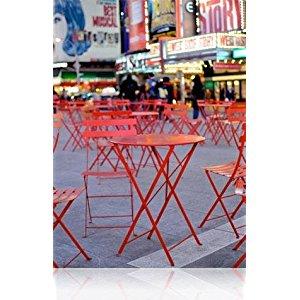

| ASIN | B001S2PPT0 |
| Best Sellers Rank | #142 in SLR Camera Lenses |
| Brand | Nikon |
| Built-In Media | AF-S DX NIKKOR 35mm f/1.8G Fixed Zoom Lens for Nikon DSLR Cameras, CL-0913 Soft Case, HB-46 Bayonet Lens Hood, LC-52 Snap-on Front Lens Cap, LF-4 Rear Lens Cap |
| Camera Lens | Nikon AF-S DX NIKKOR 35mm f/1.8G Lens with Auto Focus for Nikon DSLR Cameras, 2183, Black |
| Camera Lens Description | Nikon AF-S DX NIKKOR 35mm f/1.8G Lens with Auto Focus for Nikon DSLR Cameras, 2183, Black |
| Color | Black |
| Compatible Camera Mount | Nikon F (DX) |
| Compatible Devices | Nikon Cameras, Nikon Digital SLRs |
| Compatible Mountings | Nikon F (DX) |
| Customer Reviews | 4.7 out of 5 stars 15,836 Reviews |
| Exposure Control Type | Automatic |
| Focal Length Description | 35 millimeter aspherical. |
| Focus Type | Ring-type ultrasonic |
| Global Trade Identification Number | 00018208021833 |
| Has Self-Timer | No |
| Image stabilization | Optical |
| Item Weight | 7.05 ounces |
| Lens | Standard |
| Lens Coating Description | Super Integrated Coating |
| Lens Design | Prime |
| Lens Fixed Focal Length | 35 Millimeters |
| Lens Mount | Nikon F |
| Lens Type | Standard |
| Manufacturer | Nikon |
| Maximum Aperture | 1.8 Millimeters |
| Maximum Focal Length | 35 Millimeters |
| Maximum Shutter Speed | 1/4000 seconde |
| Media Type | ProductImage |
| Minimum Aperture | 22 |
| Minimum Focal Length | 35 Millimeters |
| Model Name | 2183 |
| Number of Diaphragm Blades | 7 |
| Photo Filter Size | 52 Millimeters |
| Real Angle Of View | 44 Degrees |
| UPC | 018208021833 |
| Warranty Description | 1 year coverage for labor, 1 year coverage for parts, This warranty doesn't apply to the batteries and software driver that accompany this product |
| Water Resistance Level | Water Resistant |
P**R
EBay the kit lens and buy this before you put batteries in your new camera
What a great price for a fast, prime lens that you'll use every day. I'm a nube to photography (good photography) and have caught the bug. I've got a Nikon D5200 and primarily take pictures of family and kids sporting events. The big zoom goes to the soccer games with us, but for almost everything else I use this little gem. With a max aperture of 1.8 you'll rarely need a flash for most of life's events indoors or out. The sharpness of the pictures I've taken with this is so good that you can really crop something down if you want to "zoom" in using Photoshop or Aperture with no graininess or degredation. At the risk of embarrassing myself to the more savvy photo enthusiasts I will try and explain why this and not the 18-55mm kit lens that you got with your camera. No it doesn't zoom (that's the prime lens part), but you'll find yourself in the 35mm range on that 18-55mm lens most times anyway. They say a 35mm lens is most representative of what the eye sees anyway. What it does do is let in a lot of light, a lot more than the kit lens does. This gives you a couple benefits first of which is speed (the fast lens or fast glass part) which means less blur on things moving and stationary. It also means that you can dial down your ISO settings. Higher ISO settings tend to add noise to the picture which gives you that pixelated look when you zoom in and crop a picture. Thirdly is something us point-and-shooters have never gotten to appreciate called depth of field. This lens will let you take those great looking photos where your subject is in perfect focus and the background is pleasantly blurred drawing your attention to what you intended the view to see. You can adjust your aperture setting to have a deep depth of field where everything is in focus, but you'll need a fast lens like the 1.8 to get a really striking shallow depth of field photo like the pros. For under $200 (maybe under $100 if you get a good price for your kit lens on Ebay), this is the single best thing you can buy to take great photos. You can pay more money for better cameras with larger sensors and more bells and whistles, but so far it appears to me that you're better off taking pictures with a great lens on a good camera, than a good lens on a great camera.
J**N
One truly excellent Nikon DX "normal" lens...
OK, just what is a "normal" lens? There are many definitions and points of view on this topic, and they go back years, but for argument's sake, let's just say that this Nikon 35mm f/1.8G...
T**Y
This is a terrific prime lens at at super affordable price!
I've had this lens for just about a month and I couldn't be happier with it! The Nikon AF-S DX NIKKOR 35mm f/1.8G gives you a lot of quality for a little bit of money. I'm shooting with a Nikon D3500 DSLR and I have to say this lens is quite a step up from the kit lenses that came with my camera. The Nikon AF-S DX NIKKOR 35mm f/1.8G Len has great clarity and the auto focus works very well. It's relatively fast to focus and shoot with. The manual focus works well and the focus ring moves smoothly. It's versatile close-up and far away, but remember, this is a prime lens so there is no zoom. You have to do any zooming with your feet by moving to position your framing and your shot. This lens works well in low-light situations with the ability to open the aperture up to F1.8G. It's easy to control the depth of field and creates a nice bokeh (blurred) background for professional looking photos. An example of blurred colored lights is attached. This lens is great for portrait or product photography and it's very good for landscapes too. The other attached photos examples have only a minimum of post-processing, mostly to adjust exposure and highlights, but they are a good example of the quality this lens offers for its price point. The lens is small and light and it's become my "go-to" whenever I'm shooting pictures. It won't weigh you down carrying it for a day of shooting. Remember, depending on your camera, this lens may not shoot as a true 35mm - on my camera's cropped sensor, it shoots the equivalent of 50.2mm. This works well for me for the various types of shooting I like to do. I really can't give a list of pros and cons since I have no experience with another similar lens (it's my 1st prime lens), but I will say that so far, all I've seen are "pros". As an amateur photographer, it's a nice step up from kit lenses. I don't hesitate to suggest this lens and I would purchase another. Thanks for reading my review and I hope it help you to decide on the lens that you really think will work for you.
R**C
great no flash motion shots in questionable lighting
amateur hardware geek's practical opinion: Though the experts rave about it for the price, I'm not going to talk about minuscule degrees of sharpness, minor hard to measure distortions, or CA you can't see unless you zoom in crazy close. Optically, this lens is fine for us, and it offers some great other advantages over typical kit lenses. Hand-held shots wide open at dusk outside without flash gives no blur, and results in better image quality than using the flash and auto mode, or the 18-55 vr with any settings we tried. Back to back tests each using the same (poor, but typical of a night-time birthday party, etc) lighting conditions indoors: 35 mm f1.8, ISO 400 hand-held. No camera shake or subject motion blur over numerous shots (subject was a dog who was incited to perk up her ears etc beside a motionless clothes basket to test for subject vs camera shake blur). (18-55 set to 35 mm equivalent with max aperture) 35 mm f4.5, ISO 800 hand-held, no VR. No camera shake for most shots, but significant subject motion blur, and poorer image quality even in the regions with no subject motion. Cheating down to f3.5, and otherwise the same conditions, trying ISO 400 and 800, the f1.8 35 mm still won. The above shows just how much advantage The f1.8 lens has for low light moving subject conditions compared to a typical kit zoom. Auto-focus is very fast in bright light, and pointlessly slow for moving subjects in the dark. Manual focus is as quick and easy as auto in bright light. Another huge The really cool thing about this lens compared to other low end Nikon lenses is that you can leave it in auto-focus mode when the auto-focus speed is questionable or variable. If it isn't auto-focusing fast enough on our D90 because there is just a hair less light than it needs, it will often go rapidly slightly out of focus both ways, then settle in on very close to the correct focus, and hunt around there. If it does this, right when it starts to hunt, we can just hold the shutter button down, and spin the manual focus ring the correct direction. As soon as you touch the focus ring, the 4.5 fps start firing off. Running it in the correct direction for focus from what the auto focus system deemed wasn't close enough often results in one of the first 2-4 shots being in good focus, and being a shot of the critical moment you wanted to capture, instead of what auto-focus alone would have given (perfectly in focus, too late). If it is so dark that it switches to contrast based auto-focus, this trick doesn't work. Note this is all with the auto-focus assist light off. With it on, the auto-focus is fast down to much dimmer light, and the aperture is still fast enough to give better images without a flash than with. We just don't like to intrude on the scene with the auto-focus light. this is an awesome lens. I hate to admit it, but Ken Rockwell called this one right.
A**N
Great lens for the price
Earlier this summer, I bought my wife the Nikon 17-55mm f2.8 lens, after hearing her talk about what a bummer it was to have deleted half the photos she took of our kids one day (with the little 18-55mm kit lens) because the light was so poor in the house that all the pictures were blurry. Even without VR, the wider aperture on the new lens made a huge difference in our ability to capture sharp photos of our kids, in or out of the house, in a much wider range of light conditions. Upon seeing the significant difference in the exposure quality of her pictures with the new lens I immediately was beset by technology envy, but since she's the primary photographer in our house and it's merely a hobby for me, I wasn't even going to try justifying the expenditure to buy me one too. So I settled on this lens. It's cheap, small, has a focus motor, and with a few already-noted exceptions, it provides very good images mounted on my Nikon D5100. I can't say enough about the difference in image quality in almost-low-light conditions. Nikon really knows what they're doing with the VR and VRII systems on many of their newer lenses, and I still love my 18-105mm f3.5-5.6 lens for its versatility. But the difference in the amount of light let through a lens in going from 3.5 to 2.8 is _significant_, let alone going from f3.5 to f1.8. Every now and then I'll find that the light is so low that the VR on my old lens would help, but in the vast majority of cases the ability to open up the aperture more than makes up for not having it. Yes, this lens is prone to some pretty funky chromatic aberration sometimes. It seems especially noticeable in lower-light situations, with wider apertures. Mostly it can be fixed by the CA removal tools in Aperture (I don't own Photoshop or anything else, but I'd imagine they'd have the same capability). As such, I can't give this lens 5 stars. But for the price it would be pretty hard to find a better lens in this category with an on-lens focus motor so it works with Nikon's consumer-level DSLRs.
F**N
Great, relatively inexpensive way to take your photography to the next level
I imagine for most people, this will be either the 2nd or 3rd lens they buy (counting the kit lens, if you got one). For me, this was my 3rd lens. The first were the kit 18-55mm Nikon VR lens and the 55-200mm telephoto Nikon non-VR lens. Both of those lenses are very good, and very versatile, but in terms of image quality they can't even remotely touch this one. First things first, it's a prime lens, meaning no zoom. Kind of obvious, but should at least be mentioned for those newer to the hobby. However, that doesn't mean that it can't take pictures from far away, on the contrary, it can take some stunning pictures from a distance, it will just be that you can't zoom in closer on things at a distance. It's actually very good at landscapes, especially late evening sunsets and night time skylines, for instance.Additionally, this lens is so sharp, that you can crop a LOT. Meaning that you can effectively get zoom after the fact by cropping your picture in photo editing software, and the image will still look very good, as long as you nailed your focus in the original picture (obviously the more you crop, the more you notice things being out of focus). Secondly, it doesn't have vibration reduction. However, this is a fast lens, which negates most of the need for VR in the first place. What photo nerds mean by a 'fast lens' that is that it lets in a lot of light, meaning that the shutter can open and close very quickly and still properly expose the image, meaning that blur, both from camera shake and moving subjects are DRASTICALLY minimized. It also thus better at 'freezing' moving objects, that would blur in a slower lens. The only time where VR would be a welcome addition is possibly extremely low light photography, but even then you should be fine without it. To be honest, I'm almost glad it's not on there, because I often forget to turn VR off when I don't need it, and VR does run your battery down faster. Now that those two caveats are out of the way, on to the strengths: This will enable photos that you just can't take with the kit lens. Especially if you're interested in concert photography (or any other form of photography that involves low light, but also movement). In most instances, this lens just takes better looking pictures than the kit lens. But in low light concert photography it will actually take pictures that a slower lens just can't take without extreme blur (or using the flash, which both kills the atmosphere and often times isn't allowed). For instance, a lead singer who moves his head back and forth some on a dimly lit stage. With the kit lens his head will just be a blur, which is sometimes a cool effect, but sometimes it just looks blurry. With this lens, you can get a nice crisp image if you want, or adjust your aperture, or your shutter speed and get the motion blur as well, if you want it. It's nice to have both options. The bokeh. Bokeh is a photography term that essentially just means 'blurry background'. This is what really makes portraits 'pop' as the subject's face can really be set apart from the background. It's also good when you have a busy background that would otherwise be distracting, even if you're not shooting portraits. Just go into aperture priority mode and set this baby to f1.8, get relatively close (a few feet) to your subject and fire away. Your portraits will take on that dreamy professional look. The closer you are to your subject, the more extreme the bokeh effect is (which is why this lens can effectively take landscape shots, because the effect is diminished greatly when you're shooting from a large distance). More control over your depth of field. This is basically the same strength as the previous point, but just more widely considered. With the kit lens, at any given focal length, your f/stop options are going to be pretty limited. Meaning you're basically stuck with the depth of field you have. However, with this lens, you basically always have from f1.8 to f22. This gives you extreme control over how deep your field is (essentially how large the range of 'in focus' is, and how gradually images fade from in focus to out of focus). You can create that nice blurred background we talked about above, or you can have an identifiable background as well. This is especially useful when shooting dogs, for instance, because sometimes (like when they're in profile) you want a very shallow depth of field, to give good bokeh and sharpness, while others you want a little more depth of field (like if they're looking straight forward at you and you want to keep the tip of their nose all the way to their ears in focus. Being able to control your depth of field is really the first step (of many) into going from a snapshot shooter with a nice camera to an actual photographer. Light weight, short length. doesn't seem like a big deal into you lug a heavy 15-300 zoom lens around on your neck all day long. It's also short, which is surprisingly helpful in a crowded environment, like a concert. While this lens is obviously not quite as versatile as a kit or telephoto lens, the images you get will blow you away. Yes, you will have to move around more to get the shot you want and/or crop more. But that's not much of a price to pay for drastically improved image quality. Since I've bought this lens, the 18-55 mm lens rarely comes out of the bag. I still use other lenses, but this is the default go to lens. The one that stays attached when the camera is in my bag, so that if I need to pull it out and snap off a shot in a hurry, this is the one that will be taking it.
V**Z
My First Prime Lens.
So after a lot of research, going through tons of reviews and articles, I finally decided to buy Nikon AF-S DX NIKKOR 35mm f/1.8G as my first prime lens... and oh boy, what a lens it turned out to be. I am not a professional photographer, but a pretty knowledgeable enthusiastic. Also, I am pretty decent at post-processing the pics (software like PS, LR etc). So a DSLR and kit lens used to work for pretty much all of my needs. But I always struggled with one combination - "Low light photos with shallow depth of field and wide angle." This is a common situation for amateur photographers, for example, a dinner event at home, drinks @ a bar, a family picnic or walk in the park during evenings, your kid performing on a stage for a school event etc. Honestly, I also hate carrying two lenses for some quick simple pictures. Primes being expensive, I did not want to invest in one, unless I was certain it would suffice my needs and I could use it regularly. This one checks all boxes 1. It's cheap considering its a prime lens 2. Low light photography is awesome (especially indoor, since you need wide angle) 3. I no more carry two lenses, since this pretty much covers my need while traveling (portraits and simple landscapes). .. plus much more... 4. my pics are much more sharper and color gradients are much contrasting (as expected from a prime lens) 5. I hardly spend time in post processing now, as the original pics itself are damn good. 6. I like to shoot with shallow depth of field, and with a wide aperture, this produces perfect pics. Never got this using kit lens This is now fixed on my camera all the time.. be it travel, indoor event or whatever, I highly recommend people who want to move up from their regular kit lens to try this as their first prime. It's not a big investment risk, considering the output it provides.
A**R
Great general purpose lens. Not ideal for close up portraits.
This is a very very sharp prime lens with autofocus. It takes pictures so clear and pleasing that the kit lens generally can't come close to this quality. This lens is good for low lights as well. It is NOT A ZOOM lens...for people who are looking to get this as their main lens. This is perhaps the sharpest nikkor lense you can get for general purpose indoor use. Get an external flash and the results will be even better. IS THIS FOR PORTRAITS? Yes and no. Good for full or half body portraits but not good for head shots on DX cameras. This is good for general purpose photography. I have tried portraits with this lens and while there is no problem that people notice at first, anybody can see the difference when shown a portrait or a head shot taken with a 105 or 135 mm. See, the thing is that in portrait pictures, you do not want too much depth. If you want to take a head shot with this lens, you have to stand so close to the subject that the tip of the nose and ears both can't be in focus at the same time. There is also a subtle distortion of facial feature when you are so close to the subject. Of course you can stand a bit further and crop your picture later but it is not ideal. On the other hand, if you want to take a portrait snap of half or full body, this is a good lens for that. My tests show that for portraits, you need a combination of focal lengths ranging from 70 mm to 105mm(DX format cameras such as nikon d5100). If you have a full format camera, you will shoot best portraits using lenses ranging from 85 to 135mm or so. No professional photographer will use this as their main portrait lens. So, if you want to shoot portraits, get a different lens as well. The best general purpose travel or outdoors lens is 18-200 mm f3.5 nikkor but that is at least $900 new. The bokeh on this lens is very very good as well and this is what makes things stand out. I showed a picture of my daughter taken at f1.8 in bright light outdoors to her and he reaction was that "it looks like a photo from a movie". That is what excellent bokeh means to people who just look at pictures but don't know what bokeh is. Even to them, bokeh makes portraits pleasing. Your kit lens will generally not provide this kind of bokeh, in fact it won't even come close. Auto focus is fast. The lens is quite small and will be no problem to carry around. videos with this are also very good. On my Nikon d 5100, the videos are affected badly due to the auto focus noise and speed if the subject is moving or you pan the camera. The auto focus is fast but not fast enough for videos. If you are a serious photographer, then you should have at least one prime lense suitable for your main purpose. I am not a professional but I still have this and a Rokinon 85 mm 1.4f. I will eventually get the 18-200 zoom but for now, I am happy with my prime lenses. People are stunned at the quality of pictures that this lens can take. For people who have mostly used point and shoot cameras, this will blow their mind. I also use an external flash and it makes things look even better. For hobbyists looking to setup a home studio, a strobe light setup will help immensely. For those looking to shoot models, this is not the best lens. Get a longer and fast telephoto for that. If you are just trying a DSLR for the time, and will mostly shoot in good light, get the kit lens or another zoom of your choice and you will be happy. Sometimes, knowing less about photo equipment is a blessing as it is very easy to know so much that you will find it hard to afford the expensive gear you read about. Great photos can still be taken with kit lenses. Limit equipment research to a reasonable level and focus more on the pictures. It is much more fun to take pictures than to worry about that 400 mm f1.8 that most can't afford and quite frankly don't need.
Trustpilot
1 week ago
2 months ago