

Desert Online General Trading LLC
Dubai, United Arab Emirates
Desert Online General Trading LLC
Dubai, United Arab Emirates
Full description not available
C**N
Fascinating insights about human physiology at the limits
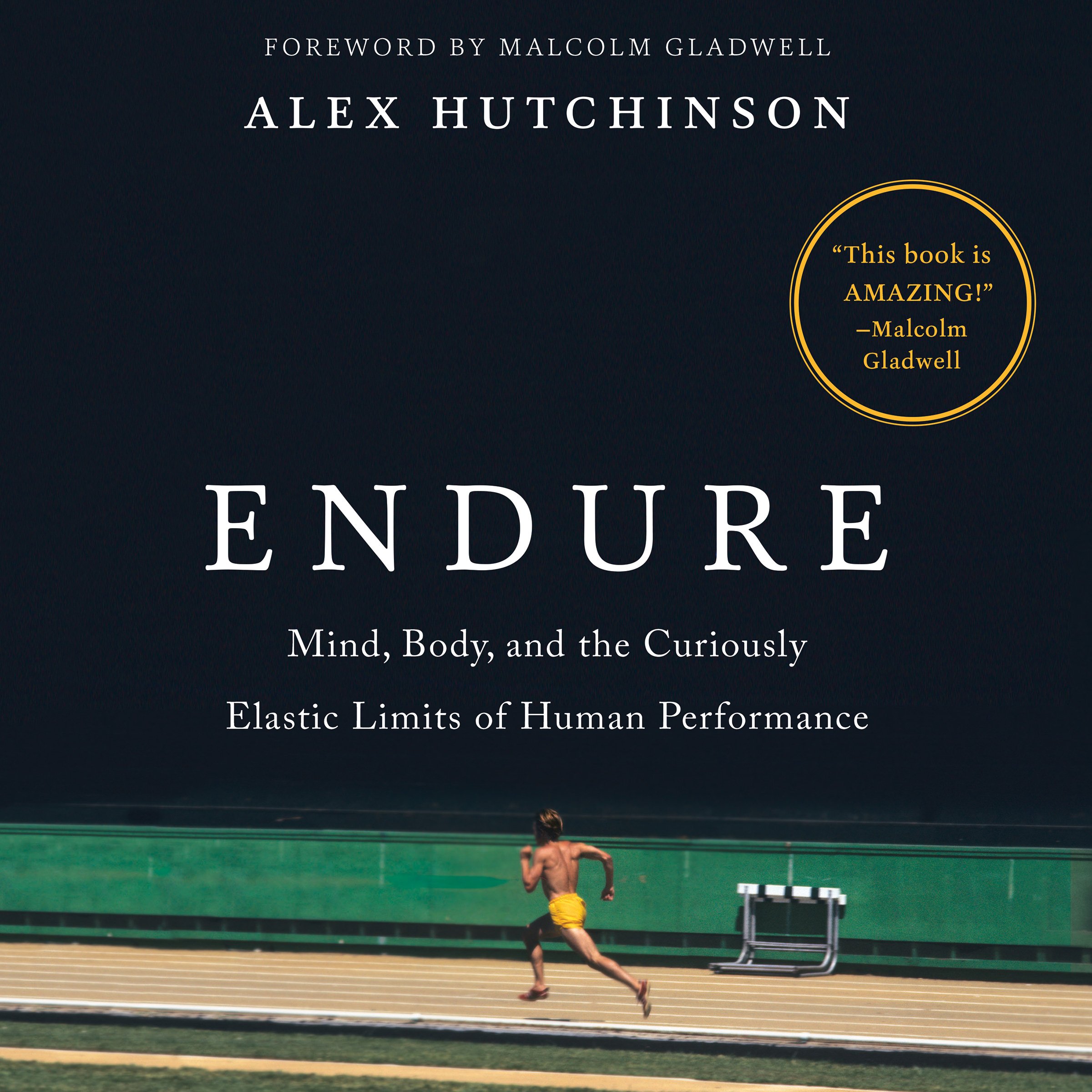
This is one of the most fascinating books I have read in recent memory. Hutchinson, writing in a style reminiscent of Malcolm Gladwell (who actually wrote the book's foreword) or Freakonomics investigates how the human body works and how it can be pushed to its limits - or beyond what we often perceive as our limits. The book was initially inspired by the chase to run a marathon in under two hours - a conquest many believe to be beyond the limits of human capability. The record has since been broken, but only in a very controlled and optimized setting, leaving questions remaining, but opening the door for the possibility much wider than previously considered. This is one of many principles Hutchinson looks at to bridge where psychology and physiology interrelate to define our limits. Once something is proven to be possible, it suddenly becomes attainable to a far wider audience; this is one of the clear psychological barriers. While the book does not definitively conclude how much is mind vs how much is body in defining limits, it clearly uncovers that the mind plays a much larger role than we like to give credit. Hutchinson references, and indeed observes, many ingenious studies aimed to identify what the true physiological limits are - from explorers in wild conditions, to elite athletes, to living and dead animals having their muscles stimulated by electrical currents. One of the central pillars is that the human body has many self-regulatory systems that act as a governor to keep us from approaching anywhere near our actual limit. As one of many examples, he considers the limits of oxygen deprivation. By looking at ultra free divers, a familiar pattern emerges that they must psychologically manage. Holding one's breath for an extended time begins with discomfort, a signal to the brain that oxygen is needed. If one continues to avoid breathing, the diaphragm will begin to spasm to try to force a breath. If one continues to refrain the task actually becomes easier for a time and a second wave occurs allowing the extension of holding one's breath. This is because the spleen sequesters a cache of oxygenated blood to be released in case of emergency. The true limit is far beyond what most people consider because few will willingly push themselves to the point of the spleen anticipating death and offering a final boost (clearly, this is not something a normal person should strive for). There are obviously much more pedestrian examples like how, if racers are running all out in an olympic race, is it possible that most are able to increase their pace in the last stages of the race? Or why, if access to glycogen stores is critically important, do most top marathoners allow their glycogen stores to deplete over the course of the race rather than keep them topped up? Or, more psychologically, it has been revealed that rinsing one's mouth with carbohydrate rich solution and spitting it out has a nearly identical impact on performance to actually drinking it (the suspicion here is that there is an as-yet unidentified pathway from the mouth that signals to the brain carbohydrates are coming, allowing an override of the governor that would otherwise signal you to reduce your effort). There are dozens of studies, real world examples, and fascinating stories, backed up by the biology and chemistry of how it works, that reveal so much about how our bodies work in the everyday and in the extreme limits of exertion. All of it is remarkably digestible and written almost like a series of mysteries to resolve. Simply put: this is a brilliant, enlightening, and entertaining book that will teach you about the limits of that which we're capable and why, even if it doesn't necessarily provide all of the answers.
G**I
Excellent but extreme
An excellent text, delving on the extreme outer limits of human endurance. You will learn a lot about how far we can be pushed but I doubt that you would (or should) attempt what is described in this book. So this is more for encyclopedic knowledge than for practical application by an endurance athlete like the vast majority of us.
F**N
New Ideas Well Told With Practical Tips - Bravo
One of the few books I read fully last year. New ideas very clearly and engagingly shared. I think about it often as I ride and swim long distances. Several practical tips that have helped me endure longer, better understand my actual limiters and appreciate my effort more. The reason I am writing this review now is because I just ordered his most recentl book and am excited to hear his 'voice' again exploring the idea of 'Exploration'.
S**.
A must read!
This book is a must read for endurance athletes at any level (even those just thinking about starting). The stories of elite athletes and outstanding attempts & accomplishments are inspiring and sometimes cautionary. Importantly, there are actionable items for anyone looking to enhance their performance. Maybe you need to think about your hydration or fuel or thinking to meet your next goal. It’s all in there. Great book! I hope he updates it regularly.
A**A
Excellent writing, pages turn
Took a chance on this and so glad I did. Very well written and researched. It reads like a story and I feel like I learned a lot. I only run casually but I feel this has changed me entire perspective on life and all forms of physical activity. Thanks to the author!
D**R
Well-Researched but Maybe TOO Well-Researched?
I've come to know Alex Hutchinson's writing through his fantastic articles in "Runner's World." He had some serious chops as a Canadian runner but he's equally (if not more) accomplished as a journalist. Hutchinson's interests tend toward the science-y, geeky side of running, and those interests are on full display in "Endure." It's likely I came into the book with a bias, being a distance runner and having heard "Endure" mentioned on various ultra-running podcasts. I assumed the focus would be on long-distance running, but Hutchinson touches on endurance sports of various types, including mountain climbing, cycling, free diving, marathoning, ultra-running, exploration, etc. A real strength of the book is that the author is able to tie these sports together, along with a wealth of scientific findings and summaries of clinical studies, so seamlessly. He moves effortlessly between Nike's 2-hour marathon project, Roger Bannister's 4-minute mile, record free diving attempts, Everest ascents, Antarctic treks, and "The Hour" (an all-out one-hour bike sprint that leaves its participants flailing in a pool of their own saddle sores, sweat, and tears). Hutchinson paints such a vivid picture of these efforts that you almost start to struggle for air along with the free diver or mountain climber. A lot of the book is arranged around these limits to human endurance, such as oxygen, heat, and fuel. The book springs to life when Hutchinson is describing mountain ascents or cycling races, but then just as quickly we're back in the lab for...another study. There were many studies summarized in this book, studies where athletes were poked, prodded, given pills and placebos, denied oxygen, given pure oxygen, denied carbs, given extra carbs, EKGs, and on and on. I tried to keep everything straight, but after awhile it was difficult to determine what I was supposed to take from all this, other than that people often push themselves to the brink of exhaustion but rarely does anyone die due to a "central governor" in the brain that starts shutting things down if we stray too far into dangerous territory. By the time Hutchinson got to the study about the cyclists shown a video of an Asian woman who forces herself to vomit and then eats it, I was ready to be done with studies. I think Hutchinson accomplished what he set out to do, which was to provide a survey of various extreme endurance achievements and explain the science behind them, and despite my own bias toward running I thought the stories about mountaineering, antarctic exploration, and cycling were fascinating. I just wish the author would've focused more on the details of these events, maybe focusing on four or five, describing them in-depth, and scaling back all the studies, which for me just blended together anyway. I also have a feeling these studies are going to make "Endure" seem really dated in about five or ten years. I ultimately came away thinking the book was interesting but not always a page-turner, and there's also not a huge amount you can easily take from it and apply to your own training/racing if that's your goal for "Endure."
K**D
Informative and entertaining
Easy to understand and appreciate the vast amount of effort complied by so many dedicated people.
Trustpilot
1 week ago
5 days ago