

Desert Online General Trading LLC
Dubai, United Arab Emirates
Desert Online General Trading LLC
Dubai, United Arab Emirates

Full description not available
M**L
Refuting Eurocentrism
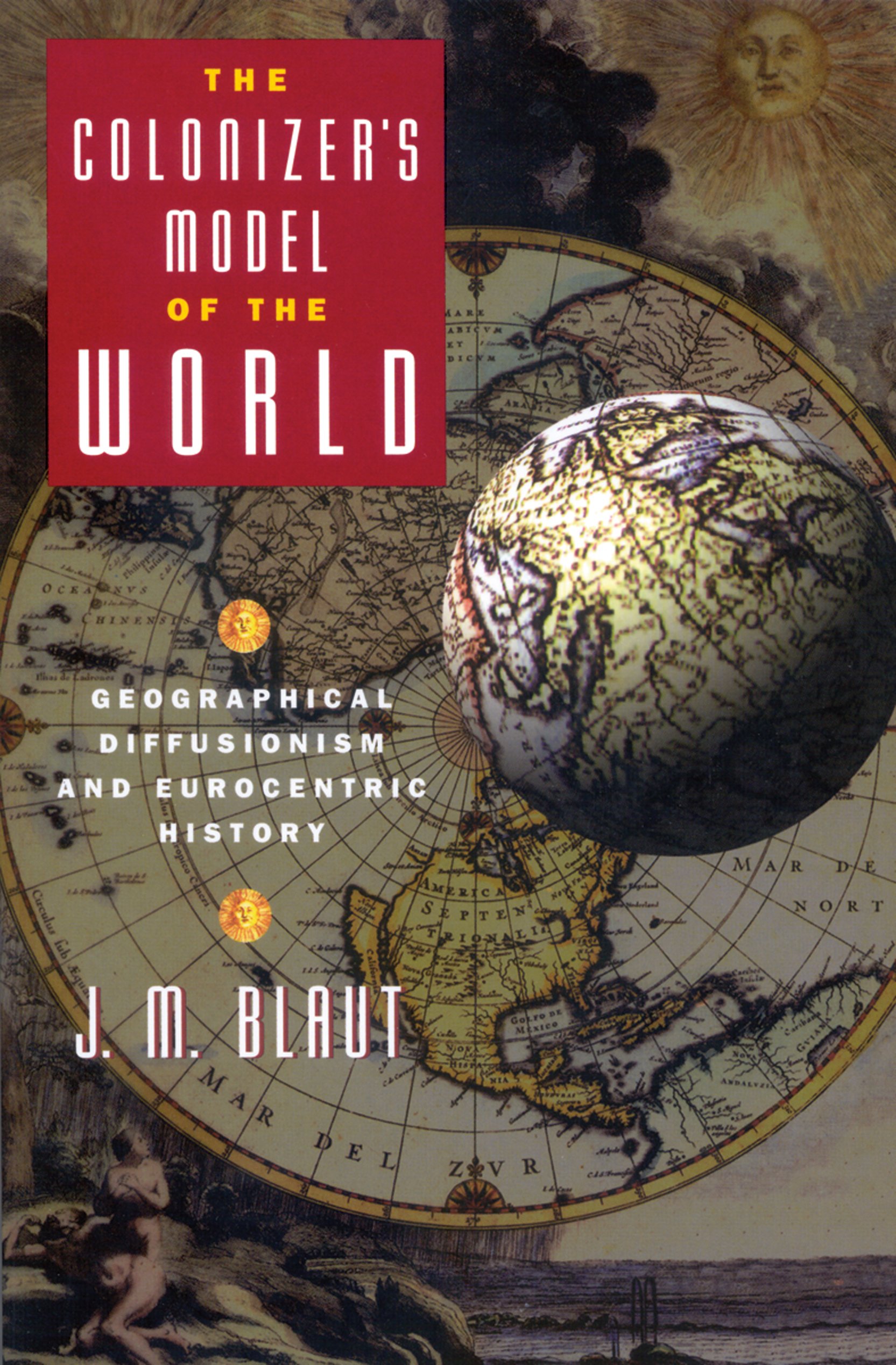
James Blaut, a geographer at the University of Illinois at Chicago, is particularly known for his excellent refutations and polemics against Eurocentrism in economic history. This book, "The Colonizer's Model of the World", is the pinnacle of that oeuvre, together with its companion work Eight Eurocentric Historians.The first and largest part of the book is devoted to refuting the mythology and mistakes of Eurocentric diffusionism, a body of theories and statements which purport to show that Europe or Europeans were in some way, whether mentally or physically or economically or environmentally or culturally, superior to Asians, Africans and other non-Europeans before the 'discovery' of America. Blaut does this by analyzing systematically the works of many recent and past popularizers of these theories, from the 'hydraulic societies' of Karl Wittfogel to the contemporary racist historiography of Eric L. Jones, and subjecting them to an unsparing criticism for their erroneous assumptions and ignorance of the non-European world. As Blaut shows, China, India, Southeast Asia and even Africa were not lagging behind Europe in any respect before 1492, including but not limited to technology, individual freedom (or lack thereof), and demographics. He also makes many essential geographic points, such as refuting the theories that tropical conditions are inherently unsuited for working or thinking, or that tropical soil is necessarily less fertile, or that Europe relied on rainfall agriculture unlike Asia. The book "Eight Eurocentric Historians" builds upon this part and goes into more detail about it.The second part of the book is a discussion of the state of feudalism in Europe and elsewhere (about the same level of development except for the Americas, as Blaut shows) before 1492, and the immensely rapid growth, change, and development Western and Southern Europe underwent in the period roughly from 1492 to 1700. Blaut persuasively argues that only the colonization of the Americas, with the enormous influx of wealth and capitalistic production relations resulting from gold and silver mining and plantation work (particularly sugar), can adequately explain this phenomenon. He also explains why it was Europe that conquered America rather than the opposite, the answer being disease, and why it was Europe as opposed to Asia or Africa that did this, the answer being geographical location and advantageous wind patterns for sailing.Blaut is unsparing and polemic in his writing, occasionally getting preachy, but his case is strong and aims home. He even criticizes otherwise radical authors for their failing in this regard, often legitimately, such as Marx and to a lesser extent Engels, Robert Brenner, Perry Anderson, and others. I do not endorse or support all his critiques on this field, as Blaut occasionally goes overboard, and his endorsement of Martin Bernal's "Black Athena" theory, now discredited, does not aid his case. (It must be noted that this book was written in 1993, and the refutation of this theory in "Black Athena Revisited" (Black Athena Revisited) was published in 1996.) Blaut nonetheless gives good cause also for the radical historians to revise and change the substance of some of the classic Marxist historical view - his book is yet more confirmation that the concept of the "Asiatic mode of production" is untenable and must be discarded, and it also gives more argument for introducting "protocapitalism" as a separate mode of production in between feudalism and Industrial Revolution capitalism, although Blaut himself is not yet willing to do so.What is most important about this book however is not its historiographical import, but the essential corrective it is to much of the still popular view of world history and the development of Europe and its superior position. From Tarzan to Tintin and from Kipling to the popular view of American Indians, the entire picture of the interactions between Europe and the rest of the world are for many people still unwittingly based on completely incorrect Victorian prejudices and assumptions. This goes not just for the average guy, but even for intellectuals, in fact even for professional historians. And if Blaut's book could make a dent in this vision, it will have made a major contribution to international understanding and historical sense.
W**D
Good refutation of Eurocentrism
This is a good book on refuting eurocentrism which effects how all of us view history and the world.Learning history is all about getting a different perspective than what society tries to indoctrinate you with.However, this book is just the beginning, I'd recommend also reading Samir Amin's books Eurocentrism.My only issue with the book is that it's sort of a difficult read. The words don't flow as well and although it was only 200 pages, I did struggle through it.
E**N
A classic.
Written by a young professor whose life ended tragically early, he eagerly takes on most of the contemporary world views of history, challenging their Eurocentrism and biases.
J**Y
Historic
Great historic analysis of the evolution of mercantilism and global capitalism.
J**D
Pops a Few European Balloons
This is a good critique of the assumptions made by Eurocentric historians over the years about the superiority of Europe as compared to the inferiority of the rest of the world. Blaut effectively examines and explodes each theory dispassionately but thoroughly. Finally he comes up with his own explanation for European success since 1492: America. Europe's "discovery" of and exploitation of North and South America gave it the wherewithall it needed to overtake and surpass the rest of the world. A well written, well documented assessment which deserves a place beside The Great Divergence and ReOrient, among others.
J**D
Save your money and get his other book
I should have looked closer at the copyright before wasting $30 on this Kindle version. This book was written in 1993 and it shows. His other book, Eight Eurocentric Historians, was published in 2000. His later book is more concise and has better developed arguments. Blaut is good at summarizing what he dislikes about his opponents Eurocentric arguments, but his facts/arguments don't hold up. Look for Doomsdayer520's review for a concise list of how this book fails its premise, the weakness in his arguments.
T**G
Excellent read.
Working to dispel the myths of "the West's" (really European, and Euro-American) climb to being the dominant world power. Kinda a hard read but I like that sorta thing.
A**R
Kind of obnoxious, but still an important read
Blaut makes some excellent points about Eurocentrism. This is a classic, must-read book on globalization/colonization. However, I'm not a huge fan of the book. Blaut writes with a certain passion that gets a little over the top and obnoxious. In a sense, it politicizes the book, making it feel less like the work of an academic and more like the work of a think tank or angry pundit. It draws out one's natural desire to play devil's advocate, which may be great for stimulating class lectures. Some of his historical facts are questionable, but his overall point is well-taken.
Trustpilot
4 days ago
2 weeks ago