We remain fully operational. Our teams are working around the clock to ensure your deliveries continue safely.

DOWNLOAD THE APP


Customer Services
Copyright © 2025 Desertcart Holdings Limited
DOWNLOAD THE APP
Buy anything from 5,000+ international stores. One checkout price. No surprise fees. Join 2M+ shoppers on Desertcart.
Desertcart purchases this item on your behalf and handles shipping, customs, and support to Philippines.
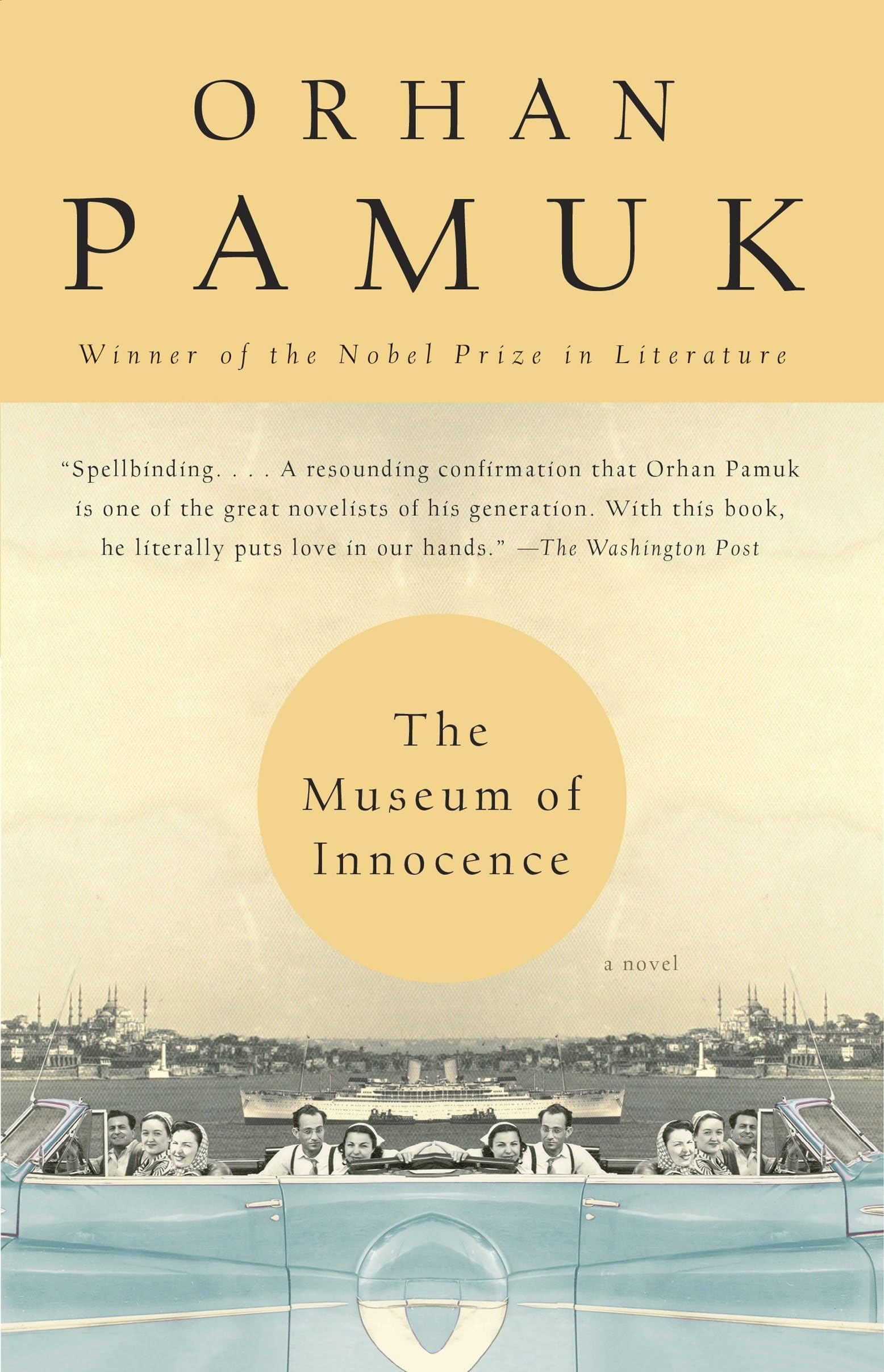
desertcart.com: The Museum of Innocence (Vintage International): 9780307386243: Pamuk, Orhan: Books Review: A somewhat biased review - Let me preface my review by admitting that I am a huge sucker for well written romance stories, even ones that may lack the literary genius that define masterpieces. This potentially contributed to the mesmerizing experience I had from reading this book. That said, Orhan Pamuk is a great writer who demonstrates an uncanny ability to put out beautiful and poignant literatures, as evident in all his previous work. I had the pleasure to listen to his talk at the New Yorker Festival last year where he talked about the experience of writing his book. As fascinating and hilarious as his speech was, I don't think he was able to convey what readers should be expecting in Museum of Innocence. Museum of Innocence is a love story that alludes to much more. It is said that this is Pamuk's first novel about love (I disagree). The story is centered on Kemal's experience of encountering his love Fusun, as an almost married man, losing her and trying to win her back. Almost the entire story is told from his perspective because he represents multiple oppressive forces that existed in Turkish society in the 70s and 80s, despite his own resentment of these forces. The story is divided into short chapters with titles that convey metaphysical inquiries about love and happiness in the most colloquial and at times cliché language. The writing itself is rather poetic but contains a greater dose of realism than Snow. The storyline is punctuated with breathtaking imageries. Kemal's obsession with Fusun, manifested through his fetish of collecting the objects with associations with Fusun, is absurd by nature but made real and even what somewhat sensible by Pamuk. (The actual museum, which Pamuk has been organization is scheduled to open this year in Istanbul and all objects mentioned in the book will be on display) When reading this book, I cannot help but be reminded of three other novels - Lolita, Anna Karenina, The English Patient. One of the major theme found in Museum of Innocence is the exactly the central theme in Lolita - the objectification of the object of desire. HH's lust of Lo and Kemal's persistence pursuit of Fusun are so similar in that they are both characterized by fetishism. The Istanbul society, the setting of Museum Innocence is not much different from the one Tolstoy described in painstaking details in of St. Petersburg society in Anna Karenina. Pamuk gave the same level of attention to detail to the inanimate objects in Museum of Innocence as Tolstoy did in AK. But writing in a more modern and tender prose, reading Museum of Innocence is more similar to reading the English Patient than to the tediousness of reading Tolstoy. I read the Museum of Innocence after having gone a long period without reading much fiction. It is a tremendous pleasure and I was completely immersed in the story that by the time I got off the train and arrived at work, I cannot stop thinking about the story. It is a long book but Pamuk will pull you through quickly. I cannot claim this as a literary masterpiece at this point but it is definitely a great read. Review: Powerful Start and Then a Slow Burn - I do enjoy Mr. Pamuk’s work. He has a unique style, and his plots are generally engaging. The idea that drives this novel—a bereaved man who collects objects that connect him to his lost love and puts them in a museum—is intriguing. Though I don’t think it quite lives up to the potential of the idea, I did like this. The early part of this novel is spectacular. Our narrator, Kemal, a rather spoiled rich man, becomes enamored of a beautiful, young, distant relative named Fusan even as he prepares to celebrate his engagement with another spoiled rich girl named Sibel. His powerful lovemaking scenes with Fusan in the first pages color the rest of the novel. The extended scene of the engagement party is a tour de force. After the party, however, the novel becomes something of a slog. Pamuk does have a tendency to go for the slow burn in his novels which can be trying. Kemal becomes such a sad sack and his actions seem so ridiculous that it becomes difficult to sustain any sympathy for him. There are some good moments as he tried to keep his relationship with Sibel going and the end, though predictable, has some energy. On the other hand, there are hundreds of pages of boring dinners with Fusan’s family (and husband) where he apparently steals thousands of small items from their house and no one mentions it. Apparently, Mr. Pamuk has created a real Museum of Innocence in Istanbul because of the popularity of this novel there. I do think the picture he paints of a country in transition from traditional to more modern values is a fascinating one and maybe resonates very strongly in Turkey. On the other hand, for this reader, there were challenges along with the successes.


| Best Sellers Rank | #32,528 in Books ( See Top 100 in Books ) #115 in Cultural Heritage Fiction #133 in 20th Century Historical Romance (Books) #1,347 in Literary Fiction (Books) |
| Customer Reviews | 4.0 4.0 out of 5 stars (1,423) |
| Dimensions | 5.19 x 1.27 x 8 inches |
| Edition | Reprint |
| ISBN-10 | 0307386244 |
| ISBN-13 | 978-0307386243 |
| Item Weight | 15.2 ounces |
| Language | English |
| Print length | 531 pages |
| Publication date | October 5, 2010 |
| Publisher | Knopf Doubleday Publishing Group |
Y**O
A somewhat biased review
Let me preface my review by admitting that I am a huge sucker for well written romance stories, even ones that may lack the literary genius that define masterpieces. This potentially contributed to the mesmerizing experience I had from reading this book. That said, Orhan Pamuk is a great writer who demonstrates an uncanny ability to put out beautiful and poignant literatures, as evident in all his previous work. I had the pleasure to listen to his talk at the New Yorker Festival last year where he talked about the experience of writing his book. As fascinating and hilarious as his speech was, I don't think he was able to convey what readers should be expecting in Museum of Innocence. Museum of Innocence is a love story that alludes to much more. It is said that this is Pamuk's first novel about love (I disagree). The story is centered on Kemal's experience of encountering his love Fusun, as an almost married man, losing her and trying to win her back. Almost the entire story is told from his perspective because he represents multiple oppressive forces that existed in Turkish society in the 70s and 80s, despite his own resentment of these forces. The story is divided into short chapters with titles that convey metaphysical inquiries about love and happiness in the most colloquial and at times cliché language. The writing itself is rather poetic but contains a greater dose of realism than Snow. The storyline is punctuated with breathtaking imageries. Kemal's obsession with Fusun, manifested through his fetish of collecting the objects with associations with Fusun, is absurd by nature but made real and even what somewhat sensible by Pamuk. (The actual museum, which Pamuk has been organization is scheduled to open this year in Istanbul and all objects mentioned in the book will be on display) When reading this book, I cannot help but be reminded of three other novels - Lolita, Anna Karenina, The English Patient. One of the major theme found in Museum of Innocence is the exactly the central theme in Lolita - the objectification of the object of desire. HH's lust of Lo and Kemal's persistence pursuit of Fusun are so similar in that they are both characterized by fetishism. The Istanbul society, the setting of Museum Innocence is not much different from the one Tolstoy described in painstaking details in of St. Petersburg society in Anna Karenina. Pamuk gave the same level of attention to detail to the inanimate objects in Museum of Innocence as Tolstoy did in AK. But writing in a more modern and tender prose, reading Museum of Innocence is more similar to reading the English Patient than to the tediousness of reading Tolstoy. I read the Museum of Innocence after having gone a long period without reading much fiction. It is a tremendous pleasure and I was completely immersed in the story that by the time I got off the train and arrived at work, I cannot stop thinking about the story. It is a long book but Pamuk will pull you through quickly. I cannot claim this as a literary masterpiece at this point but it is definitely a great read.
T**H
Powerful Start and Then a Slow Burn
I do enjoy Mr. Pamuk’s work. He has a unique style, and his plots are generally engaging. The idea that drives this novel—a bereaved man who collects objects that connect him to his lost love and puts them in a museum—is intriguing. Though I don’t think it quite lives up to the potential of the idea, I did like this. The early part of this novel is spectacular. Our narrator, Kemal, a rather spoiled rich man, becomes enamored of a beautiful, young, distant relative named Fusan even as he prepares to celebrate his engagement with another spoiled rich girl named Sibel. His powerful lovemaking scenes with Fusan in the first pages color the rest of the novel. The extended scene of the engagement party is a tour de force. After the party, however, the novel becomes something of a slog. Pamuk does have a tendency to go for the slow burn in his novels which can be trying. Kemal becomes such a sad sack and his actions seem so ridiculous that it becomes difficult to sustain any sympathy for him. There are some good moments as he tried to keep his relationship with Sibel going and the end, though predictable, has some energy. On the other hand, there are hundreds of pages of boring dinners with Fusan’s family (and husband) where he apparently steals thousands of small items from their house and no one mentions it. Apparently, Mr. Pamuk has created a real Museum of Innocence in Istanbul because of the popularity of this novel there. I do think the picture he paints of a country in transition from traditional to more modern values is a fascinating one and maybe resonates very strongly in Turkey. On the other hand, for this reader, there were challenges along with the successes.
G**Y
A Case of Time And Waiting
It takes a certain emotional discipline to read European Literature. No, change that - it takes a certain unique discipline to read any literature other than that of these United States. We here in the colonies go for hidden tawdriness, spelled out from page one with the page-turner style of dime westerns (more like five-spot westerns these days). The "other" requires us to stop, smell the cigarette smoke, to inch into the book ever so slowly, in the hope that plot is fructifying, even though we can't yet discern it. That characters are more than poseurs trying to seduce us with their cool, above-it-all aplomb. But as Pamuk makes plain in his somewhat derivative novel, his Turkish characters are as flawed, as human, as we Yanks are. In The Museum Of Innocence, Pamuk gives us the story of Kemal Basmaci, whom we Americans might call one of Turkey's beautiful people coming of age during the `seventies' turbulence there. They party hard, abuse friendships and loves, all without a second thought, reminding me a bit of Gatsby. One of that culture's paradoxes is that even as late as the 1970s, Turks submitted to arranged marriages. So it hardly surprises that one day Kemal finds himself engaged to and in love with the very beautiful and cultured Sibel. And who couldn't love such a person as Sibel? Pamuk seems to ask. But his trick here is that Kemal and his friends are creations of both their culture and their family's aspirations for them. All despite the way they see themselves as culturally European, not Middle Eastern. But Kemal is soon to learn the hard way - and over many anxious years - what real love is to make of him. He falls in love with Füsun, a distant cousin and a child from the, well, less rich side of the family. They immediately enter into a sexual relationship, handled with almost Puritanical tact by Pamuk. And with each copulation, their intimacy and love grows stronger. Kemal at first sees no conflict in his double sex life, but as marriage to Sibel comes closer to reality, internal discord sets in. Füsun, of course, wants to be his one and only, but this doesn't seem to be blessed by the stars, so Kemal and Sibel press on with their marriage plans. Finally, Füsun disappears. Kemal is devastated. His marriage plans soon fall apart, and he sets out on a journey of decades to find Füsun and to reclaim her love - reminding me a bit of Ian McEwan's Atonement. There are other tacit literary references: Victor Hugo and Tolstoy and Henry James and a whisper of Dickens. But Pamuk's vision for this novel seems more philosophically complex than these derivative tacks might lead us to believe; he seems to want to continue to plumbing the Turkish psyche for his readers. More to the point, he toys throughout with the idea of time, how it shapes us and changes us. His eponymous museum is a paean to Füsun - a collection of mementoes gathered from the many years of their relationship, assembled in an attempt to freeze moments of their time together. He perceives from the very first, I think, that their love (and by implication, all human love) is transient, that it will pass, later if not sooner. We humans, he seems to want us to understand, are uncomfortable with the very dynamism of the human condition. There must be something more, his story whispers - a place or a condition in which permanence rules. Pamuk, as he did in Snow, dallies with the techniques of post-modernism, but one turn of that pen near the book's end nettles this reader. He turns the story over to Pamuk (who makes a cameo appearance at Kemal and Sibel's engagement party), ostensibly to free Pamuk from his role as narrator and allow him to present something of Kemal that couldn't be depicted otherwise. Sadly, the technique seems more facade than substance. Still, Pamuk proves himself one of this generation's foremost writers, one who dares to challenge us with philosophic insights cloaked in story.
K**G
A very entertaining read made all the more enjoyable by the anticipation of visiting the museum in Istanbul!
I**S
Esta es una de esas lecturas que uno quisiera se prolongarán por siempre. Me encanto
B**B
This is one of the best novels that I’ve read recently. Not for the faint hearted, the story, the masterly writing and superb translation is both truly literary and very readable, operating on a number of different levels - a love story that details - and I mean details - male sexuality and interiority over time. The backdrop is of a country in transition, Turkey, that is little known or understood in ‘the West’ which adds to the richness of the story and raises questions of how the interweaving strands of culture and context colour human emotional life.
T**Y
If you haven't read Orhan Pamuk then you haven't read the Literary Geniuses of 20th Century. Pamuk is simply superb... His characters come alive and takes you on a journey not as a spectator but as a Co-commuter.
A**L
Absolutely loved the book- loved being transported back to old Istanbul. Loved the writing which brought the book to life on the pages..,
Trustpilot
2 weeks ago
1 week ago