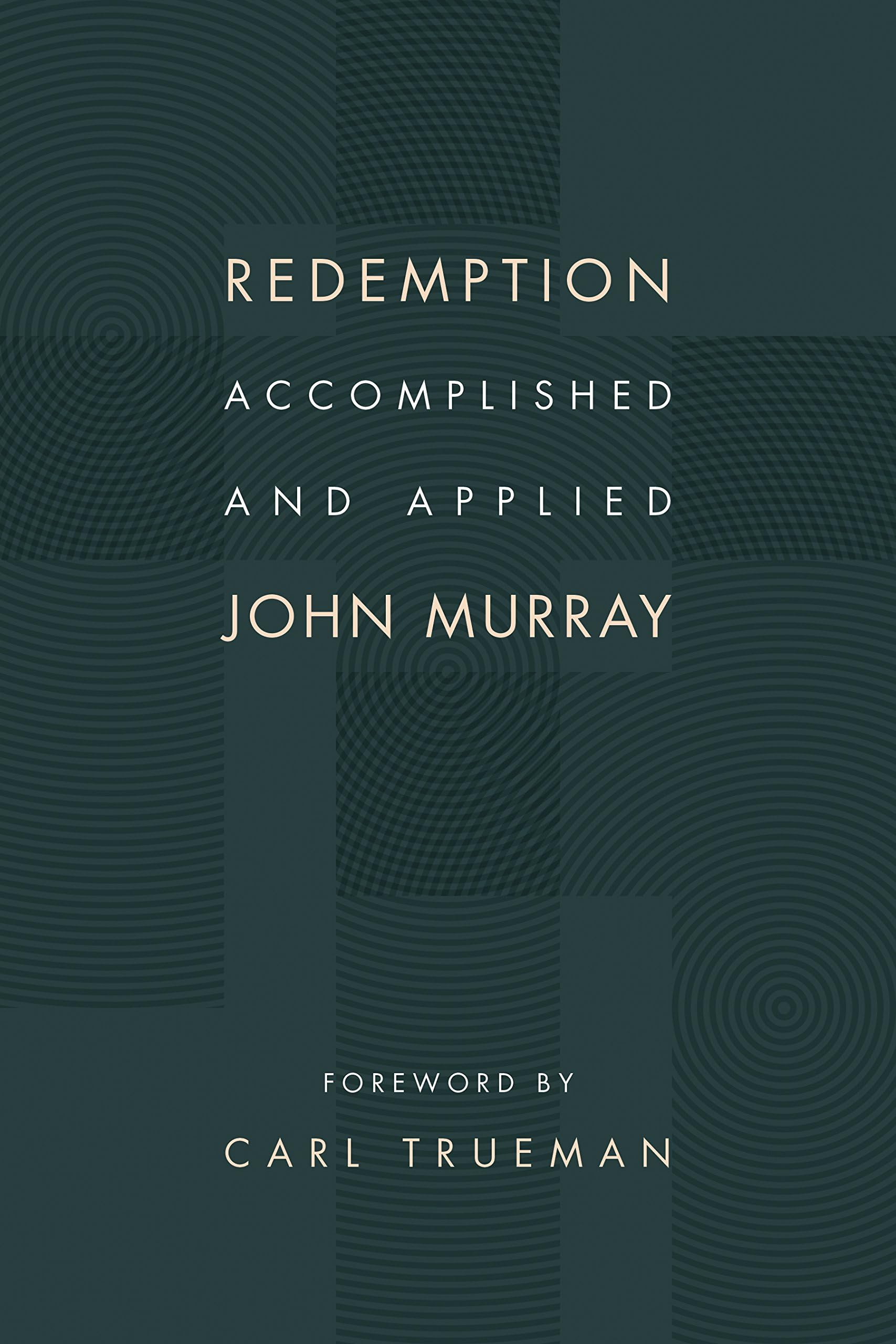
Redemption Accomplished and Applied
Product ID: 17920136
Buy anything from 5,000+ international stores. One checkout price. No surprise fees. Join 2M+ shoppers on Desertcart.
Desertcart purchases this item on your behalf and handles shipping, customs, and support to Philippines.
Redemption Accomplished and Applied [Murray, John, Trueman, Carl] on desertcart.com. *FREE* shipping on qualifying offers. Redemption Accomplished and Applied Review: Plumb the depths of Redemption Accomplished and Applied - To a Christian, the following words are pregnant with meaning and significance: atonement, redemption, calling, regeneration, faith and repentance, justification, adoption, sanctification, perseverance, union, and glorification. These words are not reserved for the lecture halls of seminaries, but should be in the hearts and on the mouths of ordinary Christians. Sadly, much of "Christian culture" has departed, in practice, from traditional confessions of the atonement. These scriptural concepts have been replaced by superficial understandings of salvation. In Redemption Accomplished and Applied , Scottish theologian, John Murray (1898-1975), has written a classic to remind the Church that the atonement is central to the Christian faith. One can never exhaust the meaning of the Jesus Christ's atonement, nor should one cease trying. I highly recommend this book as you attempt to plumb the depths of the love of Christ expressed in His atonement for sinners. The book is divided into two parts: Part 1: Redemption accomplished 1. The necessity of the atonement In this chapter, Murray presents a scriptural argument, particularly from Hebrews, against "hypothetical necessity" (this views says that God did not have to save by atonement but that he only chose to save by this method). Instead, Murray argues in favor of "indispensable necessity," that the holiness of God and the sinfulness of sin demand the vicarious sacrifice of the Lord Jesus Christ. Murray says "if we keep in view the gravity of sin and the exigencies arising from the holiness of God which must be met in salvation from it, then the doctrine of indispensable necessity makes Calvary intelligible to us and enhances the incomprehensible marvel of both Calvary itself and the sovereign purpose of love which Calvary fulfilled." 2. The nature of the atonement Murray then discusses the two distinct aspects of Jesus Christ's vicarious obedience - recognizing that the law has both penal sanctions and positive demands. He says, "Christ's obedience was vicarious in the bearing of the full judgment of God upon sin, and it was vicarious in the full discharge of the demands of righteousness." In relation to Christ's substitutionary atonement, Murray then unwraps the following biblical concepts: a. Sacrifice. Linking Hebrews 9 and 10 with the Levitical sacrifices, he shows that the Old Testament sacrifices were patterned after the heavenly reality and that the blood of Christ "purges our conscience from dead works to serve the living God" (Heb 9:14). Christ is the High Priest that has presented Himself as the offering for sin. b. Propitiation. "God appeases his holy wrath in the cross of Christ in order that the purpose of his love to lost men may be accomplished in accordance with and to the vindication of all the perfections that constitute his glory." Romans 3:25-26 says "God displayed [Christ] publicly as a propitiation in His blood through faith. This was to demonstrate His righteousness...that He would be just and the justifier of the one who has faith in Jesus." c. Reconciliation. It is true that we are alienated from God, but, the emphasis of scripture is that God is alienated from us because of our sin. God must take the initiative. Romans 5:8-11 says that we are "reconciled to God through the death of His Son" (v10) and "justified now in his blood." (v9). Citing 2 Cor 5:18-21, Murray emphasizes the necessity of divine monergism as God was in Christ "reconciling the world to Himself." (v19) d. Redemption. Linking all of these concepts together, Murray says, "As sacrifice is directed to the need created by our guilt, propitiation to the need that arises from the wrath of God, and reconciliation to the need arising from our alienation from God, so redemption is directed to the bondage to which our sin has consigned us." (Rom 3:24-26 links all of the terms in one glorious passage) First, Christ frees Believers from the guilt of sin by purchasing His own with His blood (Acts 20:28). Second, Christ frees Christians from the power of sin based on union with Christ in His death and resurrection (Rom 6:1-10, 2 Cor 5:14-15, Eph 2:1-7, Col 3:1-4, 1 Pet 4:1-2). In sanctification, Believers are thus exhorted "to reckon yourselves dead to sin but alive to God in Christ Jesus" (Rom 6:11). 3. The perfection of the atonement. "There is therefore now no condemnation to them who are in Christ Jesus" (Rom 8:1). The atonement is a completed work, never repeated and unrepeatable (Heb 1:3, 9:12, 25-28). Addressing the perfection of this atonement, Murray says, "[Christ] did not make a token payment which God accepts in place of the whole. Our debts are not canceled; they are liquidated." (emphasis mine) Hebrews 10:14 says, "For by one offering He has perfected for all time those who are sanctified." 4. The extent of the atonement. Murray answers the question, "for whom did Christ die?" He begins by examining several proof texts for the alternative view of "universal atonement." He demonstrates that this incorrect view actually limits the power of Christ's atonement by saying that the atonement could apply theoretically to someone who ends up in hell. In contrast, the correct view of "limited atonement" or "definite atonement" says that the atonement only applies to heirs of eternal life, the elect of the ages. He says "Christ did not come to put men in redeemable position but to redeem to himself a people." The atonement definitely secured for Christ a people for His own possession (Titus 2:14) Rhetorically, Murray asks, "Did [Christ] come to put all men in a salvable state? Or did he come to secure the salvation of all those who are ordained to eternal life?" He then examines Romans 8:31-39 to show that the elect for whom Christ died in verse 32 are the same who are justified in verse 33. Part 2: Redemption applied 1. The order of application. Tying together John 3:3, John 1:12, Romans 8:30, John 6, etc, Murray orders the application of redemption as: calling, regeneration, faith and repentance, justification, adoption, sanctification, perseverance, and glorification. Each of these concepts is then explained in the subsequent chapters. 2. Effectual calling. The calling of God in salvation is an efficacious summons by God Himself that will not be thwarted (Rom 8:30, 1 Cor 1:9, 2 Peter 1:10, 2 Tim 1:8,9, John 6:44,45). 3. Regeneration. Since a person is dead in trespasses and sins, the Holy Spirit (John 3) must divinely beget him as a new creation in Christ. Only by the "first cause" of the Holy Spirit can anyone be saved. Faith is not the actual first cause. Murray says, "we are not born again by faith or repentance or conversion; we repent and believe because we have been regenerated." Further, regeneration will also have lasting effects in the sanctification of the believer. The one born of God will not continue in sin since he has been delivered from the power of sin and overcomes the world (1 John 3:9, 5:4, 5:18). Murray comments on the state of the church in his day that can apply be said today, "A cheap and tawdry evangelism has tended to rob the gospel which it proclaims of that invincible power which is the glory of the gospel of sovereign grace. May the church come to think and live again in terms of the gospel which is the power of God unto salvation." 4. Faith and repentance. There is a universal command from scripture for men to repent and believe the Gospel (e.g. Acts 17:30-31). Man has the responsibility to believe. The concept of biblical faith is knowledge, conviction and trust. Faith is NOT something that merits the favor of God. "All the efficacy unto salvation resides in the Savior...The specific character of faith is that it looks away from itself and finds its whole interest and object in Christ. He is the absorbing preoccupation of faith." Repentance is the conscious turning from sin unto God with full purpose of, and endeavor after new obedience (Luke 24:46-47, Acts 2:37-38, 5:31, 20:21, etc). 5. Justification. How can sinful man be just with a righteous God? God must do the justifying (Rom 8:30). Contrary to the Roman perversion, it does not refer to the renewing and sanctifying grace of God or any "infusion of grace." Murray says, "If justification is confused with regeneration or sanctification, then the door is opened for the perversion of the gospel at its centre." Rather, justification is judicial or forensic. God gives the verdict regarding our judicial status. Justification is a declarative and constitutive act of God's grace. God must constitute the new relationship as well as declare it to be. The constitutive act consists of the imputation to us of the obedience and righteousness of Christ. Then He declares it to be so. 6. Adoption. As in John 1:12, adoption is the act of transfer into the family of God Himself. It is distinct from justification but not separable from it. It is also a judicial act. Those adopted are given the Spirit of adoption whereby they are able to recognize their sonship and exercise the privileges which go with it (Galatians 4:6, Rom 8:15-16). 7. Sanctification. For the believer, sin is dethroned in every person who is effectually called and regenerated. Sanctification is concerned with the elimination of all sin and complete confirmation to the image of God's own Son, to be holy as the Lord is holy. The believer must be dependent on the Holy Spirit as the agent of sanctification. The Believer is not passive in this process; however, the means of sanctification is the work of God Himself (Phil 2:12-13). 8. Perseverance. John 8:31-32 says that "If you continue in [Christ's] word, then you are truly disciples of Mine; and you will know the truth, and the truth will make you free." Jesus' true disciples are characterized by continuance and endurance in His word (c.f. Matt 10:22, Heb 4:14). In contrast, apostasy is only temporary. It shows the "outward signs of faith in Christ and obedience to him...then lose all interest and become indifferent, if not hostile to the claims of Christ and of his kingdom." It is the lesson of the seed sown on rocky ground (Mark 4:5,6,16-17). According to 1 Peter 1:4-5, a true child of God is kept "by the power of God" until the end. How is he kept? 1 Peter also says that he is kept "through faith unto salvation ready to be revealed in the last time." The perseverance of the saints reminds us that only those who persevere to the end are truly saints. John 6:39 says that of all that the Father has given the Son, He will "lose nothing, but raise it up on the last day." They will never perish, and no one can snatch them out of the Son's, nor the Father's hand (John 10:28). 9. Union with Christ. "Nothing is more central or basic than union and communion with Christ," says Murray. "It is not simply a phase of the application of redemption...Union with Christ binds all together and insures that to all for whom Christ has purchased redemption he effectively applies and communicates the same." "...the greatest mystery of creaturely relations is the union of the people of God with Christ. And the mystery of it is attested by nothing more than this and it is compared to the union that exists between the Father and the Son in the unity of the Godhead." The Holy Spirit take residence in the believer and he experiences fellowship with Father, Son, and Holy Spirit (1 John 1:3, John 14:16-17). 10. Glorification. This is the final phase of the process of redemption. "It is the attainment of the goal to which the elect of God were predestined in the eternal purpose of the Father and it involves the consummation of the redemption secured and procured by the vicarious work of Christ." When a believer dies, he is perfected in holiness (Heb 12:23). Then, glorification will be consummated at the end of the age when, along with the creation's deliverance, believers will experience "the adoption, the redemption of the body" (Rom 8:23) and "mortal will put on immortality" (1 Cor 15:54). Review: A foundational book for the (Reformed Protestant) Christian - Fundamental to the Gospel is the proclamation that salvation is by grace through faith in Jesus Christ alone. Even those loosely acquainted with Christian theology have encountered this idea via conversation with believers and exposure to Christian literature, media, or so forth. Members of Christian families, notably in Protestant households, learn it from a very early age and some are able to offer supporting scriptural texts accumulated from church attendance. Unfortunately, the essential concepts and the various associated theological nuances that undergird the statement, which should have been apprehended during one’s spiritual maturation, are largely unappreciated. This is partly due to neglect of the Biblical mandate for continued spiritual formation but also the lack of familiarity with books that adequately address the topic. Here in Redemption Accomplished and Applied, John Murray addresses the following questions exquisitely from a Reformed perspective: What exactly is salvation and why is it necessary? What precisely did Jesus accomplish on the cross and for whom? How is salvation and its benefits conferred to the beneficiary? I’m sure that most Christians have some answer in mind already. However, by discussing both the history and order of salvation, Murray aims to explore the depth of scripture’s assertion while navigating the intricate framework that the Bible provides towards a complete answer. The author’s diction may be troublesome in the early sections but the persistent reader quickly adapts. Overall, it’s a precious gem, a coherent introduction, and a foundational book that I highly recommend to all Christians seeking to enhance their understanding of Biblical salvation (from a classical Reformed Protestant perspective).
| Best Sellers Rank | #40,999 in Books ( See Top 100 in Books ) #39 in Christian Salvation Theory (Books) #49 in Christian Systematic Theology (Books) #87 in Christology (Books) |
| Customer Reviews | 4.8 4.8 out of 5 stars (509) |
| Dimensions | 5.58 x 0.31 x 8.46 inches |
| ISBN-10 | 080287309X |
| ISBN-13 | 978-0802873095 |
| Item Weight | 2.31 pounds |
| Language | English |
| Print length | 215 pages |
| Publication date | August 20, 2015 |
| Publisher | Eerdmans |
P**Z
Plumb the depths of Redemption Accomplished and Applied
To a Christian, the following words are pregnant with meaning and significance: atonement, redemption, calling, regeneration, faith and repentance, justification, adoption, sanctification, perseverance, union, and glorification. These words are not reserved for the lecture halls of seminaries, but should be in the hearts and on the mouths of ordinary Christians. Sadly, much of "Christian culture" has departed, in practice, from traditional confessions of the atonement. These scriptural concepts have been replaced by superficial understandings of salvation. In Redemption Accomplished and Applied , Scottish theologian, John Murray (1898-1975), has written a classic to remind the Church that the atonement is central to the Christian faith. One can never exhaust the meaning of the Jesus Christ's atonement, nor should one cease trying. I highly recommend this book as you attempt to plumb the depths of the love of Christ expressed in His atonement for sinners. The book is divided into two parts: Part 1: Redemption accomplished 1. The necessity of the atonement In this chapter, Murray presents a scriptural argument, particularly from Hebrews, against "hypothetical necessity" (this views says that God did not have to save by atonement but that he only chose to save by this method). Instead, Murray argues in favor of "indispensable necessity," that the holiness of God and the sinfulness of sin demand the vicarious sacrifice of the Lord Jesus Christ. Murray says "if we keep in view the gravity of sin and the exigencies arising from the holiness of God which must be met in salvation from it, then the doctrine of indispensable necessity makes Calvary intelligible to us and enhances the incomprehensible marvel of both Calvary itself and the sovereign purpose of love which Calvary fulfilled." 2. The nature of the atonement Murray then discusses the two distinct aspects of Jesus Christ's vicarious obedience - recognizing that the law has both penal sanctions and positive demands. He says, "Christ's obedience was vicarious in the bearing of the full judgment of God upon sin, and it was vicarious in the full discharge of the demands of righteousness." In relation to Christ's substitutionary atonement, Murray then unwraps the following biblical concepts: a. Sacrifice. Linking Hebrews 9 and 10 with the Levitical sacrifices, he shows that the Old Testament sacrifices were patterned after the heavenly reality and that the blood of Christ "purges our conscience from dead works to serve the living God" (Heb 9:14). Christ is the High Priest that has presented Himself as the offering for sin. b. Propitiation. "God appeases his holy wrath in the cross of Christ in order that the purpose of his love to lost men may be accomplished in accordance with and to the vindication of all the perfections that constitute his glory." Romans 3:25-26 says "God displayed [Christ] publicly as a propitiation in His blood through faith. This was to demonstrate His righteousness...that He would be just and the justifier of the one who has faith in Jesus." c. Reconciliation. It is true that we are alienated from God, but, the emphasis of scripture is that God is alienated from us because of our sin. God must take the initiative. Romans 5:8-11 says that we are "reconciled to God through the death of His Son" (v10) and "justified now in his blood." (v9). Citing 2 Cor 5:18-21, Murray emphasizes the necessity of divine monergism as God was in Christ "reconciling the world to Himself." (v19) d. Redemption. Linking all of these concepts together, Murray says, "As sacrifice is directed to the need created by our guilt, propitiation to the need that arises from the wrath of God, and reconciliation to the need arising from our alienation from God, so redemption is directed to the bondage to which our sin has consigned us." (Rom 3:24-26 links all of the terms in one glorious passage) First, Christ frees Believers from the guilt of sin by purchasing His own with His blood (Acts 20:28). Second, Christ frees Christians from the power of sin based on union with Christ in His death and resurrection (Rom 6:1-10, 2 Cor 5:14-15, Eph 2:1-7, Col 3:1-4, 1 Pet 4:1-2). In sanctification, Believers are thus exhorted "to reckon yourselves dead to sin but alive to God in Christ Jesus" (Rom 6:11). 3. The perfection of the atonement. "There is therefore now no condemnation to them who are in Christ Jesus" (Rom 8:1). The atonement is a completed work, never repeated and unrepeatable (Heb 1:3, 9:12, 25-28). Addressing the perfection of this atonement, Murray says, "[Christ] did not make a token payment which God accepts in place of the whole. Our debts are not canceled; they are liquidated." (emphasis mine) Hebrews 10:14 says, "For by one offering He has perfected for all time those who are sanctified." 4. The extent of the atonement. Murray answers the question, "for whom did Christ die?" He begins by examining several proof texts for the alternative view of "universal atonement." He demonstrates that this incorrect view actually limits the power of Christ's atonement by saying that the atonement could apply theoretically to someone who ends up in hell. In contrast, the correct view of "limited atonement" or "definite atonement" says that the atonement only applies to heirs of eternal life, the elect of the ages. He says "Christ did not come to put men in redeemable position but to redeem to himself a people." The atonement definitely secured for Christ a people for His own possession (Titus 2:14) Rhetorically, Murray asks, "Did [Christ] come to put all men in a salvable state? Or did he come to secure the salvation of all those who are ordained to eternal life?" He then examines Romans 8:31-39 to show that the elect for whom Christ died in verse 32 are the same who are justified in verse 33. Part 2: Redemption applied 1. The order of application. Tying together John 3:3, John 1:12, Romans 8:30, John 6, etc, Murray orders the application of redemption as: calling, regeneration, faith and repentance, justification, adoption, sanctification, perseverance, and glorification. Each of these concepts is then explained in the subsequent chapters. 2. Effectual calling. The calling of God in salvation is an efficacious summons by God Himself that will not be thwarted (Rom 8:30, 1 Cor 1:9, 2 Peter 1:10, 2 Tim 1:8,9, John 6:44,45). 3. Regeneration. Since a person is dead in trespasses and sins, the Holy Spirit (John 3) must divinely beget him as a new creation in Christ. Only by the "first cause" of the Holy Spirit can anyone be saved. Faith is not the actual first cause. Murray says, "we are not born again by faith or repentance or conversion; we repent and believe because we have been regenerated." Further, regeneration will also have lasting effects in the sanctification of the believer. The one born of God will not continue in sin since he has been delivered from the power of sin and overcomes the world (1 John 3:9, 5:4, 5:18). Murray comments on the state of the church in his day that can apply be said today, "A cheap and tawdry evangelism has tended to rob the gospel which it proclaims of that invincible power which is the glory of the gospel of sovereign grace. May the church come to think and live again in terms of the gospel which is the power of God unto salvation." 4. Faith and repentance. There is a universal command from scripture for men to repent and believe the Gospel (e.g. Acts 17:30-31). Man has the responsibility to believe. The concept of biblical faith is knowledge, conviction and trust. Faith is NOT something that merits the favor of God. "All the efficacy unto salvation resides in the Savior...The specific character of faith is that it looks away from itself and finds its whole interest and object in Christ. He is the absorbing preoccupation of faith." Repentance is the conscious turning from sin unto God with full purpose of, and endeavor after new obedience (Luke 24:46-47, Acts 2:37-38, 5:31, 20:21, etc). 5. Justification. How can sinful man be just with a righteous God? God must do the justifying (Rom 8:30). Contrary to the Roman perversion, it does not refer to the renewing and sanctifying grace of God or any "infusion of grace." Murray says, "If justification is confused with regeneration or sanctification, then the door is opened for the perversion of the gospel at its centre." Rather, justification is judicial or forensic. God gives the verdict regarding our judicial status. Justification is a declarative and constitutive act of God's grace. God must constitute the new relationship as well as declare it to be. The constitutive act consists of the imputation to us of the obedience and righteousness of Christ. Then He declares it to be so. 6. Adoption. As in John 1:12, adoption is the act of transfer into the family of God Himself. It is distinct from justification but not separable from it. It is also a judicial act. Those adopted are given the Spirit of adoption whereby they are able to recognize their sonship and exercise the privileges which go with it (Galatians 4:6, Rom 8:15-16). 7. Sanctification. For the believer, sin is dethroned in every person who is effectually called and regenerated. Sanctification is concerned with the elimination of all sin and complete confirmation to the image of God's own Son, to be holy as the Lord is holy. The believer must be dependent on the Holy Spirit as the agent of sanctification. The Believer is not passive in this process; however, the means of sanctification is the work of God Himself (Phil 2:12-13). 8. Perseverance. John 8:31-32 says that "If you continue in [Christ's] word, then you are truly disciples of Mine; and you will know the truth, and the truth will make you free." Jesus' true disciples are characterized by continuance and endurance in His word (c.f. Matt 10:22, Heb 4:14). In contrast, apostasy is only temporary. It shows the "outward signs of faith in Christ and obedience to him...then lose all interest and become indifferent, if not hostile to the claims of Christ and of his kingdom." It is the lesson of the seed sown on rocky ground (Mark 4:5,6,16-17). According to 1 Peter 1:4-5, a true child of God is kept "by the power of God" until the end. How is he kept? 1 Peter also says that he is kept "through faith unto salvation ready to be revealed in the last time." The perseverance of the saints reminds us that only those who persevere to the end are truly saints. John 6:39 says that of all that the Father has given the Son, He will "lose nothing, but raise it up on the last day." They will never perish, and no one can snatch them out of the Son's, nor the Father's hand (John 10:28). 9. Union with Christ. "Nothing is more central or basic than union and communion with Christ," says Murray. "It is not simply a phase of the application of redemption...Union with Christ binds all together and insures that to all for whom Christ has purchased redemption he effectively applies and communicates the same." "...the greatest mystery of creaturely relations is the union of the people of God with Christ. And the mystery of it is attested by nothing more than this and it is compared to the union that exists between the Father and the Son in the unity of the Godhead." The Holy Spirit take residence in the believer and he experiences fellowship with Father, Son, and Holy Spirit (1 John 1:3, John 14:16-17). 10. Glorification. This is the final phase of the process of redemption. "It is the attainment of the goal to which the elect of God were predestined in the eternal purpose of the Father and it involves the consummation of the redemption secured and procured by the vicarious work of Christ." When a believer dies, he is perfected in holiness (Heb 12:23). Then, glorification will be consummated at the end of the age when, along with the creation's deliverance, believers will experience "the adoption, the redemption of the body" (Rom 8:23) and "mortal will put on immortality" (1 Cor 15:54).
C**E
A foundational book for the (Reformed Protestant) Christian
Fundamental to the Gospel is the proclamation that salvation is by grace through faith in Jesus Christ alone. Even those loosely acquainted with Christian theology have encountered this idea via conversation with believers and exposure to Christian literature, media, or so forth. Members of Christian families, notably in Protestant households, learn it from a very early age and some are able to offer supporting scriptural texts accumulated from church attendance. Unfortunately, the essential concepts and the various associated theological nuances that undergird the statement, which should have been apprehended during one’s spiritual maturation, are largely unappreciated. This is partly due to neglect of the Biblical mandate for continued spiritual formation but also the lack of familiarity with books that adequately address the topic. Here in Redemption Accomplished and Applied, John Murray addresses the following questions exquisitely from a Reformed perspective: What exactly is salvation and why is it necessary? What precisely did Jesus accomplish on the cross and for whom? How is salvation and its benefits conferred to the beneficiary? I’m sure that most Christians have some answer in mind already. However, by discussing both the history and order of salvation, Murray aims to explore the depth of scripture’s assertion while navigating the intricate framework that the Bible provides towards a complete answer. The author’s diction may be troublesome in the early sections but the persistent reader quickly adapts. Overall, it’s a precious gem, a coherent introduction, and a foundational book that I highly recommend to all Christians seeking to enhance their understanding of Biblical salvation (from a classical Reformed Protestant perspective).
S**E
Best tool to grow
Solid and correct teaching. My 2nd copy. Pages well made
S**E
Encouraging/Edifying Read -- High Recommend
I'm a little over half way through this read and find it truly encouraging to read. Mr Murray gets into great detail when introducing any new subject material almost to exhaustion (reminded me a bit of read John Owens' material too). If you want to get a good idea of 'what happened with me, how and why That Moment came about, and 'the science' behind it -- this is the one all inclusive material source for it - with a LOT of bible references included (and listed at the back of the book "Book, chapter, and verse". I saw something another wrote once that the material we read shall challenge the reader to some degree -afterall, why bother reading what amounts to the same old hum-drum over and over again anyway? Murray knows his stuff, that alone is comforting -- there is no condescending 'attitude' I can pick up either in the reading - he Speaks the Truth with Love - but none the less - that doesn't mean pandering down to anothers' ignorance (if that be the case) either. This is one of the books, like 'Knowing God' I'll want to read at least another time (not that I will, but that's what I say right now, it's very good). !
C**S
Fantastic
This is a great book outlining the need for, means of and application of redemption in the life of the Christian. Murray clearly presents Christian truth whilst highlighting the importance of the works of God in the Christian life which results in the glorification of God, praise for, and joy in all of God's wonderful works. The aspects of redemption are presented in a clear and logical manner outlining the will and works of God in bringing salvation, from beginning to completion, for his people. This is a richly rewarding book that deserves revisiting to further understand the great and glorious salvation provided in Christ Jesus.
T**E
This is a Christian classic and I can see why. This may not be a book for non-believers but it is certainly one for believers to grasp an understanding of the gospel truths that have been at work in them. Is it important to know? Personally I think absolutely. What is love without knowledge? What is growth without a deepening understanding of the gospel truths? This is fundamental if we are to be always "prepared to make a defence to anyone who asks you for a reason for the hope that is in you." (1 Peter 3:15) God's truth is splendid. All that we need to do is to speak it plainly, and its glory will shine through. In just under 200 pages, Murray provides not only an account of Redemption Accomplished and Applied, but also a specimen of how to think through issues and establish arguments theologically. How to ask a question is an important aspect. Of course, the gospel is simple to understand. But spiritual growth means that we move from milk to solid food. the latter means greater depth. This book is such solid food on our Redemption that we should read. I greatly appreciate Murray's patience and vigour in laying out all the stages and definitions and distinctions, which give sharper focus to my understanding and correct a few of my misunderstandings. Do we need to be pedantic about the details? If your mind can take it and in your stage of Christian walk, you have been led to read it, then read it. Diligence is a Christian discipline. The goal is such that we see God's glory and majesty all the more. What impact will that have in our life?
M**T
If you haven’t read this book, it’s likely you dime understand the gospel. It’s more profound than you can ever imagine. This book helps to unpack the profundity and wonder of the gospel of God.
M**R
Another book satrts on page 172 and continues to the end. 30 return policy has expired so I cannot return it.
V**N
Murray's classic is concise & precise. Explores the necessity, nature, perfection and extent of atonement. Expounds on calling, regeneration, faith, repentance, justification, sanctification, perseverance & union with Christ.
B**A
Interested in the doctrine of Redemption? Them this is a MUST READ. But be prepared to read it over and over again till you get what he is saying. You will need to STUDY this book carefully. Once you get what Murray is saying you will find out that you did not really know what is all involved in the doctrine of redemption. Well, time to throw out what the preacher has told you about it and see what the Bible teaches about it.
Trustpilot
1 month ago
2 weeks ago