We remain fully operational. Our teams are working around the clock to ensure your deliveries continue safely.

DOWNLOAD THE APP


Copyright © 2025 Desertcart Holdings Limited
DOWNLOAD THE APP
Buy anything from 5,000+ international stores. One checkout price. No surprise fees. Join 2M+ shoppers on Desertcart.
Desertcart purchases this item on your behalf and handles shipping, customs, and support to Philippines.
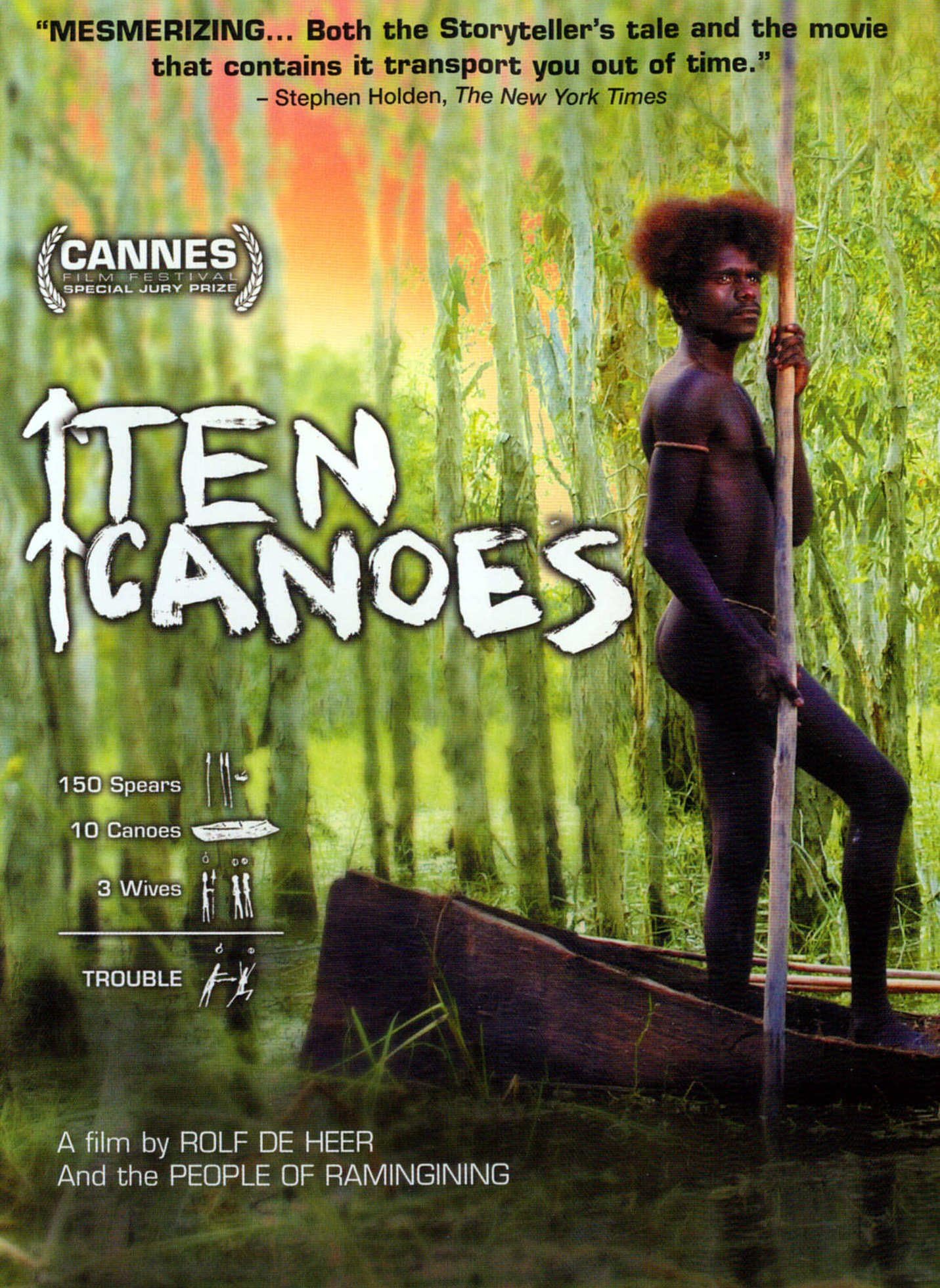
Product Description Bonus Features:Balanda and the Bark Canoes: The Making of Ten Canoes (12min) Aerial Map of Arnhem LandInterview with Peter DjigirrInterview with Director Rolf de HeerPhoto Gallery: Thomson Photographs RevisitedUS Theatrical TrailerStudy Guide (DVD-Rom) Review Ten Canoes, based on an ancient story from the Yolngu people of Arnhem Land, is just plain staggering. From first frame to last, it has a shimmering beauty, shifting easily between rich colour and luminous black and white, in a landscape that makes you feel humble, but its power goes deeper than that.Part of the reason that black culture remains so mysterious to white Australia is that we have no place within it, no vantage point. We're shut out, often with that sullen stubbornness that Aboriginal Australia has used for more than 200 years as the final - sometimes the only - form of resistance.Many white filmmakers have tried to penetrate it, with limited success, but it's rarely seemed totally convincing. Black filmmakers aren't necessarily able to get further inside, especially when the story concerns traditional culture.The result is that most Australian films about Aboriginal life have a distinctly furrowed brow, whether made by black or white directors. They're always about the "problem" of black Australia, rather than the more basic questions of who people are. Aborigines can never really just "be" in our (white) films; they're always a threat, an accusation, a regret or an ideal. There's not much chance for a real engagement when white guilt runs smack into black reluctance to reveal the private self.Ten Canoes leaps over all that in a single bound, with unlimited optimism. Rolf de Heer, probably our most adventurous filmmaker, has been through the guilt and accusation with The Tracker, a brooding and violent film in which he established a strong relationship with actor David Gulpilil. Ten Canoes is de Heer's attempt to get closer to traditional culture, and make a film that's a real collaboration, based on respect. I don't know what it took to achieve, but there's never been an Australian film quite like it. It's as if the people of Ramingining decided to give us all a gift, by letting us inside. We get a vantage point and the impact is extraordinary.The idea came from Gulpilil. De Heer has said that they had not yet decided what story to tell when Gulpilil told him: "We need 10 canoes." He then showed de Heer a photograph from legendary anthropologist Donald Thomson's 1936-37 expedition to eastern Arnhem Land, depicting a group of 10 men in canoes hunting for goose eggs in a swamp. De Heer says he took one look at the photo and agreed - they would need 10 canoes. --smh.comAnthropology and entertainment are marvelously married in Rolf de Heer's "Ten Canoes." The first feature in an Australian Aboriginal language feels authentic to the core as it tells a cautionary tale set 1,000 years ago. Sticking closely to the convoluted patterns of Aboriginal oral history, pic is rendered accessible by the English narration of a storyteller who jovially assumes the role of cultural tour guide. World preemed at the Adelaide Arts Festival, "Ten Canoes" looks set for a prestige fest passage and wide arthouse exposure. Local release is skedded for June 1.A venture into the challenging physical and emotional environments that have become de Heer's trademark, "Ten Canoes" reps another distinctive outing for the helmer of "The Quiet Room" (1995), "Dance Me to My Song" (1998) and "Alexandra's Project" (2003). For this multilayered morality play, de Heer has collaborated with the Ramingining Aboriginal community with the goal of representing a spoken art form dating back long before the continent's recorded history.In several respects, pic is similar to the Canadian Inuit feature, "Atanarjuat the Fast Runner" (2003), another first-of-its-kind native pic.Over glorious aerial shots of Arnhem Land in the Northern Territory, an eloquent narration defines the deep spiritual connection between the land and its inhabitants. Promising "a story like you've never seen before," the offscreen Storyteller (Aussie screen favorite David Gulpilil, billed here as David Gulpilil Ridjimiraril Dalaithngu) intones the staple "once upon a time in a land far, far away," then chuckles and says, "I'm only joking." Funny ploy allows auds to click into a different groove of tale-telling.Framing device shot in B&W -- inspired by photographs of anthropologist Donald Thomson in the mid-1930s -- is a canoe-building expedition led by old Minygululu (Peter Minygululu). Minygululu is aware that Dayindi (Jamie Dayindi Gulpilil Dalaithngu, son of David Gulpilil) has designs on the youngest of Minygululu's three wives and decides to set the youngster straight.Action switches to color as the old man recalls a tale about warrior Ridjimiraril (Crusoe Kurddal), whose younger brother, Yeeralparil (also Jamie Dayindi Gulpilil Dalaithngu), desired one of Ridjimiraril's wives.This story is just the tip of a large catalog of backstories, sidestories, detours and digressions, all fleshed out to make the lesson clear.While respect and understanding are uppermost, there's nothing precious about "Ten Canoes." Delightful humor includes various wives giving verbal stick to lazy husbands, the men joking about sexual performance, and a charming running gag about roly-poly elder Birrinbirrin (Richard Birrinbirrin) and his passion for honey.On-screen cast members are all first-timers. They perform wonderfully with little or no clothing (and zero self-consciousness) under de Heer and his indigenous co-director, Peter Djiggir.Gorgeous widescreen lensing by Ian Jones in croc-infested wetlands exudes the other-worldly aura of a Werner Herzog pic without any hint of travelogue. Rest of tech package is first class. --Variety.com Review: fascinating "art" film - Beautiful photography. Very nice way of telling a story taking place in a lost culture. Quiet and not very exciting in the modern world sense of action or dramatic films. I guess these make it an art film. It is not ethnographic in the sense that ethnographic would imply dissecting a culture in terms of the categories of technology, production, kinship, ceremonies, etc. that are the ways in which ethnographers commonly organized their note-taking. It makes a good effort at telling a story from the perspective of these particular aboriginals in a traditional frame of mind. Far, far from the old Mondo Cane anthro-exploitation films!! Other reviewers have given good overall views on the film. I especially appreciated the lengthy "making of" extra. It went into aspects of how difficult it can be to try to make a film with non-Western peoples and still be respectful of their cultural integrity and of them and individuals. I confess that I could not follow all the details, but the general nature of the challenges came through very well. All in all, if you are the sort of film watcher who is interested in people who are different from us in many respects and how they make a go of it, then you may well appreciate this. Watching it with a friend, she said that she was struck that they are not so different from us -- laughing at farts, penis envy (I did not see it that way), joking around, men attracted to women, women attracted to men, mostly cooperating, sometimes fighting, misunderstandings, and so on. I sort of took this for granted, but maybe that would be a value for some viewers. No matter how exotic these aboriginals might seem they are simply people coping with life. With very different lives than ours, granted, in a very different environment -- Australian swamps and forests. Review: A Wonderful Adventure to an Unknown Land - This is a wonderful film based on an ancient Aboriginal tale that is interwoven with a story from a 1000 years ago. Though it is in the old indigenous language of the northern Arafura Swamp it is surprisingly warm and funny as the universal humanity of the characters comes through. I hope it comes to the US and gets the attention it deserves. I was fortunate to be able to see it on a plane flying back from my trip to Australia in August 2006. So, even though I saw it on a tiny screen with earphones I was transported to a totally new time and place and completely absorbed in the film. Though the language, the customs and the setting were strange, the human desires, actions, humor and responses were so recognizable. It has a dreamlike quality that weaves a spell of enchantment... Thank you, Qantas, for giving me the opportunity to see this wonderful, special film.
| ASIN | B000S8CLSS |
| Actors | David Gulpilil; Crusoe Kurddal; Jamie Dayindi Gulpilil Dalaithngu; Richard Birrinbirrin; Peter Minygululu; Frances Djulibing; Sonia Djarrabarlminym; Cassandra Malangarri Baker; Philip Gudthaykudthay; Jamie Gulpilil |
| Aspect Ratio | 1.78:1 |
| Best Sellers Rank | #105,012 in Movies & TV ( See Top 100 in Movies & TV ) #1,055 in Foreign Films (Movies & TV) #16,305 in Drama DVDs |
| Customer Reviews | 4.3 4.3 out of 5 stars (114) |
| Director | Rolf de Heer |
| Is Discontinued By Manufacturer | No |
| MPAA rating | Unrated (Not Rated) |
| Media Format | AC-3, Color, DVD, Dolby, NTSC, Subtitled, Widescreen |
| Number of discs | 1 |
| Package Dimensions | 7.52 x 5.35 x 0.39 inches; 1.6 ounces |
| Release date | September 25, 2007 |
| Run time | 1 hour and 32 minutes |
| Studio | Palm Pictures |
| Subtitles: | English |
P**R
fascinating "art" film
Beautiful photography. Very nice way of telling a story taking place in a lost culture. Quiet and not very exciting in the modern world sense of action or dramatic films. I guess these make it an art film. It is not ethnographic in the sense that ethnographic would imply dissecting a culture in terms of the categories of technology, production, kinship, ceremonies, etc. that are the ways in which ethnographers commonly organized their note-taking. It makes a good effort at telling a story from the perspective of these particular aboriginals in a traditional frame of mind. Far, far from the old Mondo Cane anthro-exploitation films!! Other reviewers have given good overall views on the film. I especially appreciated the lengthy "making of" extra. It went into aspects of how difficult it can be to try to make a film with non-Western peoples and still be respectful of their cultural integrity and of them and individuals. I confess that I could not follow all the details, but the general nature of the challenges came through very well. All in all, if you are the sort of film watcher who is interested in people who are different from us in many respects and how they make a go of it, then you may well appreciate this. Watching it with a friend, she said that she was struck that they are not so different from us -- laughing at farts, penis envy (I did not see it that way), joking around, men attracted to women, women attracted to men, mostly cooperating, sometimes fighting, misunderstandings, and so on. I sort of took this for granted, but maybe that would be a value for some viewers. No matter how exotic these aboriginals might seem they are simply people coping with life. With very different lives than ours, granted, in a very different environment -- Australian swamps and forests.
D**O
A Wonderful Adventure to an Unknown Land
This is a wonderful film based on an ancient Aboriginal tale that is interwoven with a story from a 1000 years ago. Though it is in the old indigenous language of the northern Arafura Swamp it is surprisingly warm and funny as the universal humanity of the characters comes through. I hope it comes to the US and gets the attention it deserves. I was fortunate to be able to see it on a plane flying back from my trip to Australia in August 2006. So, even though I saw it on a tiny screen with earphones I was transported to a totally new time and place and completely absorbed in the film. Though the language, the customs and the setting were strange, the human desires, actions, humor and responses were so recognizable. It has a dreamlike quality that weaves a spell of enchantment... Thank you, Qantas, for giving me the opportunity to see this wonderful, special film.
S**T
great film
the film sucks you in, is not overtly political or philosophical. what might it have been like to live as one of the original australians? how might it have felt? the film gives you one detailed and nuanced vision of this. one of my favorites
C**E
Picture perfect.
An aboriginal telling of thier own legends. It is wonderfully portrayed and gives an insight into early and present-day aboriginal culture. Don't forget to watch the special feather on the making of the film. I enjoyed every minute and have gone back to watch it numerous times.
M**R
Ten Canoes
This is a wonderful movie. The actors are so natural...u can't help but fall in love with them..and the plot is great. After viewing this great film, I kept telling myself how alike we are...no matter what part of the world we may live in. Highly recommended!
R**E
Aboriginal Magic
"Ten Canoes" is an extraordinary movie about the indigenous Aboriginal natives from the Arnhem region of Australia. Learning is often passed along through instructional story-telling and at the heart of this tale is the story of an unmarried younger brother's lust for for one of the wives of his elder brother. As the men of the tribe hunt for goose eggs in a remote swamp, having to team-build canoes to carry them, they boast about their sexual prowess. The elder brother uses this opportunity to explain what happened to some of their ancestors when a younger brother also coveted an older brother's wife. So, this is a story within a story, filled with mystery, tribal rites, revenge, sorcery, and a beautiful untrammeled background. The bonus features are not to be missed. The movie was 2 years in pre-production and that they managed to make it is almost a miracle. For example as filming was about to start, one of the key actors disappeared; scenes between husbands and wives had to use actual married people and there were cultural norms and relationships that had to be honored. Even the skills required to make the canoes, once the province of every tribesman, had long been forgotten and only one cast member actually knew how to make the canoes (shown in detail as part of the movie). This will be a classic, remembered Australian movie. It is for those who value the unique and unusual, and not typical Hollywood fare.
D**D
Wonderful Movie (actual wonder is involved)
On my top 10 all time. The "making of" should be considered part of the movie. Wonderful cultural exploration.
P**K
Life in Australia
I bought this movie because I thought that it would be a good movie to show what life is like for the Aborigines. While it does a great job of showing what life it like for them. It leaves out a lot of the life issues that I thought it would cover. I would only recomend this movie to adults who were interested in how they go egg hunting.
M**D
An absolutely wonderful story, a must for all of us to see. Provides insight into the amazing Aboriginal culture.
H**R
Slow-moving (I watched some at 2x speed), but superbly interesting. This film seems to me to give a flavour of hunter-gatherer lives of humans way back. The people seem to - have a lot of time; no rush, no deadlines, no trains to catch - to be comfortable in their own skins - to be close to laughter most of the time: more than we are. The extra feature interview with Rolf de Beer about the making of film is also fascinating. It showed me something about how the culture of a group of humans is an important lifeblood for them; without it the are weakened and their life force seems to ebb away. Seeing such a different culture caused me to reflect on how we also are in a culture, that we have little or no perspective on, but which is there and probably does have many odd and non-logical parts to it (e.g. why adulterous politicians have to go in the career naught corner for 18 months).
M**N
Lleno de sabiduría y humor sutil, merece la pena tomar el tiempo para adentrarse en otras culturas de la mano de esta cinta sensible y hermosa.
S**E
Die Darsteller des Films sind zwar Aborigines und die Handlung spielt in Australien, aber was hier zu sehen ist, kann man gut als eine Episode aus der Urgeschichte der Menschheit allgemein betrachten. Es gibt viele gute Dokumnentationen, die sich mit "Steinzeitmenschen" befassen und dabei ein besonderes Augenmerk auf die technischen Möglichkeiten dieser Zeit legen: Beschaffenheit der Behausungen, Waffengebrauch, Nahrungsbeschaffung, Jagdmethoden. Aber wann wurde je beleuchtet, was die Frühmenschen in ihrer Gedanken- und Gefühlswelt beschäftigte? Hatten die sowas überhaupt? Der Film bietet eindrucksvolle Antworten, vor einer atemberaubenden Kulisse und ist damit unbedingt sehenswert. Ein Punkt Abzug wegen der manchmal bei hellem Bildhintergrund schlecht lesbaren hellen Untertitel.
W**A
I saw this film on the Qantas flight from Singapore to Perth for my second visit to Australia. It was a true pleasure to view the Arnhem swamplands, listen to the Ganalbingu language and learn what could matter in the small society when basics were important, at least mostly. The actors, each of them, do excellent studies of their parts. Then it also show how to perform, among several others, making of canoes with ancient technique. I wish it will reach out to a large unbiassed and unprejudiced audience with ability to realise it tells a story which touch on our origin as humans wherever we come from / which land we belong to.
Trustpilot
1 month ago
3 weeks ago