How to Diagnose and Repair Automotive Electrical Systems (Motorbooks Workshop) [Martin, Tracy] on desertcart.com. *FREE* shipping on qualifying offers. How to Diagnose and Repair Automotive Electrical Systems (Motorbooks Workshop) Review: Probably the best book to start with - I found this book after searching for the book that got me started about 20 years ago in electrical diagnostics and after finding it figured I would give it a review it’s a amazing book for entry level technicians working on 12-24 volt dc systems found in anything from a car to heavy equipment. It really breaks down some tests and components in glossy easy to understand color photos. This was one of the books that led me to a career of electrical diagnostics that now has me working as an instructor for caterpillar. I would recommend this book to anyone interested or struggling with interpreting electrical fundamentals Review: Excellent overview of automotive electronics - With only a few years into my career as a professional mechanic I purchased this book to further my overall knowledge of electrical systems. The book is extremely well written, the author conveys the usually intimidating world of electrics into common language. The book effectively explains electrical concepts both scientifically and in practical real world situations. Additionally the drawings and diagrams reinforce the themes far better than any other automotive text I have read. This book rivals the general electrical repair texts offered by manufacturers. Definitely worth a read for both the hobbyist or professional.
| Best Sellers Rank | #166,233 in Books ( See Top 100 in Books ) #20 in Automotive Electrical Systems #38 in Automotive Testing & Certification #95 in Automotive Engineering (Books) |
| Customer Reviews | 4.6 4.6 out of 5 stars (771) |
| Dimensions | 8.3 x 0.5 x 10.8 inches |
| Edition | Illustrated |
| ISBN-10 | 0760320993 |
| ISBN-13 | 978-0760320990 |
| Item Weight | 2.31 pounds |
| Language | English |
| Part of series | Motorbooks Workshop |
| Print length | 160 pages |
| Publication date | November 10, 2005 |
| Publisher | Motorbooks |
A**R
Probably the best book to start with
I found this book after searching for the book that got me started about 20 years ago in electrical diagnostics and after finding it figured I would give it a review it’s a amazing book for entry level technicians working on 12-24 volt dc systems found in anything from a car to heavy equipment. It really breaks down some tests and components in glossy easy to understand color photos. This was one of the books that led me to a career of electrical diagnostics that now has me working as an instructor for caterpillar. I would recommend this book to anyone interested or struggling with interpreting electrical fundamentals
J**N
Excellent overview of automotive electronics
With only a few years into my career as a professional mechanic I purchased this book to further my overall knowledge of electrical systems. The book is extremely well written, the author conveys the usually intimidating world of electrics into common language. The book effectively explains electrical concepts both scientifically and in practical real world situations. Additionally the drawings and diagrams reinforce the themes far better than any other automotive text I have read. This book rivals the general electrical repair texts offered by manufacturers. Definitely worth a read for both the hobbyist or professional.
O**L
Excellent book!
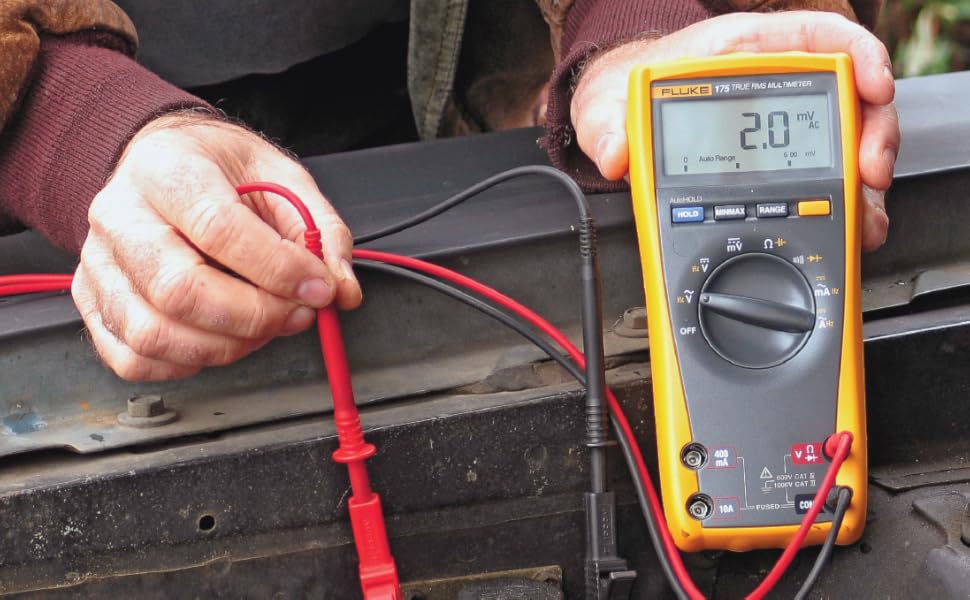
This is an excellent book that is ideal for someone new to automotive electrical/electronic systems and even someone like myself who has worked on cars for decades but can use a good review of these systems. The pictures and illustrations are so clear and colorful that they are almost stunning when you open the book. In fact, they are the best photographs and illustrations that I have ever seen in a book of this type. They are large and beautifully clear and the pages are of very high-quality glossy and thick paper. I was a bit surprised by the amount of information about old electrical systems with distributors, points, generators, regulators, etc. But that's OK and someone working on a older car may find it to be a plus. However, many people may have little or no interest in the older systems and a unusally large percentage of the book is devoted to long obsolete systems. I would suspect that most people would prefer that the book emphasized modern electronics more. Don't get me wrong: The book does cover modern systems but I would say at least about 1/2 of it is about old systems. Also, know that this does not cover OBD systems at all but I'm actually glad that it doesn't because that's a subject in itself. (I bought the two most popular books listed on Amazon about OBD systems on Amazon and I found the Haynes book to be, by far, the better of the two. I have written a review of both of them. The Haynes book would be a perfect companion to this book.) One funny thing that I noticed is that, in numerous pictures in the book, the author is shown using a DMM set to read AC voltage when he is reading a DC circuit. In fact, I don't know how he even got a reading on his meter as shown in the pictures. It's a small thing but it's funny that the author didn't catch that. This book will be an excellent resource for me and I think others will find it valuable too. It's well worth the money.
I**D
Works for Me!
I rattle my tongue for Tracy Martin & this book. It doesn't talk down to the reader, nor does it assume we know anything (or worse, everything). It's written so we can skim through what we know, get on to what we need to learn, & not miss anything important. It's thorough, too. I have been a ham radio operator for decades. Been mechanicking for more decades (since I was 13, when my uncles insisted I learn or go stay with 'the women' - what a no-brainer! Learn interesting stuff or not!) BUT.... I've always had a problem fixing automative electrical glitches. Just could not figure out how to isolate the problem area so I could fix it. This required waiting on some man to get a round tuit. An exercise in patience & frustration! Not for this grandma to do. Enter this book. I've had a problem with the right rear light on an 83 Chevy pickup for awhile. Bad ground/socket/broken wire? Couldn't fix it.. Until now. I was up to running new wire from one end of the pickup to the other. With this book, I found the problem & fixed the darned thing. Then to attack the gauges. I put in a set that worked fine in an 81 Chevy.. but wouldn't work here. Bad fuse? No. Then what? Now I know. As soon as the temperature in the great open-air garage rises to 'tolerable', I'll fix them. Look out world, here I come! With working tail lights & gauges. Waaay cool! Wopila tanka, Tracy / Strong thanks, Tracy!
R**.
Okay
Great buy
K**H
This book taught me alot
Scotty Kilmer recommended this book in one of his video's (Biden is Going to Make This Illegal Next Year) I orderd the other book also in the video along with the test light and an OBDII XTOOL D7. If you're like me you need to read this book very carefully as much important information is presented in the text and you'll miss it if you gloss over the pages. After I read it once I realized I needed to review the information again as electrical diagnostics does not come naturally to me. The authors 40+ years of electrical diognostic knowledge is presented through explanations of electrical diagrams, test equipment and rudementary theory. But hidden in those explanations are the test sequences and procedures that you will follow to run down a short or electrical problem. To understand how to solve electrical problems you need to think like a Mechanic would and that is logical system analysis which is required to identify the issue. For instance, in the book a simple circuit is diagrammed with a relay in it. It explains how to find a short or failure in the circuit based upon what the relay is turning on or not turning on. Because electricity is invisible we can only deduce what has failed by the process elimination and this book explains the process. Carefully read the explanations to see the logic Electricians follow. I hope this review helps.
P**L
I liked that the book is clear and straight to the important points quickly!
A**H
not a lot
J**X
Estoy estudiando un grado superior en Automoción en el que también se da la asignatura de electricidad de vehículos. Compré este libro porque me encanta esta materia y también me gusta leer en inglés. Explica muy bien las cosas y todo con un lenguaje sencillo. Compraré más libros de esta editorial.
G**.
I've always been interested in cars and have tried to do as much of my own repairs and maintenance as I can. One aspect of my knowledge I've always thought a bit lacking was auto electrics. So I decided to improve this. I know the basics and I watch stuff on Youtube, some of which is helpful, some not so, but I've always liked books. Perhaps this is a generational thing (I'm over 60). So I searched on Amazon for an appropriate one and came across Tracy Martin's. Not expensive and not overly complex. Not a stuffy academic treatment of the subject. Just a good guide to the common sense basics. The book itself? It's softback, 160 pages with colour photographic and diagrammatic illustrations throughout. In fact every page has atleast one. The diagrams especially are clear and in a visually attractive style. He starts out explaining basic electrical theory (D.C.), basic electrical circuits (series and parallel) and Ohm's law. Then in chapter 2 he explains what I think the most valuable electrical test one can know, the voltage drop test. Chapter 3 he covers basic electric testing equipment such as the digital Avometer, test light, battery testers and oscilloscopes. All explained clearly and succinctly. In chapter 4 he covers batteries. Chapter 5 covers charging systems (dynamos and alternators) including basic A.C. and starter motors. In chapter 6 he covers modern electronic ignition systems after going through the old type contact breaker system. Chapter 7 is devoted to modern electronic fuel injection systems. Chapter 8 covers wiring diagrams and finally chapter 9 goes over troubleshooting techniques. Throughout he assumes you know very little and then takes you from the absolute basics through to a deeper understanding. I have learned an awful lot from this little book and was even inspired to upgrade my old digital multimeter with a more modern clamp ammeter type. I would strongly recommend this book to anyone with little knowledge of basic auto electrics but who is motivated to know more and also to someone with more advanced knowledge who wants a succinct refresher and new look at the subject. If the latter then one can just delve into any chapter where one feels the need to improve one's knowledge without reading from the beginning. However, if one is a relative newcomer to the subject then reading from beginning to end will definitely help your knowledge and skills, helped in no small measure by the author's easygoing almost conversational style. My one slight criticism, and I am being niggly, is that it is an American book and the cars and manufacturers given as examples may not be familiar to a UK reader. But the principles of how their electrical systems and components work are identical. For the price of a couple of pints of beer a great buy!
J**C
Si on retire le blah blah théorique la publicité masquée pour du matériel, il reste quelques bonnes idées et des illustrations clairs. Cependant je pense qu'on aurait pu attendre plus de densité dans les informations.
Trustpilot
2 months ago
1 month ago