Desertcart purchases this item on your behalf and handles shipping, customs, and support to Philippines.
โ๏ธ Charge smarter, roam freer โ your portable power revolution starts here!
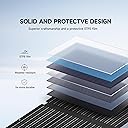
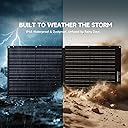
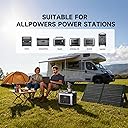
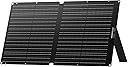
The ALLPOWERS SE100 is a 100W foldable solar panel featuring high-efficiency monocrystalline silicon cells (23%-25% conversion rate) and a robust 4.8A output current. Its lightweight, foldable design with an adjustable kickstand and IP68 waterproof rating makes it ideal for outdoor enthusiasts and emergency backup. Compatible with 12V/24V systems and ALLPOWERS solar generators, it offers versatile charging options and parallel wiring to reduce shading impact, delivering reliable off-grid power wherever you go.


| ASIN | B08DKTZY7G |
| Amperage Capacity | 4.8 A |
| Best Sellers Rank | #45,591 in Patio, Lawn & Garden ( See Top 100 in Patio, Lawn & Garden ) #221 in Solar Panels |
| Brand | ALLPOWERS |
| Brand Name | ALLPOWERS |
| Connector Type | USB |
| Customer Reviews | 4.2 out of 5 stars 2,028 Reviews |
| Efficiency | 23%-25% |
| Included Components | 100W SOLAR PANEL |
| Item Dimensions L x W x H | 41.3"L x 23.1"W x 0.12"H |
| Item Weight | 8.8 pounds |
| Manufacturer | ALLPOWERS Industrial International Limited |
| Manufacturer Part Number | AP-SP-026-BLA-US |
| Material | Polycrystalline Silicon |
| Material Type | Polycrystalline Silicon |
| Maximum Power | 100 watts |
| Maximum Voltage | 20.8 volts |
| Model Number | SE100 |
| Number of Items | 1 |
| Output Voltage | 18 volts |
| Product Dimensions | 41.3"L x 23.1"W x 0.12"H |
| Special Features | Portable |
W**D
Low output (34 watts) for a supposed 100w panel
While I like the size and weight of this portable solar panel, and I appreciate the MC4 connectors, I am not happy with the product. I have tried several methods to get more than 34 to 36 watts from it, and have been unsuccessful. I have used two different goal zero Yeti 400 units with below 50% charge in them. Neither can get more than 34 watts from this panel. (They routinely charge off a rooftop mounted 100w panel at over 70 watts so I know how they perform with other 100 watt panels.) I have also tried a separate automotive charge controller on a slightly discharged car battery, and was only able to draw 2.5A at 14.3V, so again not quite 35 watts. All of this testing was done on a clear day, low humidity, at about 3000ft elevation over the course of a month when conditions allowed. So I am not really happy with this portable solar panel. Maybe only one panel is working? Maybe the panels are of low quality? I don't know, but I suggest you try something else. UPDATE AUGUST 2024 So get this! Allpowers contacted me. The nice representative asked me to perform some basic tests (simmilar to what I had done previously which led me to my previous review). After two or three emails to verify the test results, I was asked to render the defective panel useless my cutting the MC4 output cords, and in return, they would send me a new 100w unit. About a week later, I did indeed receive a new replacement panel. When testing the new panel to charge a mostly depleted Yeti 400, I was able to get nearly 80 watts on output on a hot summer day. That's totally acceptable for a folding panel that is this lightweight and portable. Thanks Allpowers!
B**T
Great value, works with Bluetti EB55 if you purchase another adaptor
I wish I could give this 4.5 stars because this is a great value that does what it is supposed to, but isn't as universal as some may think. For the record, this review is as much information sharing as anything. 2024 UPDATE: More details on watts produced TL;DR: Works with Bluetti power station but you need to buy an XT60 adaptor or use the cables provided with the power station if you have them. Panels are wired in parallel which is good for partial shade. Was able to get 60W in less than ideal situation so you can charge a 500Wh power station throughout the day. Best output watts I have seen is ~80W Good value, but not flawless. I bought this for $125 to use with my Bluetti EB55. I didn't want to pay $500 for 200W panels from the manufacturer, but wanted a bit more than what the knock off 100W panels offered. This was a good compromise. Despite having lots of different adaptors in the box, I had to purchase an Anderson to XT60 adaptor to get this to work on my unit. Allpowers provides a barrel plug that fits the input for the Bluetti, but that particular jack requires 20V to work and this panel wasn't able to provide it. By going with the Anderson to XT60 (I originally thought they were the same thing, but they are not), I was able to get things working. (Edit to add: I later realized my power station came with the cables needed.) Two important details about these panels that are worth noting: crystalline structure and parallel vs series wiring. First, these panels use polycrystalline silicon instead of monocrystalline like some of the more expensive models. Essentially it is a bunch of small pieces instead of one big one. People talk about mono being more efficient, but in my experience that has more to do with surface area required than with anything else. Since poly is cheaper, if you want to save a few bucks you can use it, but you will need slightly larger panels to get the same wattage. But if you are purchasing based on output and price, it doesn't matter. The second item is related to how the individual panels are wired -- either in series or parallel. Without getting too technical, if a multi panel unit like this one is wired in series, then if one panel is partially 50% shaded then the overall output will be 50% less even if the other panels are in the full sun. However, if say a 4 panel design is wired in parallel, and one panel is 50% shaded, your output power will only drop by about 12.5% if all the others are in full sun. These panels are wired in parallel which is great and something I was originally worried about. Now let's talk about output. It is winter here as I am reviewing this. The sun never gets very high in the sky, it is hazy, the days are short, and since I live in the woods, everything has at least some shade from leafless branches. It is close to worse case scenario for a "sunny day" I will encounter. In these circumstances I am about 60W just setting things up quickly and not being too particular about alignment. 60W out of panels advertised for 140W doesn't sound very good, but it was much better than I was expecting given the circumstances. Since the EB55 is 537Wh unit, I know that even in less than ideal situations, this will be enough to charge it over the course of a day. UPDATE: Running these in full sun near the solstice at mid day, I was getting outputs of around 75-85 watts, so that is what I am using for best case scenario. Given that ~500Wh power stations cost $500 on their own, I was not eager to basically double that amount to add solar functionality. I am very pleased to be able to recharge every day while spending less than $150. Since this is technically a review, let me drop a few other quick thoughts on the unit. - There are lots of adaptors you can use that come with the panel, but don't assume that just because it fits it will meet the needs of your device. - The alligator clips they include are basically useless since it can be dangerous to try and charge a battery without a power control unit. - The USB controller is nice and having it work with USB-A and USB-C is a perk. Can't really think of a situation where I would bring this but not my Bluetti, but still a good perk. - The pouch is nice to have to keep all the wires. - I like that if I decide I do need more power, I can buy another unit and wire it together with this one. - It is a bit heavier and bigger than expected, but not burdensome. Final verdict: Great value if you want solar charging and can work around the limitations.
G**E
Good Value & REAL WORLD OUTPUT, Vs. Rated Yes it makes 200 Watts But Useful 12
Panels, especially folding ones, never meet my expectations as far as output, until I realized REAL WORLD output and RATED POWER are two different things. This applies to ALL PV (Solar) PANELS not just All Power. More below but first the overall impression. ALL POWER comes with a good variety of useful accessories and the design is good, quality is very good for price. I got it for $239. That is a good price compared to other brands that may cost $400-$800. Are the other brands better? IDK? You would expect more for the price, but not necessarily. The fold out kickstands works well. I like how they have a pocked for the panel output cables and accessories YES the power cables leads are short which is fine with me, so the cables can store in pocket.... They use high quality cable and connectors. I have extension power cables so my devices are in the sade... panel in sun. RATED POWER - The big variable besides sunlight hitting the panel, no shade even just a corner kills output, aiming the panel at sun, how hot the panel, is what is the panel connected to. What are you trying to power (Load/Drain). Typically it is a battery you are charging to provide power to the devices you want to power. More accurately it is a BATTERY CHARGER or battery controller you connect the panel to. Sometimes those are a discreate device, other times integrated in a POWER STATION with the battery. Not all controllers love DC power direct from a PV (Photovoltaic) Solar Panel. Some battery charging controllers are optimized for one solar panels but may not be optimal for another brand of solar panel. Does not mean the panel is bad, just mis-matched. Spoiler Alert, ALL POWER does meet it's rating 200W, but for my actual usage I could only extract about 125W for my application. This is normal. I compared All Power to two 100W high end ridged panels (big and heavy) in parallel, they do the same thing in my application. Although the ridged panels consistently had about 10% to 12% more Real World output. Not a big deal. The point being both panels did not make 200W in my application... but both tested to their rated 200W. RATED POWER... How to measure. In strong full sunlight mid day w/ panels angled right at sun, using a volt meter check open voltage. This is with no device connected. You will see 20V give or take. Then check shorted amps, with an Amp meter able to measure at least 12 Amps DC (you can do this in series with meter leads or clamp on DC Amp Meter). I measured 20V open and 10.18Amps Short. (NOTE WHEN YOU SHORT THE + and - YOU WILL GET A SPARK. IT IS OK). ALL POWER, 203.4 Watts under the conditions it was tested under... However when connected to REAL WORLD load the actual power it is normal to get less Wattage due to mismatch with controller and that solar panel design. I DO NOT KNOW if $800 panel similarly rated will do much better. I would hope so, but who knows. My application is a 500W POWER STATION to run a 12V Frig/Freeze when camping. The Frig in moderate outside temps can run 24 hours on the Power station, about 24Watts an hour. The charge controller in my power station LIKES 24V, and limits charging to 125 watts (to protect the internal batteries). Voltage can be from 12v to 30v but anything under 20 volts the charging drops off. I tried to charge the power station off car's 12v jack (13-14v) and it was pathetic. So it is not all the Solar panels fault. Most panels open circuit make 20 volts, but under load the volts drop to 14-17 volts... this is normal and some charging controllers don't like lower voltages. *That is why I use a boost converter to charge my Power Station from Solar panels.* TIP I USE A BOOST (bucking type) Converter to get voltage to 24V regardless of input voltage (output from panels). The panels are going to be well below their OPEN voltage, often in 15v-17v range. Better more advanced (expensive) power stations may be more flexible. So my charger sees 24 volts and at what ever the current (Amps) are and charges most efficiently. If there are clouds and panel drops too low the booster drops out and you are no longer charging. It really is great in that with low morning or late afternoon light it continues to charge without dropping off as it does when panels are directly connected to Pwr Station. My Renogy 2x 100W panels behave in a similar way with this power station as the All Power panel. Some combination of power station and panels do better than others. SIDE BY SIDE COMPARISON WITH ALL POWER (portable folding) and TWO Ridged 100W Renogy panels in parallel. The Renogy panels were better, typically 12% give or take, about 9 to 12 watts more. This is to be expected being ridged panels. But ALL POWER surprised me and did better than I thought. I had other 200W folding panels and they could only muster 80W... All power was doing 117W. NOTE One advantage of having two 100W panels (Renogy) is you can put them in series and double voltage and cut Amps in half saving "IR" loss. The HIGHER VOLTS the LOWER AMPS for same POWER (watts). This means less loss over extension cable. I have long extensions (V x Amps = Watts). This is why the power grid bring power to your home is very high volts like 100,000 volts, but AC. I have another converter or BUCK converter to take the 38volts from the Renogy panels in series and drop down to 24 Watts (ideal volts for my Pwr Station controller). My power station is limited to 30V max. I can not run the two panels in series directly. So I have a BOOST converter and a BUCK (or drop down) converter. Note you can run to ALL POWERS in parallel and get more power (double). SIZE MATTERS... Clearly stored the ALL POWER is a winner. It is about 25" x 20" folded and fairly thin. However unfolded it is 25" x 80" = 2000 sq-in or 13.8 sq-ft it is large.... The ridged Renogy 100W panels size are 41"x 20" = 820 sq-in each, 1640 sq-in for two, or 11.4 sq-ft. However when the two Renogy panels are stored in their cardboard shipping box, it is awkward and heavy to move. The Renogy panels are about 1.5 inch thick, so two in packing box is about 5" deep. The thickness of the All Power panels are thin. However not too thin they are too floppy. The All Power I think is about 10 lbs less than th ridged Renogy. Add a handle, less weight, thin compact the All Power is easy to move around.. However folded out the ALL POWER IS BIG... The KICK Stand is nice. In wind take care it does not blow down or away. People expect to ALWAYS to get rated power no matter what. That is of course not possible. In fact it is unlikely you will ever get more than 50%-70% unless everything is optimal. Besides the mismatch between battery charger I explored above, obviously sunlight can be filtered (cloudy), panels not ideally aimed at sun, hot temperatures, all produce less power than rated. However if testing the panels under standard testing criteria, they produce rated power, current, volts. However real world is not test conditions. ALL PANELS DO THE SAME THING. I need to generate about 500 watts per day to keep my good sized portable 12V DC refrigerator/freezer running by charging the battery station fully before sunset. I can expect to make that over a 8-10 hr sunny day easy and then some. Overnight, say 12 hours my Frig uses about 250 watts. I need to keep the Rrig running and charging battery (250W + 250W = 500W) throughout the day before nightfall. 200Watt panels that make 120W to 140W real world with no clouds is plenty. However if cloudy more panel may make the difference. I tried to lay them flat on roof luggage rack. It was marginal. Angling them makes a huge difference. Also on marginal day bigger or more capacity panels helps a lot. I found a sweet spot for my camping Frig, but you never can have too much power. I would do well to get more panels and1000W power stations but price and weight goes up significantly. Right now I am good enough and still have room to spare for charging phones. HOT DAYS AND 12V FRIG. Last time I was camping a full week it was mid 90's, I was using much more power (Frig running much longer due to not getting to set temp during peak temp of day). I had to run the Regurgitator at 38F verses 32F so it ran a little less. Drinks are still cold at 38F, especially when it is in the high 90's. Also even though set at 38F it is colder at bottom of Frig is close to 32F. Guess where the beer went?
S**G
Fantastic light and portable solar panel
This thing is light and folds into a neat package with a zippable container to store wires. It uses velcro for easy opening and closing. It's surprisingly light. I've had other solar panels before that were heavier for the same wattage. It charges devices excellently. I plug it into a small Allpowers battery. It usually keeps it topped up on sunny days. Sometimes, I plug devices into the USB slots and that works fine as well, though it reduces the wattage to the battery (as expected). I have not tested it on any other battery besides the Allpowers one, so I don't know how well those would work, but I don't really need any additional functionality for my purposes. The maximum power I got out of it was 54 watts. It's advertised as 60 watts, and I think it would be possible if it were angled in exactly the right way, but 54 is pretty good. Most of the time, it's between 10-15 watts in dawn conditions and 35-50 watts in full sunlight. The reviewers saying the 60 watts is false advertising probably have defective units or wires, because it works fine for me. The foldable nature makes it very portable but at the same time, makes it a bit hard to angle the entire panel properly. More often, only half will be angled correctly. This isn't a problem with the design but just something inherent in folding 6 panels instead of 2. I never found this to be a problem. It also has straps for attaching wires or carabiners, but I never had a problem just leaving it on a floor or roof, and sometimes angling the top half towards the sun if I really need to. Cleaning dust from it is a breeze. Just wipe it with a wet towel. It's easy to keep the water away from the electronic bits. In summary, this is a fantastic piece of tech and hasn't failed me yet.
M**O
Discrepancy
I purchased the 140W Allpowers solar panel about a year ago, and it worked fine for my needs at the time: camping, re-charging portable generators, cell phone, laptop, etc. I use a powered telescope, and with it the portable generators and laptop. Suffice it to say that the 140W solar panel was adequate. HOWEVER, it is about a year later, and I needed to buy a larger battery pack or generator I could run at night while camping. Hence, I needed more power to recharge said generator/battery pack Seeking affordability, I once again bought the Allpowers 140W solar panel. And then . . . it began. I could see on my batter pack, a Generac GB1000, that my input wattage from a single 140W solar panel was 40W, varying and fluctuating, but also increasing as the day progressed. Prior to connecting the solar panel(s), I measured voltages of each, one panel at about 21VDC, and the other at 20.3VDC. I connected them in series, and measured 38VDC at one point, and then 42VDC at another. I'll chalk this up to the saturation of the solar cells as the day progresses. But to charge the Generac, the specs on the Generac say that the max voltage to charge the Generac is 28VDC. Therefore, charging with the solar panels in series is a no-go. Hence, I had to connect them in parallel, in which case, I measured voltage at 20.2VDC. Connected to the Generac in parallel, the input power indication is 67W, going as high as 77W, but generally holding at 67W. So that's 2 x 140W solar panels in parallel measuring at 67W input to the Generac. Total power, however, with 2 x 140W solar panels should be 280W. However, reading the specs on Amazon for the Allpowers 140W solar panel, they indicate 140W Peak Power. So taking 140W peak power and dividing that by the square root of 2 gives me about 98.99W. So, 67W compared to 98.99 is 67% of that power OR: let's take 67W and change that to a peak value: 67W x the square root of 2= 94.75W. So 94.75W x (100/280) = 33.84% of the rated power with 2 x 140W panels in parallel. Now let's take the 40W value from a single panel, and change that to a peak value: 40W x the square root of 2= 56.57W. So, 56.57 x (100/140)= 40.4% of the rated power of a single panel. Whether we use percentages, or just what we see in the measurement of power, the 140W Allpowers solar panel is not producing 140W peak power. Indeed, there are variables to consider, such as placement of the panels with relation to the sun. Maybe the lead engineer in research and development at Allpowers was having a bad day and happened to be using a broken calculator. Maybe quality assurance at Allpowers doesn't have a strict testing protocol where the outputs are measured. I don't know what the test conditions were in designing or how the manufacturer arrived at 140W peak power, which by the way, is an easy defense for them if one doesn't know how to arrive at these numbers using the right calculations. Just based on my voltage measurements, power indications, and calculations, the Allpowers 140W solar panel is NOT as advertised, and hasn't come close to producing the rated peak power. Take what you will from it, be your best self, do you, and make the decision that works for you. As for me, even if a $1k solar panel produces the advertised rated output, I couldn't afford it anyway. This particular solar panel has been adequate to my needs, albeit OVERRATED and with that, probably OVERPRICED. And in case you're wondering, I have a background as an electronics test technician for aerospace, a background as a robotics technician, a former electronic technician in animation and production, and I am currently an electrical test technician in power utilities (just in case Allpowers has a need to know).
A**Y
Solar charging at a fantastic price!!!
I bought three sets of these panels. So, how well did I do? Likes: โ the briefcase material is of good quality, washable, and seems durable โ the stitching on the handle is very good โ the handle may not be top of the line, but it is of decent quality and should last โ the panels open and close easily as they have a quality button system โ a pouch which closes with Velcro is incorporated on the back for the cable โ the cable is MC4 โ the panels offer water resistance โ also included is a MC4 to 5.5x2.1mm cable โ also included is a MC4 to Anderson cable โ the price point is excellent โ performance proved to be excellent during the tests that I ran (see below and watch video) Dislikes (not a big deal especially if incorporating them would increase cost): โ no kickstands or alternative system is in place (while I am not a big fan of kickstands since they do not offer an adjustability feature, they do come in handy in many situations) โ grommets for hanging the panels are not used โ the fabric hanger loops may or may not last Specs: VOC = 22.4 V IMP=5.4 A Test Results: October 24, 2020: sky condition was sun with clouds (peek-a-boo) and temperature was 84 degrees, time 11:00-11:30 am Panel #1: 19.3 to 20.9 V, 2.8 to 3.6 A Panel #2: 20.8 V, 3.5 A Panel #3: 21.8 V, 5.21 A November 3, 2020: sky condition was no clouds, temperature was 73 degrees, time was 11:15 Panel #1: 19.5 to 19.79 V, 4.95 to 5.33 A November 4, 2020: sky condition was partly cloudy, temperature was 77 degrees, time was 11:05 to 11:40 am (this test was video recorded) Panel #1: 17.0 to 19.9 V, 5.27 to 5.63 A Panel #2: 19.4 to 19.7 V, 5.38 to 5.47 A Panel #3: 19.5 to 19.9, 4.95 to 5.27 A Panels #1, #2, #3 connected in series: 59.3 to 59.4 V, 5.19 to 5.22 A These panels have met my expectations and I am very happy with their quality and performance results. The price point was the first feature that put them on my radar and research list. Their quality and performance is what is keeping them in my emergency preparedness arsenal. I do not have any doubts that they will perform well when charging my power stations.
J**G
Not the best in shaded conditions. Jury out on durability
I think the cost of this panel is too high. You can find it on sale quite often. However, price should be cheaper. Just my opinion on that topic. I like the folded size. Convenient to carry. Unfolded it does become cumbersome when trying to set to a better sun angle. Laying flat is probably the design of this though. I have had this about a month, used about 15 times while the rest of the time its stored in my car. I have already noticed quite a bit of fraying in one or two of the folds. I will monitor to see if it becomes a bigger issue down the road. The panels are somewhat rigid so you definitely need to be careful when moving or laying this panel on any bumps or objects. I I will monitor this as well as I try to lay it on my car windshield to improve sun angle, which can stress the two middle panels I have gotten decent wattage so far in the fall months. Maxed at about 340 watts. This does mean moving the panel around to try to get a better angle to the sun. It can be clumsy when doing this and does not have a lot of support to get ideal angles. Laying flat has been the easiest setup. Just laying it out and see what I get. Current conditions November in NE USA laying flat I get about 160 watts. I believe I will do much better in late spring and summer months. I have noticed in partial shade conditions, that the wattage decrease is significant. Even when a single panel is shaded, this decrease occurs. It can cut the output by 50 percent. Overall, this appears to be one of the better portable panels I have used. Time will tell if I can get full wattage output and the durability. I will look to update this review after a few months
P**R
100 watt AllPowers Portable Solar Panel
Update: Ecoflow 768 WH at 32% this morning. Panels putting out 147 watts between the two shows 3 hours to full charge. When the panels are initially connected and still cool the output between the two is roughly 170-187 watts. As soon as these panels warm up the output drops consistently down to 147-155. Do not expect to get 100 watts per panel. I'm retired, in no hurry to go anywhere and have the advantage of the Arizona sunshine. 3 hours from 32% to 100% on my Ecoflow is fine, but if you're solely dependent on your SoGen for whatever reason, and stealth camping or in less than ideal sun conditions, spend a bit more and get a rigid polycrystaline or monocrystaline panel. They are less affected by heat. Otherwise, I am still very pleased with this purchase. I bought these because they were 100 watt panels for $79 and they are compact and portable. The Ecoflow 110 watt panel is $169. I am currently getting between 80-85 watts out of one of these folding panels. When I connect a Y to them I feel confident that I'll get a minimum of 160 watts between the two panels. My Ecoflow River 2 Pro 768 wh unit was at 40% s.o.c. when I connected the 1 panel. After ten minutes in the sun, in Quartzsite Az it had increased by 4%. Not bad for an inexpensive folding panel. Also, some folks were wondering if these have a support leg? Mine did come with a fold out leg on each panel, a pocket to store cords in and a very rugged Velcro flap to secure the panels. Connect the lead wire to the panels, then to your sogen before opening them to the sun. Very pleased and will update in a month.
K**G
High Value, Low Cost Solar
I bought this portable, foldable, light weight panel with some fear. So many times things are priced frugally for a reason and that reason is poor workmanship and with lower value materials and the product doesn't do as advertised. I was pleasantly surprised upon receiving this panel. -Had two stands, one for each panel. -had the connectors I needed -light weight -small -easy to fold MOST IMPORTANTLY: It gave me between 43 Watts(clouds, not optimal setting) and 105 Watts(full sun at noon directly on panel) on my Bluetti 150!!!! I was worried that the voltage produced by this panel wouldn't be high enough as this Bluetti unit requires Open Circuit Volate of 16 but it worked marvelously. Success! I was so excited when I saw those numbers jump from 43 upwards. It gave me consistently 86 watts over a longer period of time. This is my first time using solar and I'm still awestruck at technology. The sun rays....being captured by this panel....and storing it in this cool box.... and I can then use that box to run all sorts of electrical devices....and it costs me nothing after the initial investment.......what a world... I ordered another panel and might even get a third. Edit: Bought a second panel and it works just as good as the first! I put it in series with the first and received double the watttage as hoped for. It hit up to 205 Watts! The average was about 182 watts during peak sunlight. I'm very happy with both panels. So simple to put in series as well.
N**N
Worked as expected for emergency use. Saved a bundle!
Finally used this recently during 3 day power outage with Ecoflow Delta Pro and it worked flawlessly. Overcast day, but was getting around 240-280 from what I saw. I also had an EF 200w panel out and that one was drawing around 130-140. If worth noting, I had them both laying flat on the ground. All around, what I expected and it kept our DP with juice until power returned.
S**N
It works
Works as advertised
A**R
Best
Recommended I don't know about the life span but definitely worth the price
G**L
Would try again at a later date.
haven't tried them yet thats why 4 star but the price was what interested me.
Trustpilot
5 days ago
3 weeks ago