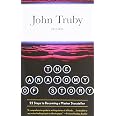
The Anatomy of Story [Truby, John] on desertcart.com. *FREE* shipping on qualifying offers. The Anatomy of Story Review: Truly Essential Reading - While I have a few criticisms, I'm still giving this 5 stars because The Anatomy of Story is by far the best book I've ever read on the subject of writing. Reading it has truly been a revelation and I'm so glad to have found it. I've read several other books and was always left with a sense that something fundamental was missing from them. This book fills in all the gaps. Instead of platitudes, Truby gives us explanations, multiple examples and insightful techniques for each point he makes. I was amazed by how many ideas are in this book that I had not seen anywhere else: four-corner opposition, psychological and moral need, attack by an ally, audience revelation - any one of these ideas by themselves are worth the price of the book, yet we get all of these and more in The Anatomy of Story. Don't waste your time on another re-hash of two plot points and a climax; buy The Anatomy of Story instead and prepare to bring your writing skill to a new level. But beware, there is so much new information in this book that you may want to read it twice (like I had to) in order to see the "big picture". Be sure to have your hi-lighter handy, then do the 9 exercises. Did I mention the exercises? Oh yes, that's almost the best part! 22 steps is a lot to weave together, so Truby lays out 9 exercises which guide us through each step in a detailed manner. The completion of the 9 exercises will leave you with a full first-draft story that you will be proud to have written. This is not a "color by numbers" approach. Think of the 22 steps like 22 tools for your writer's tool box; you may use them (or not) as you see fit. Either way, you'll have a clear understanding of how, why and when to use them. If you are an aspiring writer like I am, then you and I have a kinship. As a comrade of sorts, I highly recommend this book to you. Review: Best by far for novel or screen writers - I have spent a lot of money on screenwriting and novel writing books. I have had recommendations for books that were different, or foolproof; formula based, character based, plot based, etc. In my experience, the screenwriting books do it better than the novel writing ones, but it still takes some searching to find something really useful. I first used John Truby's book for a screenplay I was writing. I followed the first few chapters religiously and discovered I was solving problems I didn't even realize existed, creating deeper characters and stronger arcs all as part of the process. It wasn't formulaic and didn't give me a standard plot, but it did adhere to a few fundamental truths about story and character that cannot be ignored. As with any book, you need to use your brain and alter the rules to fit your story, but trust me, don't stray too far. It's very easy for someone to think that their character or story is "too good" or "above" the rules of conventional story telling but trust me, even the most obscure stories follow this basic format (if they are any good). It gives you relatable examples from a variety of movies, and the exercises are actually practical (none of the tired clichés such as "write about an experience you had where..." or "tell a story using these key words as a starting point"). All the exercises are specifically designed to help you develop YOUR story, not just any random plot. Because of the success I had with this method, I used the book again for planning my novel. Now, with a novel there are a few changes that need to be made. More happens in a novel, and of course things like "the audience reveal" are generally strictly cinematic tools and don't translate well to literature. However, I found the same successes with it for novel writing. Same problems being solved, same richness added to the plot and character. I would recommend this book to anyone writing something with plot. I bought this originally in paperback and purchased the kindle version so that I could just carry around my iPad. Use in conjunction with your favourite other texts (I like Blake Snyder's "Save the Cat" beat sheet for pacing. I cross referenced this with my favourite novels from the genre I was writing in to find the appropriate pacing for the novel). There is no such thing as a magic book that will make you a great writer, BUT if you have skills and a great idea, this will help you workshop and develop the idea to give you something you actually start writing.
| Best Sellers Rank | #12,205 in Books ( See Top 100 in Books ) #3 in Screenwriting (Books) #23 in Performing Arts (Books) #381 in Reference (Books) |
| Customer Reviews | 4.7 4.7 out of 5 stars (3,328) |
| Dimensions | 5.5 x 1.16 x 8.25 inches |
| Edition | First Edition |
| ISBN-10 | 0865479933 |
| ISBN-13 | 978-0865479937 |
| Item Weight | 12.8 ounces |
| Language | English |
| Print length | 464 pages |
| Publication date | October 14, 2008 |
| Publisher | Farrar, Straus and Giroux |
A**N
Truly Essential Reading
While I have a few criticisms, I'm still giving this 5 stars because The Anatomy of Story is by far the best book I've ever read on the subject of writing. Reading it has truly been a revelation and I'm so glad to have found it. I've read several other books and was always left with a sense that something fundamental was missing from them. This book fills in all the gaps. Instead of platitudes, Truby gives us explanations, multiple examples and insightful techniques for each point he makes. I was amazed by how many ideas are in this book that I had not seen anywhere else: four-corner opposition, psychological and moral need, attack by an ally, audience revelation - any one of these ideas by themselves are worth the price of the book, yet we get all of these and more in The Anatomy of Story. Don't waste your time on another re-hash of two plot points and a climax; buy The Anatomy of Story instead and prepare to bring your writing skill to a new level. But beware, there is so much new information in this book that you may want to read it twice (like I had to) in order to see the "big picture". Be sure to have your hi-lighter handy, then do the 9 exercises. Did I mention the exercises? Oh yes, that's almost the best part! 22 steps is a lot to weave together, so Truby lays out 9 exercises which guide us through each step in a detailed manner. The completion of the 9 exercises will leave you with a full first-draft story that you will be proud to have written. This is not a "color by numbers" approach. Think of the 22 steps like 22 tools for your writer's tool box; you may use them (or not) as you see fit. Either way, you'll have a clear understanding of how, why and when to use them. If you are an aspiring writer like I am, then you and I have a kinship. As a comrade of sorts, I highly recommend this book to you.
M**A
Best by far for novel or screen writers
I have spent a lot of money on screenwriting and novel writing books. I have had recommendations for books that were different, or foolproof; formula based, character based, plot based, etc. In my experience, the screenwriting books do it better than the novel writing ones, but it still takes some searching to find something really useful. I first used John Truby's book for a screenplay I was writing. I followed the first few chapters religiously and discovered I was solving problems I didn't even realize existed, creating deeper characters and stronger arcs all as part of the process. It wasn't formulaic and didn't give me a standard plot, but it did adhere to a few fundamental truths about story and character that cannot be ignored. As with any book, you need to use your brain and alter the rules to fit your story, but trust me, don't stray too far. It's very easy for someone to think that their character or story is "too good" or "above" the rules of conventional story telling but trust me, even the most obscure stories follow this basic format (if they are any good). It gives you relatable examples from a variety of movies, and the exercises are actually practical (none of the tired clichés such as "write about an experience you had where..." or "tell a story using these key words as a starting point"). All the exercises are specifically designed to help you develop YOUR story, not just any random plot. Because of the success I had with this method, I used the book again for planning my novel. Now, with a novel there are a few changes that need to be made. More happens in a novel, and of course things like "the audience reveal" are generally strictly cinematic tools and don't translate well to literature. However, I found the same successes with it for novel writing. Same problems being solved, same richness added to the plot and character. I would recommend this book to anyone writing something with plot. I bought this originally in paperback and purchased the kindle version so that I could just carry around my iPad. Use in conjunction with your favourite other texts (I like Blake Snyder's "Save the Cat" beat sheet for pacing. I cross referenced this with my favourite novels from the genre I was writing in to find the appropriate pacing for the novel). There is no such thing as a magic book that will make you a great writer, BUT if you have skills and a great idea, this will help you workshop and develop the idea to give you something you actually start writing.
V**H
This is the One.
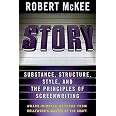
When you read the reviews, it seems everyone thinks every screenwriting book is the greatest one ever written. Well, to me, personally, this is absolutely at the top of the pile. Without question. It's neck-and-neck with Michael Hague's book. They're both incredible and they both offer different insights, so I definitely recommended getting both. Why does this book (and Michael Hague's book) lead the pack? Well, when it comes to... ahem... actually writing the screenplay, they're unbeatable. Having read the recommended, I see now that most authors merely wax-on philosophically without practical, applicable, and effective insights. I found Robert McKee's book to fall squarely into the philosophical category too, even though (again) all the reviews claim it's the best one ever. I respectfully disagree. For me, I'm looking to learn how to...ahem... actually WRITE a screenplay. And John Truby's book is in a solid and shared first place with Michael Hague's. There. I said it. I've been searching far and wide for a framework and sequence to outline my screenplay, and this is the one. Get it amigo. Thank me later.
T**X
Your just need this. Buy it. And the Anatomy of the Genre
P**E
Was sceptical in reading this book as there are so many claiming to have the answers to storytelling at a publishable level. Also relevant to film scriptwriting as many of its examples attest. This isn't an easy book to fully digest, but worth the effort I reckon and one I will study further.
P**R
As a writer who wants to improve my writing, I've read many books on writing (to learn how to stuff another 'writing' into an overburdened sentence) and John Truby's book is often mentioned as the gold standard of how to write a great story. I can see why, as John is incredibly thorough, going in depth into all the aspects of story telling from premise to character to scene construction. What is appreciate is the organic approach he advocates with many examples from great movies and tales. However, that depth makes it hard to grasp the whole of the approach and sitting down to implement his concepts into a practical structure is challenging. I think it would take a few reads to get his ideas integrated into an author's process but well worth doing. Perhaps it's best to view his concepts as guideposts to make sure you have not wandered far off the path of a great story.
C**R
Mükemmel
A**V
Excelente libro y el servicio de Amazon!
Trustpilot
1 month ago
1 month ago