
DOWNLOAD THE APP


Customer Services
Copyright © 2025 Desertcart Holdings Limited
DOWNLOAD THE APP


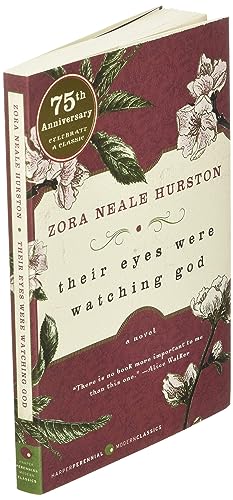


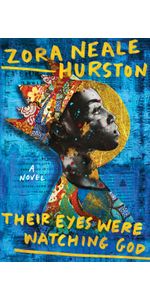
Buy Their Eyes Were Watching God (Harper Perennial Modern Classics) by Hurston, Zora Neale (ISBN: 9780061120060) from desertcart's Book Store. Everyday low prices and free delivery on eligible orders. Review: A tide in the affairs of women... - When Janie walks back into town eighteen months after leaving with a man 12 years her junior, her former friends and neighbours gossip and snigger, assuming he has spent all her money and then left her for a younger woman. But Janie's story is more complicated, a tragedy but also an awakening, her journey one of self-discovery. Janie is 16 when we first meet her in the care of her grandmother, a slave who became pregnant to her owner just before abolition. Janie's own birth was as a result of the rape of her mother by a teacher. The date isn't given, but a quick calculation suggests that the bulk of the book takes place in the first couple of decades of the 20th century. This matters, because one of my major criticisms of the book is that it seems to be set quite apart from historical context. There is no mention of WW1, no suggestion that any of the men fought or, indeed, had an opinion on the rights or wrongs of fighting for the USA. My (shallow) understanding is that this was a time of great change for African Americans, when they began to demand that a country that expected them to fight and die for it should also give them rights as equal citizens, develop a true democracy that embraced all people equally. But Janie's world indicates none of this, and I found myself therefore not being able to entirely accept it as a realistic picture of the time. Instead, Janie's contemporaries are shown as lazy, passive and unambitious on the whole, their aspirations beaten out of them by a world still run by and for the white elite. That I could accept more, though it seems in conflict with the idea of the development of the all-black town of Eatonville in which much of the story is placed. And Eatonville itself doesn't ring wholly true – when Janie and her new husband arrive there, it is no more than a plot of land with a few shacks, but within a few years it seems to be a thriving success story, without any indication of where that success comes from. And again, there is no discussion of politics or the wider world – Eatonville seems to exist in happy isolation, and the people Janie meets there and on her travels live carefree lives, based around drinking, gambling and sex – a happy-go-lucky existence, with no thought for the future. The position of women is one of almost total subservience to their men – a style of life where sexism and domestic violence is accepted by all. I was surprised at how negative a picture a black author was creating of the black community at a time when the political struggle for equality was building to a crescendo. The reason I bring up these criticisms first is that, after I finished the book, I read the forewords and afterword in my copy, written by Edwidge Danticat, Mary Helen Washington and Henry Louis Gates, Jr., and was rather stunned to discover that my criticisms echoed those of the male black writing community of the time, whose dismissal of the book was based pretty much on it not conforming to the political agenda of the black movement. The subsequent feminist critiques of the '70s and later, it seems to me, dismiss these criticisms too easily, perhaps because they think that to accept them would weaken their own argument that the book is a seminal text in the finding of the black female voice in literature. I beg to disagree - with both parties: the lack of a political context is a weakness but not one that prevents the book from making an important contribution; and the fact that it gives women in black culture a voice does not negate the fact that it would have been a greater book had it addressed, or at least acknowledged, the contemporary political situation. Where the book excels is in its portrayal of Janie's character – her finding of her own way despite the male dominance of the society she lives in. As a person of mixed racial ancestry, Janie's light skin tone and unusual hair are used to great effect to show how indoctrinated the black psyche had become to accept the desirability of 'white' physical traits; showing within their community the same kind of prejudices heaped on them from outside it. Having been married off young to a much older man, Janie rebels and runs off with the good-looking and ambitious Joe to Eatonville, only to discover that Joe too believes that a woman is at her best in the kitchen and bedroom. We know from the beginning of the book that there is a third man in Janie's story – the younger Tea Cake, for whom she has left her comfortable home in Eatonville and gone off to work the fields in the Florida Everglades. It is in the few months that she spends with Tea Cake that Janie finally discovers what it is to love and be loved equally. Although the structure of the book is that Janie is telling her story in retrospect to her friend Pheoby, this is a third person narrative for the most part, slipping into first occasionally as we are made directly privy to Janie's thoughts. All of the speech is in dialect, which Hurston handles brilliantly, and although the non-dialogue parts are in a more standard form of English, she maintains speech patterns, tone and vocabulary throughout. The dialect is not so broad that it makes the book hard to read – it's sustained so beautifully that it almost recedes into the background after the reader gets tuned into it. While I have criticised the portrayal of the society as negative, it's also done with great skill, making it completely believable within the internal context of the book. The writing is lyrical at times, especially the section in the Florida Everglades where the land and weather come to play a huge part in the story. The book has its share of tragedy and horror, but Hurston offers compassion to her characters at all times, and she draws them subtly, so that there are few of them who can't earn our empathy. I am aware that this review has taken on gargantuan proportions, but that's a sign of the effect the book and the debate surrounding it had on me. I could write at length about my disappointment that fundamentally Janie's search for herself seems too much to be a search for a man who will love her right. I could mention my anger at the way Hurston seems tacitly to endorse wife-beating so long as it's done with love(!). I could wonder about the lack, not just of children, but of any mention of them. But instead, I'll say that, despite my quite severe criticisms of it, I loved the book for the language and the compelling story-telling, and for making me think, and it's one that I'm sure would deliver even more on a re-read. 4½ stars for me, so rounded up. Review: A powerful narrative voice here - A really interesting read with a powerful narrative voice. It dealt with love but also expectation and alongside that, inevitably, disappointment. Janie is on a journey to find the woman that she wants to be despite the expectations of everyone else. She is both typical and atypical and the communities within which she lives are both close (sometimes to the point of suffocation) and isolating if you don't quite, 'toe the expected line' or 'fit the mold' that you have been allotted. The novel also has elements of a love story but it is a love that does not always wear its Sunday best and whilst it is beautiful, can also sometimes be cruel. It was interesting to read about how this book was received but I am glad that at the point of reading, I knew nothing and just appreciated it in its own right.

| Best Sellers Rank | 4,572,227 in Books ( See Top 100 in Books ) 299 in Cultural Heritage Fiction 602 in Fiction Classics (Books) 650 in Poetry & Drama Criticism |
| Customer reviews | 4.3 4.3 out of 5 stars (16,009) |
| Dimensions | 20.57 x 13.97 x 2.03 cm |
| ISBN-10 | 0061120065 |
| ISBN-13 | 978-0061120060 |
| Item weight | 1.05 kg |
| Language | English |
| Print length | 264 pages |
| Publication date | 30 May 2006 |
| Publisher | HarperCollins Publishers |
F**N
A tide in the affairs of women...
When Janie walks back into town eighteen months after leaving with a man 12 years her junior, her former friends and neighbours gossip and snigger, assuming he has spent all her money and then left her for a younger woman. But Janie's story is more complicated, a tragedy but also an awakening, her journey one of self-discovery. Janie is 16 when we first meet her in the care of her grandmother, a slave who became pregnant to her owner just before abolition. Janie's own birth was as a result of the rape of her mother by a teacher. The date isn't given, but a quick calculation suggests that the bulk of the book takes place in the first couple of decades of the 20th century. This matters, because one of my major criticisms of the book is that it seems to be set quite apart from historical context. There is no mention of WW1, no suggestion that any of the men fought or, indeed, had an opinion on the rights or wrongs of fighting for the USA. My (shallow) understanding is that this was a time of great change for African Americans, when they began to demand that a country that expected them to fight and die for it should also give them rights as equal citizens, develop a true democracy that embraced all people equally. But Janie's world indicates none of this, and I found myself therefore not being able to entirely accept it as a realistic picture of the time. Instead, Janie's contemporaries are shown as lazy, passive and unambitious on the whole, their aspirations beaten out of them by a world still run by and for the white elite. That I could accept more, though it seems in conflict with the idea of the development of the all-black town of Eatonville in which much of the story is placed. And Eatonville itself doesn't ring wholly true – when Janie and her new husband arrive there, it is no more than a plot of land with a few shacks, but within a few years it seems to be a thriving success story, without any indication of where that success comes from. And again, there is no discussion of politics or the wider world – Eatonville seems to exist in happy isolation, and the people Janie meets there and on her travels live carefree lives, based around drinking, gambling and sex – a happy-go-lucky existence, with no thought for the future. The position of women is one of almost total subservience to their men – a style of life where sexism and domestic violence is accepted by all. I was surprised at how negative a picture a black author was creating of the black community at a time when the political struggle for equality was building to a crescendo. The reason I bring up these criticisms first is that, after I finished the book, I read the forewords and afterword in my copy, written by Edwidge Danticat, Mary Helen Washington and Henry Louis Gates, Jr., and was rather stunned to discover that my criticisms echoed those of the male black writing community of the time, whose dismissal of the book was based pretty much on it not conforming to the political agenda of the black movement. The subsequent feminist critiques of the '70s and later, it seems to me, dismiss these criticisms too easily, perhaps because they think that to accept them would weaken their own argument that the book is a seminal text in the finding of the black female voice in literature. I beg to disagree - with both parties: the lack of a political context is a weakness but not one that prevents the book from making an important contribution; and the fact that it gives women in black culture a voice does not negate the fact that it would have been a greater book had it addressed, or at least acknowledged, the contemporary political situation. Where the book excels is in its portrayal of Janie's character – her finding of her own way despite the male dominance of the society she lives in. As a person of mixed racial ancestry, Janie's light skin tone and unusual hair are used to great effect to show how indoctrinated the black psyche had become to accept the desirability of 'white' physical traits; showing within their community the same kind of prejudices heaped on them from outside it. Having been married off young to a much older man, Janie rebels and runs off with the good-looking and ambitious Joe to Eatonville, only to discover that Joe too believes that a woman is at her best in the kitchen and bedroom. We know from the beginning of the book that there is a third man in Janie's story – the younger Tea Cake, for whom she has left her comfortable home in Eatonville and gone off to work the fields in the Florida Everglades. It is in the few months that she spends with Tea Cake that Janie finally discovers what it is to love and be loved equally. Although the structure of the book is that Janie is telling her story in retrospect to her friend Pheoby, this is a third person narrative for the most part, slipping into first occasionally as we are made directly privy to Janie's thoughts. All of the speech is in dialect, which Hurston handles brilliantly, and although the non-dialogue parts are in a more standard form of English, she maintains speech patterns, tone and vocabulary throughout. The dialect is not so broad that it makes the book hard to read – it's sustained so beautifully that it almost recedes into the background after the reader gets tuned into it. While I have criticised the portrayal of the society as negative, it's also done with great skill, making it completely believable within the internal context of the book. The writing is lyrical at times, especially the section in the Florida Everglades where the land and weather come to play a huge part in the story. The book has its share of tragedy and horror, but Hurston offers compassion to her characters at all times, and she draws them subtly, so that there are few of them who can't earn our empathy. I am aware that this review has taken on gargantuan proportions, but that's a sign of the effect the book and the debate surrounding it had on me. I could write at length about my disappointment that fundamentally Janie's search for herself seems too much to be a search for a man who will love her right. I could mention my anger at the way Hurston seems tacitly to endorse wife-beating so long as it's done with love(!). I could wonder about the lack, not just of children, but of any mention of them. But instead, I'll say that, despite my quite severe criticisms of it, I loved the book for the language and the compelling story-telling, and for making me think, and it's one that I'm sure would deliver even more on a re-read. 4½ stars for me, so rounded up.
K**R
A powerful narrative voice here
A really interesting read with a powerful narrative voice. It dealt with love but also expectation and alongside that, inevitably, disappointment. Janie is on a journey to find the woman that she wants to be despite the expectations of everyone else. She is both typical and atypical and the communities within which she lives are both close (sometimes to the point of suffocation) and isolating if you don't quite, 'toe the expected line' or 'fit the mold' that you have been allotted. The novel also has elements of a love story but it is a love that does not always wear its Sunday best and whilst it is beautiful, can also sometimes be cruel. It was interesting to read about how this book was received but I am glad that at the point of reading, I knew nothing and just appreciated it in its own right.
R**N
Loved it
Great book, loved it took me on an emotional journey of relationships, male views of colour, race, and what they considered to be worthy of their affections of that time as it is now, in regards to being a lighter complexion. Most importantly the main character just wanted affection and not to be put on a pedestal because of her appearance.
B**M
Quite hard work to read
This is such a famous classic that I had really high expectations, and I'm left feeling perhaps I didn't quite 'get' it. The story is set in the mid 20th century, in a USA where segregation was still in place and open racism accepted and normal. However the story is mostly set within Black communities rather than explicitly about the prejudice they faced. It's essentially the life story (or the life-so-far story) of Janie, and her three marriages. Janie starts the story as a naive young girl and develops into a woman with opinions of her own and a desire to express them. In a world where domestic violence was a fact of life and not even condemned, and women's views were not welcomed by men, that doesn't always go well for her. And when she finds happiness, a natural disaster comes along to threaten that. There is a lot of dialogue in the book, which generally is a good thing, but it does make it harder to read as it is written in the way the people would have spoken it. This is authentic - it would sound strange if the characters were all speaking like English aristocrats - but requires a lot of concentration to puzzle out the underlying meaning and makes it feel like hard going. For me the plot isn't compelling enough, and the characters not loveable enough, to make it worth the effort. I didn't feel there was anything very original or different about the story and whilst I found Janie likeable I didn't have a strong emotional connection with her. Nor are there any strong supporting characters to make up for that. It's not a bad book by any means - just not exceptional, and harder work to read than I generally want when I'm reading as a leisure activity.
M**K
A remarkable book from a member of the Harlem Renaissance. The book describes the life of a woman and her marriages with her desperate search for a satisfying relationship. The book was particularly interesting in its description of life in Central Florida and the Lake Okeechobee area in the early 1900s with a dramatic description of the 1928 hurricane that caused so much flooding and loss of life.
D**R
Incredible novel with such depth and beautiful prosody. The timelessness of the themes are so universal, yet the era of writing and setting are completely foreign to me … making an enthralling read.
G**A
It's amazing novel.
R**H
Worth reading this. So emotional and heart-wrenching...a journey of self-discovery, love, and independence. The prose sings with rhythm and wisdom, turning everyday life into something almost mythic. I was surprised by how alive Janie’s voice felt...fierce, funny, and heartbreakingly real. It’s one of those rare books that feels both timeless and freshly alive every time you read it.
M**N
I wasn't sure when I started the book, and initially the dialect was had to read. But as the story continued, both the wonderful descriptive writing and the insight into the Negro experience and culture of the time were very enlightening. Highly recommend this book.
Trustpilot
2 weeks ago
1 month ago