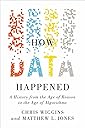
How Data Happened – A History from the Age of Reason to the Age of Algorithms
Product ID: 521398745
Desertcart purchases this item on your behalf and handles shipping, customs, and support to Philippines.
From facial recognition―capable of checking us onto flights or identifying undocumented residents―to automated decision systems that inform everything from who gets loans to who receives bail, each of us moves through a world determined by data-empowered algorithms. But these technologies didn’t just appear: they are part of a history that goes back centuries, from the birth of eugenics in Victorian Britain to the development of Google search. Expanding on the popular course they created at Columbia University, Chris Wiggins and Matthew Jones illuminate the ways in which data has long been used as a tool and a weapon in arguing for what is true, as well as a means of rearranging or defending power. By understanding the trajectory of data―where it has been and where it might yet go―Wiggins and Jones argue that we can understand how to bend it to ends that we collectively choose, with intentionality and purpose. Review: Turgid reas - I bought this book after hearing the author on a fascinating podcast, talking about the material presented in the book. Much to my surprise, the book is a turgid read. It is semi-academic in that it misses no opportunity to name sources, and one loses sight of the wood for the trees. Disappointing, since it is a fascinating subject, and I wished the authors had told the story in their own voice. Review: Decepcionante - Escrita confusa, enrolada, com uso exagerado de citações literais e floreios estranhos. Argumentação circular, a tese não evolui. Transparece demais o fato de ser escrito por dois autores - o estilo de escrita vai e volta e, pra mim, isso atrapalha a fluidez da leitura. Enfim, sinto que faltou um bom editor.
| Best Sellers Rank | #485 in Engineering Reference #712 in Databases & Big Data #1,560 in Technology |
| Customer Reviews | 4.1 out of 5 stars 32 Reviews |
M**5
Turgid reas
I bought this book after hearing the author on a fascinating podcast, talking about the material presented in the book. Much to my surprise, the book is a turgid read. It is semi-academic in that it misses no opportunity to name sources, and one loses sight of the wood for the trees. Disappointing, since it is a fascinating subject, and I wished the authors had told the story in their own voice.
C**A
Decepcionante
Escrita confusa, enrolada, com uso exagerado de citações literais e floreios estranhos. Argumentação circular, a tese não evolui. Transparece demais o fato de ser escrito por dois autores - o estilo de escrita vai e volta e, pra mim, isso atrapalha a fluidez da leitura. Enfim, sinto que faltou um bom editor.
T**Y
Hard to see the woods for the trees
I have read this book three times, given how imporrtant "data" and their associated technologies are for our lives today. The authors use accessible language (e.g.,not all jargon) and offer much information and commentary, but I wish they focused more on critical techniques rather than go into painstaking details on what often seem to be so many peripheral issues or concerns. Are we living in an information regime that relies on masses of data - as quantifiable, accessible, manipulable, and fungible - rather than good science? If so, why? And what are its costs. They may agree, and believe that in these 300 pages they have made the case. I cannot be sure, and feel lost among the aforementiond "trees." For example, I want to know more about the role(s) and importance of statistics today in data-based decision-making - probabilities, etc.
Trustpilot
4 days ago
1 week ago