Desertcart purchases this item on your behalf and handles shipping, customs, and support to Philippines.
๐ฏ Lock in perfect prints with Polymakerโs all-in-one filament fortress!
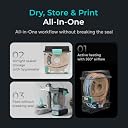
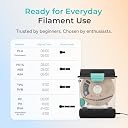
The Polymaker Polydryer is a modular filament drying and storage system designed for professional 3D printing enthusiasts. Featuring 360ยฐ heated airflow, airtight sealing, and a built-in hygrometer, it effectively reduces moisture-related print defects across a wide range of filament types and sizes. Its integrated drying dock and storage box enable seamless transitions from drying to printing without breaking the moisture seal, ensuring consistently high-quality prints and long-term filament preservation.


| ASIN | B0CK1BX9G2 |
| Additional Features | Modular design with Dry Dock and PolyDryer Box, 360ยฐ airflow, superior sealing performance |
| Best Sellers Rank | #2,361 in Industrial & Scientific ( See Top 100 in Industrial & Scientific ) #130 in 3D Printing Filament |
| Brand | Polymaker |
| Brand Name | Polymaker |
| Color | Polydryer (Dryer Dock + Storage Box) |
| Customer Reviews | 4.3 out of 5 stars 699 Reviews |
| Item Diameter | 1.75 millimeters |
| Item Weight | 1.3 kg |
| Manufacturer | Polymaker |
| Manufacturer Part Number | PX01002_A |
| Material | Plastic |
| Material Type | Plastic |
| Model Number | PX01002_A |
| Number of Items | 1 |
| Number of Packs | 1 |
| Special Feature | Modular design with Dry Dock and PolyDryer Box, 360ยฐ airflow, superior sealing performance |
| Unit Count | 1 Count |
T**H
Long review to explain why I chose it and why I love it.
I like to leave a review when one is worthy, and spoiler alert, this will be glowing. 3D printing is loads of fun with unlimited creativity, but there is knowledge that is gained along the journey. One little tidbit is that filament needs to be dried if you live in a humid area...And some, in not as humid as you would think area. After looking at the design of several devices from Creality, Anycubic, Sunlu, Comgrow and Giantarm (Filament Bags) I finally settled on the Polymaker. As I own an Ender 3 S1 Pro, I'm currently only feeding one filament at a time, so a multi-strand dryer while cool, didn't really make sense to me. I also am limited on permanent space. This lead me to the reduction of choice to single spool. I chose the Polymaker because it allows me to store the dried filament separately from the drying system (Which is partially built-in). The ability to see the humidity level in the box was a big part of my choice and know that the desiccant changes colors so you know when to recharge it. Yup, the desiccant is reusable, not just an individual pouch. And if that wasn't enough, each case comes with a good PTFE lead pipe so you can draw directly out of the case. The case itself is sealed really tight. The seals on the feet (Where you set it on the heated air flow device) also seal very well and have a rubber non-slip base as well. They stack very well too. As for the performance, well it was way better than I expected. When I received the unit, I had some prefoamed LW-PWA that had been out in the open air for weeks. When I put it in the container and let it sit for a few hours, it showed to be at 54% humidity in the container (UP from the 49 when I loaded the filament). I ran it on the forced heated air base for 6 hours as instructed. It dropped down to 41% after the first run. I decided to run it again, just for the heck of it, and it came down to 36% after the second run. After leaving it overnight it was down to 29%, just using the desiccant. Total reduction from 54-29% in less than 24 hours (About 22 hours total). I was very happy with the 25% reduction in that short period of time. Each box can be used without pulling the roll out. There are two options: 1 you can use the ball bearing rollers that are setups in the case, and they are so well designed that in an empty case, the airiflow will turn them, OR you can use the included roll post that ankers very well in the side of the box. The PTFE tubing allows for either vertical or horizontal tapping of the filament. I have minie setup to feed from behind the printer, but may make some changes in the future. Regardless, I know that the system will support whatever setup I choose. The base unit is very easy to operate, has recommendations for the filament drying temps and times listed, and allows you to set it according to that, or you can just set it for constant untimed running if you really wanted to drive it down faster. The foot print is very small as compared to the others I looked at. The power source is a bit large, but designed to not take all the slots on your power strip if using one. It will take up 3 depending on how close together they are. Overall I very much love the design of this unit, along with the well thought out engineering. The whole system seems very sturdy and strong which encourages me on its longevity. The only change I made to the setup was the desiccant color. III already had 2lb of Blue silica gel which turns to pinkish red, so i used that vs the orange that turns green. This was done for two reasons. 1. the color of the box is Blue/Black/Clear and it just looked better. 2. having the silica gel turn Pink/Red just made more sense to me with Red meaning "Stop" in my mind. Thank you for bearing with me ini what is the longest review that i have written in a long time. Should you choose to purchase this system, and it is a system, it wont let you down. Print Happy Days, and everyone will love your prinits!!
K**0
PolyDryer with PolyDryer Box... works as intended
The Polymaker PolyDryer with PolyDryer Box combo works as intended. It does in fact heat up and dry out filament reasonably well, seems well made, doesn't make too much noise and is reasonably compact with a modular design. The base unit does the work, and the removable, sealable Box unit can store your dried out filament indefinitely with a hygrometer and desiccant visible with the clear box. So, what's not to like? according to The Internet, it's an overpriced, underperforming monstrosity. In my observation: The Bad: 1-The removable Box unit has a top lid with unusually difficult to operate latches. 2-The removable Box unit has two easily misplaced bottom sealing plugs that must be removed when placing the Box unit onto the PolyDryer unit. No provision is made for holding these two plugs when not in use. 3-The instruction manual is a bit sparse with no mention of actual intended temperatures, humidity or power levels. Also, worryingly, it advises to unplug the Power Supply from the wall when not in use. This seems like an unusual precaution in modern times and calls into question the quality of the Power Supply. 4-The LCD displays in both the base unit and the inboard Hygrometer are difficult to read off-axis. 5- No actual temperature displays are included, just a relative heating level selector and timer on the base unit and a Hygrometer inboard of the Box unit. The Good: 1- It works as described and expected with easy to use controls. 2- While hardly silent, the sound is reasonably unobtrusive. 3- The Box section seals really well and has an inboard Hygrometer and Desiccant container, the Desiccant itself being re-usable and replaceable. 4- It is reasonably compact and there modular Box units are sturdy and well-sealed. Neither good nor bad: The Power Supply is external, and thus replaceable. Odd that it is not built in, but whatever. Not very stylish at all. Just functional. Not especially cheap or expensive. In comparison to my first Filament Dryer unit, an eSun eBox Lite: The Polydryer works better and allows for sealed storage. So far has lasted longer as the eSun's heater failed within the first few hours of operation. The eSun is easier to open and close and looks nicer. Both have very similar controls and displays with three relative heating levels. The PolyDryer costs more but works better. The eSun manual is not quite as sparse, with actual intended temperatures, power and humidity levels published though probably wildly optimistic.
L**H
Good stuff!
A super way to dry and your filaments! I got several more boxes for filaments. I really like the internal humidity indicator on the front and the ability to remove and rechange the internal desiccant. Good design!
A**A
Might be an economical temp solution
So Iโm giving this review from a total newbs perspective, it may be updated as I gain experience. Now, that saidโฆ itโs an ok product. I scrutinized many during the setup phase when I was waiting for my 3d printer to arrive. I wanted my system to be complete to hit the ground running. Drying my filament was one of the surprises I hadnโt anticipated(see, total newb). So I began researching, being highly disappointed what was available and the cost. I donโt have the patience, nor an endless bank account, to trial and error. So I originally ordered just the box after reading reviews. Then thought on it some more, considered how humid where I live can get and how the room my setup is in isnโt completely climate controlled. I ended up ordering this for the dryer. By the time both arrived, my filament order had arrived. So I ran a bit of a trial. I placed a petg spool in the box with the desiccant, the roll went in directly from its shipping box. Initial reading right from its vaccum seal was 45%. After 3 days it was reading 34%. By this time I was ready to try with the dryer. Notes on dryer Itโs not loud enough to be noticeable at all. I worked in the same room with an audiobook playing on my cell phone at normal volume across the room. This is entirely a subjective criteria though. My โloudโ may be your โbarely able to hearโ and vice versa. I donโt see the sound ever being too intrusive in any situation though. Also the box does not firmly attach to the dryer, it just sits on top. Not a great fan of this BUT I do see the convenience. Weโll see how long itโs tolerable. So, took the spool of petg, placed a 2nd mesh bag of desiccant inside and placed on the dryer. 34% to 24% in less than an hour. I left it to do its thing. I havenโt tried printing anything yet but will eventually update that as well. As well as monitor storage once removed from dryer. Overall, for the cost, I think this will be an acceptable, but definitely not perfect solution. I can see where the rotation of boxes on/off the dryer will be cumbersome and annoying. Iโm not convinced long term storage will be successful but as mentioned, Iโm so new to 3d printing that I may be surprised. I do not anticipate using this method long term though. I think itโs a โfine for the interimโ stopgap to avoid some of the waste that comes with filament not being dry enough. Additionally I donโt like the clutter of having to have a dedicated plugin and multiple boxes to rotate various spools. But given the limit of the dryer market at the moment, itโs the less expensive option that is marketed to achieve the same results. So 4 stars for now And yes, the closure on the box is a royal pain! And Iโm by no means weak. But I get it.
K**R
Plenty of heating power
TLDR: They work great for the enclosed python ams. I run 2 in the back of each of my python units. I hate the power bricks. Iโve melted a spool on accident on the highest setting. I like the modularity. I havenโt had issues with storage in the containers. Long/in depth part: I donโt have exact measurements from a thermometer, but considering I melted one of my spools (the spool, not the filament) when having it on the highest setting to dry, and the box discolored/warped as well, I think it gets hot enough. Given the spool was very large because it was a tpu spool from geeetech so maybe that caused issues? The little blue spool holder thing didnโt even lift the spool but it fit in the box just fine so I went for it. Maybe I got units out of spec compared to everyone else? Whatever the case, they work awesome. Theyโre all mini dragons of filament drying goodness in my setups. I have 5 of them. 2 for each of my python ams units (in the back of the enclosure), and one freestanding for the one off spools I dry every once in a while. The freestanding one is the one that did the melty bit above. I also bought these for my python ams and have been able to sustain temps past 120ยฐF (what my internal thermostat can measure to. I got cheap ones okay?) at the front of the unit (2 dryers in the back on full throttle), so that gets plenty hot too. With all 4 units running (my pythons are stacked right on top of one another), things can get toasty in the upper unit. Given it takes 2-3 hours to reach temp, but sustaining past that is no problem. More exotic filaments that are needing the additional heat I do in the boxes on the single. Itโs just easier to keep them in the boxes as I use them. I think they work fine for what theyโre advertised to do and as a modular system. Yeah itโs not like those crazy expensive 4 spool units but itโs good for the money. I always dry longer than recommended just because it takes time for the entire container to get up to temp. My only complaint is how big the power brick is. I can only use 1/2 the plugs on my extension cord and I donโt feel like doing shenanigans with replacing them with something else. The biggest mod I did was removing the sticker with the settings (it was an accident at first thanks to tape, but it looked good enough to where I decided to roll with it). That way theyโre just black units at the back of my ams. The single one still has it on, and the ams ones I never run on any setting but the highest unless I see significant issues.
B**D
Disappointed.
This dryer is disappointing. This is my third dryer. List of issues: * The displays can only be read "straight on". That means only visible with your eye level with the table the thing is sitting on. If you are standing near the unit, you cannot read the displays. Hunch down. * Inadequate drying. This only reaches about 55C on the highest setting. It took 18+ hrs to dry a new spool of PLA. There does not appear to be much air exchange if any, so the moisture has nowhere to go except into the desiccant. This really seems to rely on the desiccant to dry things. * Recharging the provided desiccant is hard/impossible. I had a hard enough time pouring it into the box. After drying a single roll, the desiccant turned black, indicating that it needed recharge. If you read the instructions, you are supposed to put "the desiccant" in the oven at 200F. Uh, are you supposed to empty the pellets out and dry them in the oven? And then manually refill the thing? Every time? Are you supposed to put the whole module in the oven? I think that anyone that puts the entire plastic module with the desiccant pellets and the temp display in THE OVEN is in for a surprise. And don't put the humidity display with its LR44 batteries in the microwave either! You might have a fire! This unclear part of the instructions is actually dangerous. Are we supposed to manually empty the pellets EVERY ROLL and dry them? Depending on the desiccant to do al the work is dumb, it needs air flow to discharge water expelled from the fillament. *The latches on the box top are REALLY HARD to work. I thought that my unit was broken at first. I can definitely see people having trouble with this. * Fiddly little door seals at the bottom. After drying, you are supposed to seal the bottom ports with these. * my fan is making noise already. I would not buy this again. 1) It does not really dry. Drying PETG takes 24 hrs. 2) It was expensive for a dryer 3) There is a huge process to regenerate the desiccant after drying a roll.
V**.
So far the best I've used
The fact that this comes with a Teflon tube that fits over my Kobra S1's inlet tube for sealed, seamless transfer of filament and an internal hygrometer with a container for silica gel, this stands head and shoulders above other budget dryers. It's a touch pricier than other single-roll dryers but it's worth every penny. My only gripe with it is that the dryer machine isn't also sealed, but that's a relatively easy fix.
T**T
Brilliant design with a few areas of improvement, but still excellent as is
Should you get this or one of the "hotter" dryers on the market? Well, let me dispel a few myths first. Myth 1: you need an extra hot dryer for advanced engineering filaments like nylon or TPU. This is simply a lie pushed by "affiliate marketers". Will a hotter (within a safe range for your particular plastic) dryer work faster? Maybe. If said plastic is not fully saturated. Can you accomplish the same (if not better) results with more modest temperatures? Absolutely. It will just take longer. Myth 2: You need to vent a Polydryer, as it has no built in vents. Again, not true - if you look at manufacturer's diagram or simply take this thing apart, you'll see that it vents on its sides, which is sufficient for 99% of the use cases. And if you deal with fully saturated filaments a lot (let's say, you had a spool of TPU or nylon sitting at ambient humidity for years) - just print PolyDryer Air Exchanger from Printables, it will speed up the process. But even without that, your filament will be dry. Myth 3: you must run a Bowden tube from drybox all the way to the extruder, and seal the ends with pheumatic fittings. Well, if you want your setup to look extra cool - sure, knock yourself out. As for practicality... don't bother, just remove filament from the printer when a long idle time is expected (newsflash: super-duper sealed Bowden will slow down the saturation during idling, but it will not stop it). AMS setups are a different story though - by all means, run a properly oversized AMS tubing. Myth 4: filament dryers don't care about ambient humidity. There's no heat exchanger, no drip line or water collection container, which might give you a correct idea that this is not a dehumidifier. All filament dryers (or food dehydrators, which were used as filament dryers since the dawn of time) are simply air heaters with forced convection - nothing less, nothing more. So in dry winter air you may reach 10% RH in a matter of minutes, while between cooling and heating seasons, when ambient RH tends to be high, you may never reach 10%, no matter how much you heat it up (same applies to all other dryers, including the hyped latest and greatest ones). Practical tips: - Print and use PolyDryer Air Exchanger for saturated (wet) filaments, as humidity can quickly equilibrate and drying almost stop. - Another useful print is PolyDryer Desiccant Funnel, which will reduce the spillage when filling up the desiccant box. - If you prefer your spools to roll on the rim instead of swinging on central axle (I do) - print PolyDryer Filament Roller Mod Ver2, it will make it roll much smoother (use scarf joints and/or sand off the z-seam).
ใ**ใ
่ฃฝๅใ่ฏใใใใตใใผใใๅฎๅฟ
่ฃฝๅ่ชไฝใใใใฃใใใ Polymakerใฎใซในใฟใใผใตใใผใใฎๅฏพๅฟใใจใฆใ็ด ๆดใใใใฃใใงใใ ็พๅจใฎไนพ็ฅๅคใฎ่ฒใฏไปๆงใๅคใใฃใฆไนพ็ฅใใฆใ้่ฒใงใฏใชใใใชใฌใณใธ่ฒใใใณใใผใฏใฐใชใผใณ็ณปใใใใงใใ ่ชฌๆๆธใฎ๏ผโใงๆ้ใใชใปใใใใๆฉ่ฝใฏๆญ่ผใใใฆใใใใ่ชฌๆๆธใๆนๅฎใใใฆใใชใใ ใใใใใฎใงใๆฐใใคใใใ ใใใ ไธๅบฆไนพ็ฅใใใฆใใฟใๅฏๅฐใใใฐ้ทๆ้ไนพ็ฅ็ถๆ ใงไฟๅญใงใใพใใใmaker worldใงๆน่ฏใงใใใใผใใใใใคใใใใฎใงใใจใฆใใใๅๅใ ใจๆใใพใใ
S**N
Effective filament drying and storage
Drying your filament is up there with washing your build plate - it doesn't seem like something that will have a huge effect but it can make a significant difference to the quality of your prints and whether they succeed at all. Failed or low quality results mean wasted filament, time, and electricity costs. Don't think that adding silica gel cuts it - that can change the relative humidity which affects whether the filament will be absorbing moisture or not, but if it's already too damp it's not going to really dry it out. Unlike most other filament dryers that only handle the drying part and leave the storage as a challenge for you to solve this is a clever modular design that separates the dryer from the storage box so once the dryer has been used to remove the moisture it's immediately sealable for storage and can be used directly from the sealed box. It really is neat, compact, and really works well as you can see from the 20-minutes in shot and the final humidity compared to the external reading. A benefit of this is that you can dry your filament way ahead of when you need to use it, rather than adding an extra 6+ hours before you can print the thing you want to. It works great as a single filament dryer but the real value comes from buying some additional boxes that you could use to store filaments in, at least the more "thirsty" hydroscopic ones such as PETG, TPU, and nylon. There are lots of mods available to print from printables or makerworld to add some venting, allow the drying to dry two boxes at once, connect two dryers to a single box (turbo mode?), stack boxes, or even use the boxes directly to feed a BambuLab AMS lite. The heater is fairly quiet in operation and is simple to use, with the temperature levels and timescales on an information plate on the top of it. The storage boxes feel well made and robust and should hold up to many years worth of use, so they are definitely an investment - getting a few extra provides more benefit over just having the one that comes with the dryer itself.
K**.
Upset
Set to PETG to dry for 6 hours, but humidity drops 2% and temperature rises to max 40 degrees.
C**A
ไบๆณ้ใๅใใพใ
ๆฅๆฌ่ชใฎๆ้ ๆธใใปใใฎ่จ่ชใจ้ใใจใใใใใใพใใ(ใปใใฎ่จ่ชใงใฏPETGใใฌใใซ๏ผใงใใใๆฅๆฌ่ชใฏใฌใใซ๏ผใซๆธใใฆใใพใ๏ผ
C**E
Best Filament Dryer System
I have the dryer and three boxes. These things are the best. I've tried other dryers and they just don't work as well as this model does. No comprimises. It can dry in place. It stays dry. You get a dry box that you can feed your printer out of (without any weird angles). This is a really well thought out and engineered system. Spend the extra 60$ and go with something that works correctly. (( You want the dryer and at least two of the boxes which will be about 60$ more than a one wheel dryer from other companies ))
Trustpilot
2 weeks ago
1 month ago