
DOWNLOAD THE APP


Customer Services
Copyright © 2025 Desertcart Holdings Limited
DOWNLOAD THE APP
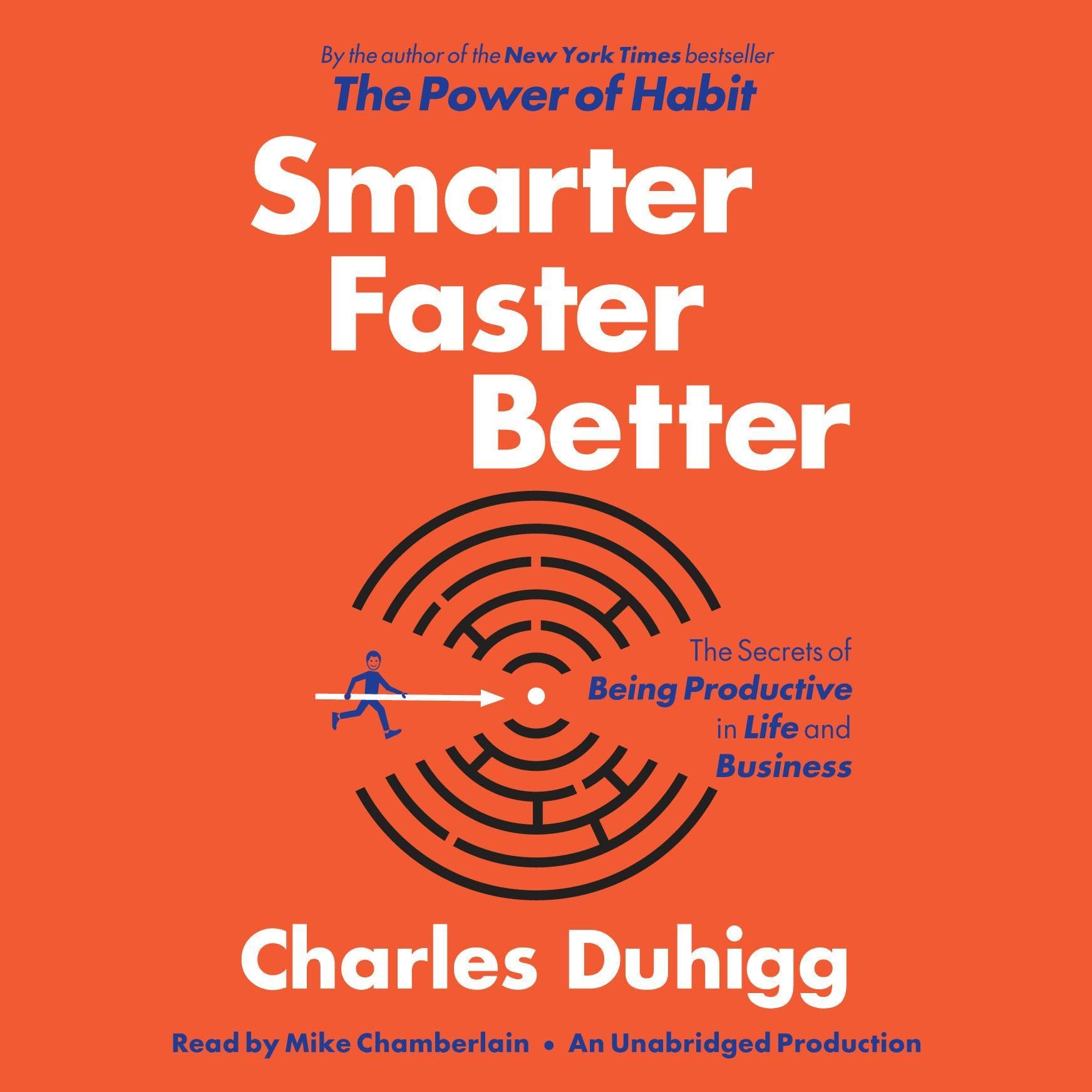
desertcart.com: Smarter Faster Better: The Secrets of Being Productive in Life and Business (Audible Audio Edition): Charles Duhigg, Mike Chamberlain, Random House Audio: Audible Books & Originals Review: Eight Methods to Becoming Super Productive! - I am really impressed with Duhigg's book. I thought his Power of Habit was fantastic when I first read it but I'm convinced that this is his masterpiece. It was a quick read. If you're interested in understanding why some peoplehave it all, and others just can't seem to get their acts together, then this book is a must read. I particularly liked his chapter on SMART Goals and setting lofty goals. Oftentimes we either select goals that are one or the other, but not both. Duhigg states you need to have both types. Your SMART goals need to be shorter term goals that can be attained regularly. It's not a matter of putting something on your to-do list then checking it off. It's a matter of challenging yourself to do things that are difficult but possible. The other category of goals are your reach goals0--go ahead... dream a little. He uses the example of the Japanese Bullet trains and how back when they were first created the Japanese elite wanted trains that could go 60 mph and turn a six-hour trip into a three-hour trip. Well, lo-and-behold, they now have trains that go above 120 mph and they have seemingly made travel much more convenient turning that three-hour trip into a 1.5 hour trip. How did this happen? Set really lofty goals. I found him echoing similar words of Jim Collins' "Good to Great" and the B.H.A.Gs (Big Hairy Audacious Goals). I'm not going to say more because I do think it's important that everyone get their hands on this book. What Duhigg has put together is another way of bettering the human race by giving us eight simple rules to squeeze the most out of our days. Review: Lots of advice that can help you be more productive - I’ve tracked my own personal productivity by one means or another since I was in my teens. I’m now 70. So, I’ve learned a lot along the way. But there’s always more to learn. I picked up Smarter, Faster, Better: The Secrets of Being Productive in Life and Business to learn more. I read Charles Duhigg’s book on habits when it came out, so I was prepared for something good. This book was better than Habits for me. The introduction includes this quote, which will tell you everything you need to know about the purpose of the book: “Productivity, put simply, is the name we give our attempts to figure out the best uses of our energy, intellect, and time as we try to seize the most meaningful rewards with the least wasted effort. It’s a process of learning how to succeed with less stress and struggle. It’s about getting things done without sacrificing everything we care about along the way.” I think the basic definition of productivity is good, but I also like the fact that Duhigg calls it “a process of learning.” That’s how it’s been in my life. Here’s what I liked and didn’t like about the book. What’s in the book After the introduction that sets out the basic purpose, Duhigg moves to eight chapters on key subjects. Let’s look at them one at a time. Chapter one is titled “Motivation.” That’s probably not the most accurate title. I suggest you think of this chapter as about control. For the last couple of decades, we’ve been learning about how important it is for people to feel like they control their surroundings. This chapter will give you some ideas about how to feel more like you’re in control. Chapter two is all about teams. There are two key examples here. One is the example of Saturday Night Live. The other, and the one that’s probably more meaningful for business people, is the results of Google’s research into what makes a successful team. The most important thing here for me is the discussion of psychological safety. Another thing which seems obvious once it’s stated, but which has not been at the forefront for most of my working life. Duhigg titles chapter three “Focus.” He talks about cognitive tunneling and airline disasters. For me, the most interesting part was the discussion of mental models. Mental models have been a feature of a lot of thinking about productivity. You’ll find an excellent discussion of them in Anders Ericsson’s book Peak. Chapter four is all about goal setting. I thought this was the weakest chapter of the book. There’s a lot about GE’s experience with goals and a lot about the strengths and weaknesses of SMART goals. The chapter missed the mark for me, I didn’t identify a takeaway that I could use. Duhigg’s appendix about how he learned to set goals helped, but not enough. “Managing Others” is the title for chapter five. There’s a lot here about some changes in FBI culture that made it more possible for a team to solve a particular kidnapping. It was interesting and helpful. I’d use this chapter as a starting point to apply lean and agile thinking to managing a team. But I suggest that you go to Jeff Sutherland’s book, Scrum: The Art of Doing Twice the Work in Half the Time for more details that you can use in your own life and work. Chapter six is about decision-making, specifically about forecasting the future. The primary story is about learning to play poker at a professional level. It’s a good story, but the big learning point here is about what Duhigg calls Bayesian psychology. I learned it back in my college days as Bayesian inference. It’s a way to improve your forecast as you go. There are some great insights here about why so many of us are so bad at forecasting. Duhigg says that chapter seven is about innovation. I guess it is, but for me it was more about how the entire creative process plays out and interacts with the way that individuals get a job done. The core story here is about creating Disney’s “Frozen. This chapter is mostly about the way we structure our human activities to create something new. If that’s innovation, so be it. Now we come to chapter eight. Duhigg titled it “Absorbing Data: Turning Information into Knowledge in Cincinnati’s Public Schools.” That’s true as far as it goes. There’s a belief that if we give people more data and information they can make their lives or their work better. That’s true, but as this chapter points out, that’s only true if people know how to use what they get. That becomes a matter of perception and process. There are two important bits of information in this chapter. The first is about how to structure data so that it’s most likely that people will be able to understand it and use it to make a difference. The second important idea is that process is important. The chapter describes what Duhigg calls the engineering design process, but which I learned in college as simply the engineering process. It describes a structure for analyzing data and prototyping so that you come up with a good result. It’s as effective for analyzing new products as it is for figuring out how to fix a problem with the brakes on a car. It’s also the essence of what is now popularly called “design thinking.” Bottom Line There’s a lot of good stuff in this book. Your best strategy might be to read the introduction then pick a chapter or two that you want to dig into. Later, you can come back and cover the stuff that you missed. Most of the content is five-star-worthy, but there are pockets that are only OK, so I'm giving the book four stars. Even so, it's one of the best I've read this year.
D**G
Eight Methods to Becoming Super Productive!
I am really impressed with Duhigg's book. I thought his Power of Habit was fantastic when I first read it but I'm convinced that this is his masterpiece. It was a quick read. If you're interested in understanding why some peoplehave it all, and others just can't seem to get their acts together, then this book is a must read. I particularly liked his chapter on SMART Goals and setting lofty goals. Oftentimes we either select goals that are one or the other, but not both. Duhigg states you need to have both types. Your SMART goals need to be shorter term goals that can be attained regularly. It's not a matter of putting something on your to-do list then checking it off. It's a matter of challenging yourself to do things that are difficult but possible. The other category of goals are your reach goals0--go ahead... dream a little. He uses the example of the Japanese Bullet trains and how back when they were first created the Japanese elite wanted trains that could go 60 mph and turn a six-hour trip into a three-hour trip. Well, lo-and-behold, they now have trains that go above 120 mph and they have seemingly made travel much more convenient turning that three-hour trip into a 1.5 hour trip. How did this happen? Set really lofty goals. I found him echoing similar words of Jim Collins' "Good to Great" and the B.H.A.Gs (Big Hairy Audacious Goals). I'm not going to say more because I do think it's important that everyone get their hands on this book. What Duhigg has put together is another way of bettering the human race by giving us eight simple rules to squeeze the most out of our days.
W**K
Lots of advice that can help you be more productive
I’ve tracked my own personal productivity by one means or another since I was in my teens. I’m now 70. So, I’ve learned a lot along the way. But there’s always more to learn. I picked up Smarter, Faster, Better: The Secrets of Being Productive in Life and Business to learn more. I read Charles Duhigg’s book on habits when it came out, so I was prepared for something good. This book was better than Habits for me. The introduction includes this quote, which will tell you everything you need to know about the purpose of the book: “Productivity, put simply, is the name we give our attempts to figure out the best uses of our energy, intellect, and time as we try to seize the most meaningful rewards with the least wasted effort. It’s a process of learning how to succeed with less stress and struggle. It’s about getting things done without sacrificing everything we care about along the way.” I think the basic definition of productivity is good, but I also like the fact that Duhigg calls it “a process of learning.” That’s how it’s been in my life. Here’s what I liked and didn’t like about the book. What’s in the book After the introduction that sets out the basic purpose, Duhigg moves to eight chapters on key subjects. Let’s look at them one at a time. Chapter one is titled “Motivation.” That’s probably not the most accurate title. I suggest you think of this chapter as about control. For the last couple of decades, we’ve been learning about how important it is for people to feel like they control their surroundings. This chapter will give you some ideas about how to feel more like you’re in control. Chapter two is all about teams. There are two key examples here. One is the example of Saturday Night Live. The other, and the one that’s probably more meaningful for business people, is the results of Google’s research into what makes a successful team. The most important thing here for me is the discussion of psychological safety. Another thing which seems obvious once it’s stated, but which has not been at the forefront for most of my working life. Duhigg titles chapter three “Focus.” He talks about cognitive tunneling and airline disasters. For me, the most interesting part was the discussion of mental models. Mental models have been a feature of a lot of thinking about productivity. You’ll find an excellent discussion of them in Anders Ericsson’s book Peak. Chapter four is all about goal setting. I thought this was the weakest chapter of the book. There’s a lot about GE’s experience with goals and a lot about the strengths and weaknesses of SMART goals. The chapter missed the mark for me, I didn’t identify a takeaway that I could use. Duhigg’s appendix about how he learned to set goals helped, but not enough. “Managing Others” is the title for chapter five. There’s a lot here about some changes in FBI culture that made it more possible for a team to solve a particular kidnapping. It was interesting and helpful. I’d use this chapter as a starting point to apply lean and agile thinking to managing a team. But I suggest that you go to Jeff Sutherland’s book, Scrum: The Art of Doing Twice the Work in Half the Time for more details that you can use in your own life and work. Chapter six is about decision-making, specifically about forecasting the future. The primary story is about learning to play poker at a professional level. It’s a good story, but the big learning point here is about what Duhigg calls Bayesian psychology. I learned it back in my college days as Bayesian inference. It’s a way to improve your forecast as you go. There are some great insights here about why so many of us are so bad at forecasting. Duhigg says that chapter seven is about innovation. I guess it is, but for me it was more about how the entire creative process plays out and interacts with the way that individuals get a job done. The core story here is about creating Disney’s “Frozen. This chapter is mostly about the way we structure our human activities to create something new. If that’s innovation, so be it. Now we come to chapter eight. Duhigg titled it “Absorbing Data: Turning Information into Knowledge in Cincinnati’s Public Schools.” That’s true as far as it goes. There’s a belief that if we give people more data and information they can make their lives or their work better. That’s true, but as this chapter points out, that’s only true if people know how to use what they get. That becomes a matter of perception and process. There are two important bits of information in this chapter. The first is about how to structure data so that it’s most likely that people will be able to understand it and use it to make a difference. The second important idea is that process is important. The chapter describes what Duhigg calls the engineering design process, but which I learned in college as simply the engineering process. It describes a structure for analyzing data and prototyping so that you come up with a good result. It’s as effective for analyzing new products as it is for figuring out how to fix a problem with the brakes on a car. It’s also the essence of what is now popularly called “design thinking.” Bottom Line There’s a lot of good stuff in this book. Your best strategy might be to read the introduction then pick a chapter or two that you want to dig into. Later, you can come back and cover the stuff that you missed. Most of the content is five-star-worthy, but there are pockets that are only OK, so I'm giving the book four stars. Even so, it's one of the best I've read this year.
D**Y
Smarter, Faster, Better - Insight Into How We Can Achieve More
In this book the author takes a detailed look at the habits and practices that improve personal and team performance. What makes this book stand out are the case studies and the scientific research that is explored. He explores motivation, team work, focus, goal setting, managing others, decision making, innovation and absorbing data in new and insightful ways. This book is not a rehash of the valid but often repeated principles of success. It is an investigation into what has been scientifically demonstrated to enhance success. He explores the rebelliousness of a retirement home resident, a successful businessman who suffered a rare form of brain damage that changed his brain’s ability to be motivated teaching us how motivation works in the brain. He looks at what motivation lessons come from the military. What kinds of people make up the ideal team? Should they be alike or diverse? How does diversity in personality types strengthen a team? What have hospitals and airlines learned about team work that can save lives? How does focus, too much or too little, affect performance? What have we learned from aircraft crashes about how focus and cognitive tunneling can cripple decision making in a crisis? What are mental models and how can they be used by anyone to improve focus and analysis of a difficult situation? How did a young woman win the National Poker Championship and what did she know about Bayesian psychology that anyone can take advantage of? What has the business world learned about effective goal setting? How are SMART goals effective and in what ways are they ineffective? What do you have to add to SMART goals to make them more effective? Duhigg provides insight into all these questions and many more. This book will provide you with a unique and provocative analysis into how we can perform smarter, faster and better. What I found useful about this book: Careful analysis of how people perform both on an individual level and as teams has provided us with considerable insight into what works best. While the traditional principles of success remain valid there is more to the story than that. Readability/Writing Quality: The book is very well written and engrossing. It is written as a series of stories that hold attention and teach at the same time. Notes on Author: Charles Duhigg is a Pulitzer prize winning journalist with the New York Times. He is an author who digs deeply into his subjects. He is a graduate of Harvard Business School and Yale College. Other Books by This Author: The Power of Habit Related Website: Charlesduhigg.com Three Great Ideas You Can Use: 1. Teams function most effectively when made up of diverse people with different approaches, attitudes and personalities. 2. Goal setting must be a combination of measurable and achievable goals with stretch goals to prevent limited performance. 3. By developing a mental model of what we want to achieve we can avoid cognitive tunneling and achieve more. Get the book here: Smarter Faster Better: The Secrets of Being Productive in Life and Business
H**N
I am a fan of Charles Duhigg's „The Power of Habit“ and was really happy when I received „Smarter, Faster, Better“. On about 230 pages, covering eight chapters, the author helps the reader to develop the right habits to be „forced to think, to be forced to go new (and sometimes uncomfortable) ways to become more productive“, as he writes in his introduction. Starting with the development (discovery) of your own motivation, the book also covers how to handle teams, bring focus to your work by setting goals for yourself, but also others, how to make decisions right, supporting innovation and closing on how to absorb (work) with data in a productive way. I liked the layout, especially the subtitles of each chapter, the length of each (sub-)chapter as well as the stories which play always an important role in supporting the topic. Writing style is vivid and engaging, the book comes with an notes section. Language can be easily understood by non-native speakers like me. Definetly a book worth recommending and I am sure, that I will revisit those pages often.
S**N
We all want to be smart, faster and better. Preferably without too much effort on our part. "Phew" you might say. "It's a big book." So does this book neatly and incisively (definitely not conclusively or concisely) provide a neat list of actions you can take to be smarter, faster better or productive? Who says so? Well actually the author. That a man of his talent with massive Random House support struggled to replicate this success is surprising. So it is just a lot of waffle and hot air then? Is the author is a fraud? Well no. I said struggled. I didn't say failed. You have to read two-thirds of the book to reach the point where you understand the content contained in the appendix. The appendix is critical because the author's struggle is also ours. When you have done all the quick fixes, the hard stuff is often where we give up. The author's power of habit is definitely the one to tackle first. This book rewards the dedicated and patient reader. So what makes this a great book? It is a series of stories of greatness told with the relentless and dedicated research of a great journalist and told with the page-turning engagement of a storyteller's craft.
C**N
Un superbe livre en anglais, essentiel pour tous les enseignants. Les secrets de la productivite, simplement expliques avec beaucoup des examples.
F**O
The main ideas of this book are well explained through examples that are narratively intriguing. This fact augment the penetration of these core concepts and determines that the book is more simple to read. The author is one of the best.
O**K
Kitap alisverislerimde saticinin amazon olmasina ozellikle dikkat ediyorum. Satici amazon oldugunda urun orijinal olutor ve iyi durumda teslim ediliyor. Ancak bu kitap kucu bir hasarla teslim edildi. Yinede iade etmedim cunku amazon saticisinda baska kalmamisti.
Trustpilot
1 month ago
3 weeks ago